
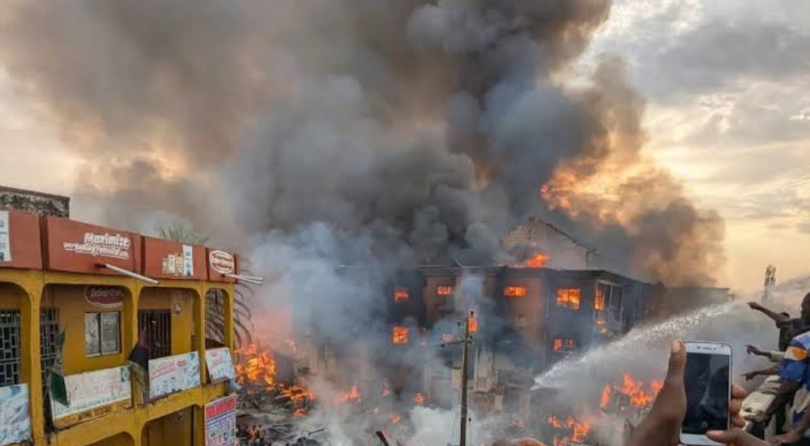
Kugbo Furniture Market in Abuja recorded three separate fire outbreaks between January and October 2026, making it the market with the highest number of reported fire incidents at a single location in NEWSNGR’s review of market fires across Nigeria.
The market was hit on January 19, February 22 and October 2, with the outbreaks affecting furniture workshops, shops, adjoining residential buildings and traders’ goods.
Kugbo was not alone. Singa Market in Kano State and Bola-Ige International Market in Ibadan, Oyo State, also recorded multiple fire outbreaks within the review period.
A review by NEWSNGR of published reports between January 1 and November 21, 2026, identified repeated fire outbreaks in markets and commercial centres across 12 states and the Federal Capital Territory (FCT), leaving traders to count losses running into billions of naira.
At the state level, Oyo recorded the highest number of reported incidents, with nine outbreaks in markets and commercial centres between February and October. Kano also recorded multiple market fires, including two at Singa Market. The FCT, however, recorded three separate outbreaks at Kugbo Furniture Market alone, making it the location with the highest number of repeated incidents in the review.
The findings are based on NEWSNGR’s review of published reports and not a consolidated national fire-service database. The Oyo tally includes both traditional markets and commercial complexes, a distinction reflected in the breakdown below.
Federal Capital Territory
Kugbo Furniture Market, along the Abuja-Keffi Expressway, recorded three fire outbreaks during the period.
The first incident occurred on January 19, when fire razed parts of the market. The Federal Fire Service said firefighters and other emergency responders brought the blaze under control after several hours.
The service reported that property valued at N1.8bn was saved, while goods worth more than N2bn were exposed to the fire. The N1.8bn represented the value of property salvaged and should not be interpreted as the value of goods destroyed.
The market was hit again on February 22, when more than 15 shops and adjoining residential buildings were affected. Traders who spoke after the incident put their individual losses at N5.2m and more than N8.2m.
On October 2, another fire affected 21 shops and a vehicle at the market. The National Emergency Management Agency (NEMA) said no casualties were recorded, while the chairman of the Kugbo Wood Machinist Association, Godswill Ndukwe, estimated the value of destroyed goods at more than N500m.
The repeated outbreaks made Kugbo the market with the highest number of reported fire incidents at a single location in the review.
Beyond Kugbo, Karimo Market in the FCT was affected by a fire on February 15, which damaged several shops. NEMA said no fatalities were recorded.
On August 30, fire also affected Chida Plaza in Jabi, where businesses dealing in building materials and roofing supplies operated. An eyewitness estimated the value of some destroyed goods at more than N20m.
Another incident occurred on November 14 at Gwagwalada International Market. A post-incident assessment by the FCT Emergency Management Department identified 28 open stalls and two lock-up shops as affected, impacting about 45 traders.
One of the affected traders, Salome Israel, said she lost goods worth about N400,000, including yams, tomatoes and peppers. Other items reportedly destroyed included clothing, herbal medicines and beverages.
Oyo State
Oyo State recorded nine reported fire outbreaks in markets and commercial centres between February and October, the highest number among the states covered by the review.
The affected locations included Ogunpa Market, Bode Market, the Nigerian Railway Shopping Complex, Alhaji Moba Complex, Bola-Ige International Market, Bodija Foodstuffs Market, Oranyan Market and the NIPOST Shopping Complex in Dugbe.
The first incident occurred on February 9 at Ogunpa Market, where about 10 shops at Iya Maryam Adebara Complex were affected.
On June 6 into June 7, fire destroyed at least 16 shops at the NIPOST Shopping Complex in Dugbe, Ibadan, affecting businesses operating within the commercial premises.
On July 3, another outbreak destroyed several shops in the herbal section of Bode Market, leaving traders dealing in herbs and traditional products to count losses estimated at millions of naira.
On August 8, fire affected one of 17 prefabricated shops at Alhaji Moba Complex in the Gbagi area of Ibadan.
Bola-Ige International Market in New Gbagi was affected on August 17, when two lock-up shops were destroyed.
Five days later, on August 22, fire destroyed nine shops at the Nigerian Railway Shopping Complex around the Aleshinloye Market axis. One trader, Busari Olayemi, estimated his loss at N21m.
On August 24, fire ravaged parts of Oranyan Market, where eyewitnesses estimated that nearly 300 shops were affected. Traders dealing in gold, furniture, second-hand clothes and other merchandise were among those affected.
Bodija Foodstuffs Market recorded another outbreak on October 19, when 15 shops were razed and 25 others partially damaged in a row of 44 shops.
The latest incident in the nine-outbreak tally occurred on October 29 at Bola-Ige International Business Complex in New Gbagi, where eight shops were affected and goods and property worth millions of naira were reportedly destroyed.
The August and October incidents show that the Bola-Ige commercial location also experienced repeated outbreaks. However, the Oyo figure covers shopping complexes as well as traditional markets and should not be interpreted as nine fires in traditional markets alone.
Kano State
Kano State also recorded multiple market fires, including two outbreaks at Singa Market within 12 days in February.
The first incident occurred on February 2, destroying three large stores. On February 14, another fire affected a different section of the market.