
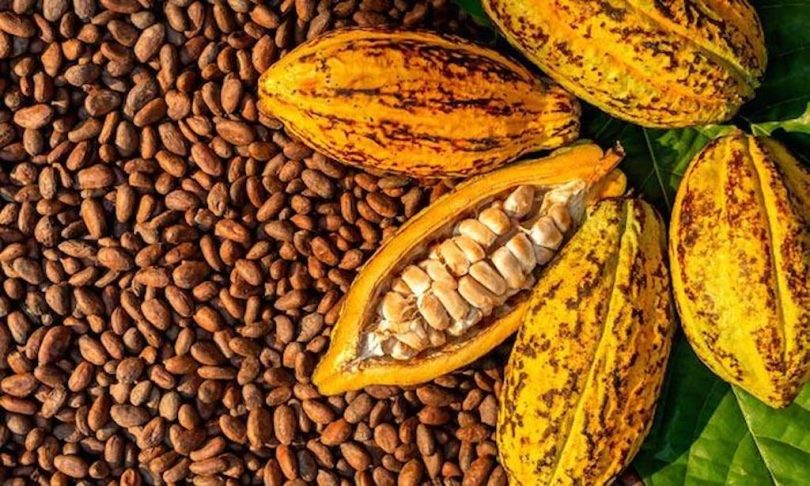
Clarification follows public discussions suggesting Federal Government planned to ban raw cocoa exports after President Bola Tinubu unveiled plans to expand domestic cocoa processing.
The Federal Government has clarified that it has no plans to ban the export of raw cocoa beans, stating its policy is to promote local value addition while maintaining Nigeria’s position in the global cocoa market.
The Minister of Agriculture and Food Security, Abubakar Kyari, made the clarification in a statement on Friday following public discussions over comments made by President Bola Tinubu during the Cocoa Value Addition Summit 2026 in Abuja.
“Our objective is value addition, not an export ban,” Mr Kyari stated.
He said the government’s priority under the Renewed Hope Agenda is to build a globally competitive cocoa industry by encouraging greater domestic processing while allowing raw cocoa exports to continue.
According to the minister, the government aims to create an enabling environment that will attract investment into cocoa processing, improve farmers’ incomes, create jobs and increase Nigeria’s earnings from cocoa exports.
“Raw cocoa exports will continue to play an important role as we expand domestic processing capacity. Our goal is to create an enabling environment that encourages more investment in processing, increases farmers’ incomes, creates jobs, and enables Nigeria to earn more from every tonne of cocoa produced,” the minister said.
Mr Kyari added that the policy also aligns with ongoing efforts to improve traceability in agricultural exports and ensure compliance with international standards to sustain Nigeria’s access to premium export markets.
“The message is clear: the Federal Government is not banning raw cocoa exports. We are promoting value addition so that Nigeria captures more value from its cocoa while remaining competitive in the global market,” he added.
The clarification comes three days after President Tinubu declared that Nigeria must move beyond exporting raw cocoa beans and instead process more of its cocoa locally to capture a greater share of the global chocolate market.
Represented by Mr Kyari at the Cocoa Value Addition Summit in Abuja, the president said Nigeria could no longer afford to export raw beans while importing finished chocolate products, arguing that local processing would create jobs, attract investment and boost foreign exchange earnings.
PREMIUM TIMES had reported that the president highlighted ongoing investments in domestic processing, including a 70,000-metric-tonne processing facility under construction in Sagamu, Ogun State, and said Nigeria’s annual cocoa grinding capacity has exceeded 120,000 metric tonnes.
At the summit, government officials, development partners and industry stakeholders also endorsed a roadmap to expand cocoa processing, while the Bank of Industry pledged financing for investments across the cocoa value chain. The meeting ended with the adoption of the Cocoa Value Addition Accord and a proposed Abuja Declaration to accelerate local processing and strengthen collaboration among Africa’s leading cocoa-producing countries.
Nigeria is a leading cocoa producer, accounting for about six to seven per cent of global output. However, like many African producers, it exports much of its cocoa in raw form, while the value from processing, branding and chocolate manufacturing is captured outside the continent.