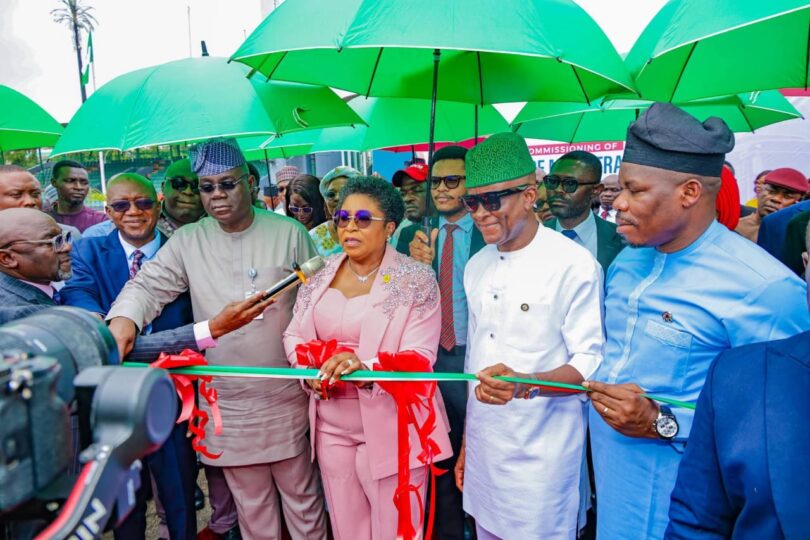
The Federal Government Wednesday launched and commissioned the Federal Civil Service Electric Mass Transit Programme, with the first phase of 100 electric buses dedicated to federal civil servants.
The initiative was described as a practical demonstration of President Bola Ahmed Tinubu’s commitment to the welfare of Nigerian workers.
Speaking at the commissioning, Mrs. Didi Esther Walson-Jack, OON, Head of the Civil Service of the Federation, noted that reliable and affordable transport reduces pressure on household income, provides greater certainty in getting to work, and ensures safer, more dignified movement for civil servants.
She said the modern electric buses can accommodate up to 200 passengers each and travel a minimum of 200 kilometres on a full charge.
The first batch is already available, and officials said the program will continue to serve the Civil Service beyond the launch ceremony.
Special commendation was given to Mrs. Walson-Jack for her role in turning the transportation idea into a welfare intervention.
As she prepares to conclude her distinguished tenure, the buses are, in a very real sense, one of her final gifts to the men and women she has led.
The programme aligns with President Tinubu’s directive that Nigeria must “produce more, manufacture more, and create more jobs at home.”
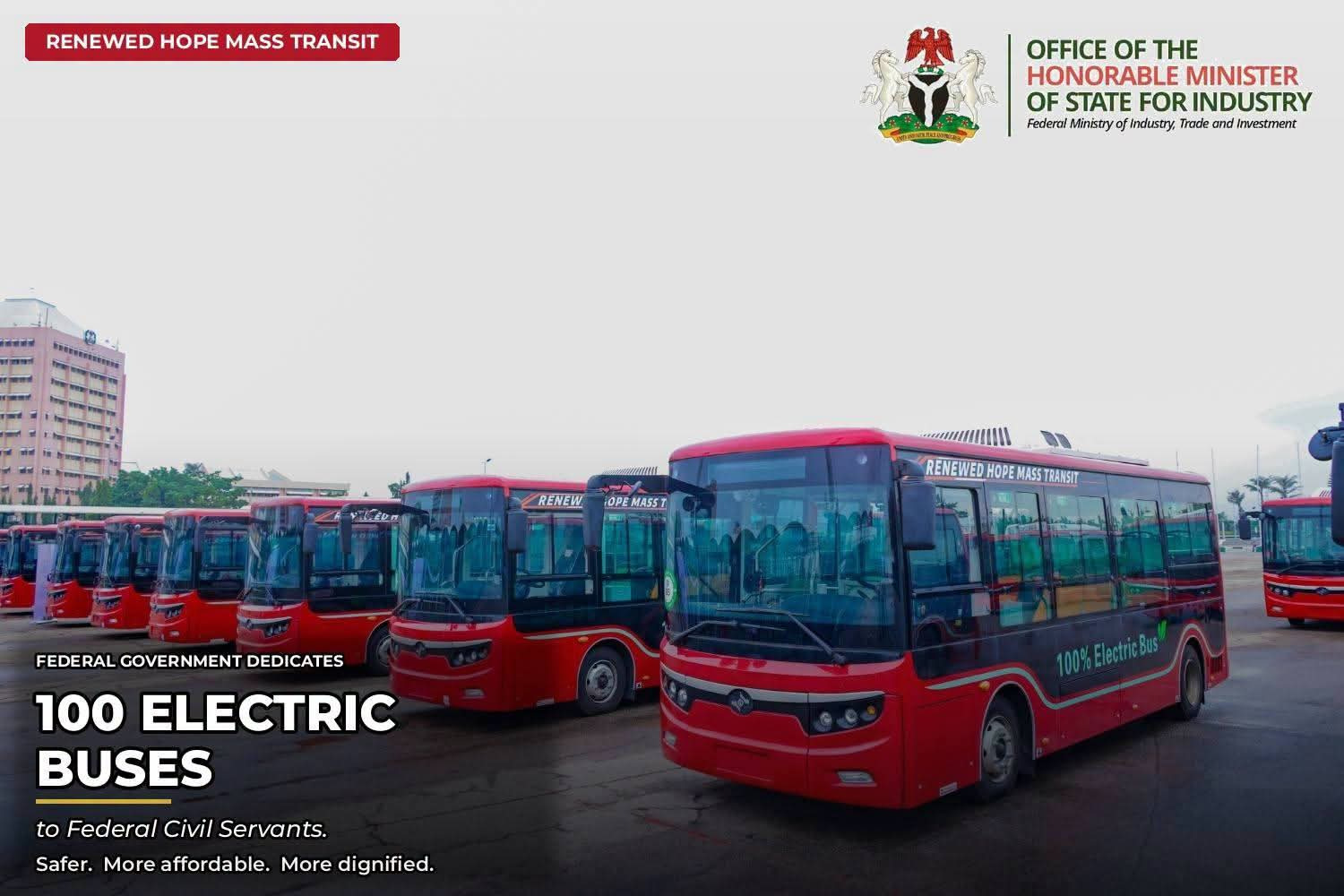
Officials said the buses are Nigerian-assembled, and the initiative is designed to support factories to upscale, train engineers and technicians, encourage local components, and retain more value in Nigeria.
“The world is moving to electric mobility. Nigeria must not arrive late and we must not become only a market where others sell the technologies of the future. We must build capacity here,” it was stated.
The government outlined a broader vision beyond the initial 100 buses, which includes: Nigerian factories producing thousands of modern buses, Charging infrastructure across the country, Skilled jobs for young Nigerians across the electric mobility value chain and Positioning Nigeria as an automotive manufacturing hub for Africa.
Manufacturers were urged to invest in plants, deepen local content, develop Nigerian talent, and “prove that Made in Nigeria can compete with the best in the world.”
The NADDC and all partners were commended for their role in delivering the project.
Profound appreciation was also expressed to President Bola Ahmed Tinubu, GCFR, for “the courage to reform and the determination to make those reforms felt in everyday life.”
“That is the mandate, and we are determined to deliver it,” the statement concluded.
The launch was attended by senior government officials, civil service leadership, and industry stakeholders.