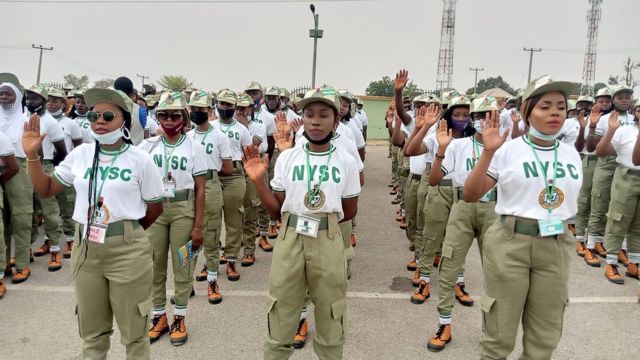
The Federal Government is considering the introduction of compulsory assessment tests for Nigerians who obtained degrees from foreign universities before approving their mobilisation into the National Youth Service Corps (NYSC).
The Acting Permanent Secretary of the Federal Ministry of Education, Dr Folake Olatunji-David, disclosed this on Monday, November 9, at the 37th meeting of the National Standing Committee (NSC) on Evaluation of Foreign Qualifications in Abuja.
She said the proposed assessment would determine whether foreign-trained graduates had acquired the required knowledge and met the necessary academic standards before their certificates could be evaluated for NYSC mobilisation.
According to her, the proposal has become necessary amid the growing number of Nigerians studying abroad, particularly in West African countries, and increasing concerns over certificate forgery and the recognition of questionable foreign qualifications.
“We must ensure that the standard of education in Nigeria is not lowered by allowing all manner of foreign qualifications that are not recognised to be paraded by Nigerians without the corresponding learning achievement,” she said.
Olatunji-David stressed that although the government remained committed to international education and global academic collaboration, it would not compromise the country’s educational standards.
“We want to ensure that, yes, for every certificate given, they are earned, and they can produce people that can contribute positively to our national development,” she added.
She urged the committee to consider introducing an assessment test as part of the evaluation process for foreign-trained graduates seeking NYSC mobilisation.
The acting permanent secretary described the committee as a critical institution in safeguarding the integrity of Nigeria’s education system, particularly by ensuring that only genuine qualifications obtained from accredited foreign institutions receive official recognition.
She also disclosed that the ministry had automated and digitalised the evaluation of foreign certificates and authentication of Nigerian certificates since the beginning of 2026.
According to her, the digital system had made the process more seamless, while fees collected were being remitted into government accounts to strengthen revenue generation.
The committee is also expected to consider guidelines for issuing no-objection letters required for the registration of proposed educational institutions with the Corporate Affairs Commission.
Other issues on the agenda include ensuring that foreign-curriculum secondary schools operating in Nigeria prepare their students for at least one recognised public examination conducted by WAEC, NECO, NABTEB or NBAIS before graduation.
Members will also deliberate on the recognition of foreign secondary school qualifications, monitoring Nigerians studying in African institutions and establishing diplomatic channels to verify the accreditation status of foreign universities.
Earlier, the ministry’s Director of Education Support Services, Gabriel Amudipe, urged committee members to uphold fairness and objectivity in evaluating foreign qualifications.
He said their decisions were vital to improving learning outcomes, institutional performance and quality assurance across Nigeria’s education sector.