The Federal Government has ruled out restoring fuel subsidy and multiple exchange rates, reaffirming its commitment to economic reforms in spite of concerns from international investors and development partners.
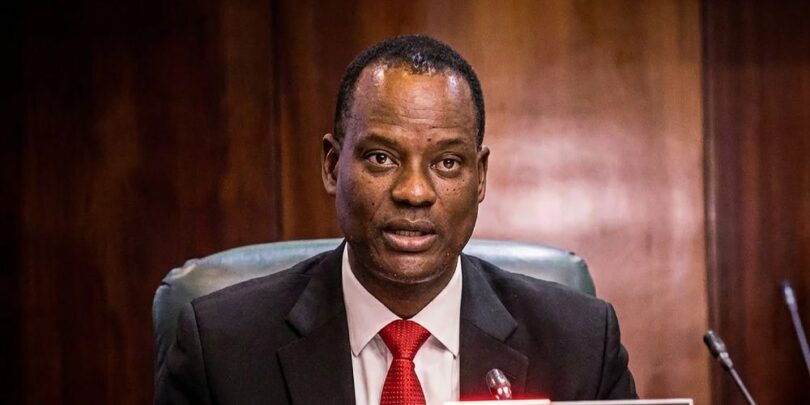
The Minister of Finance and Coordinating Minister of the Economy, Mr Taiwo Oyedele, said this at a news briefing following Nigeria’s participation in the IMF/ World Bank Group Annual Meetings in Bangkok, Thailand on Saturday.
Oyedele said that the recent 30-day retail margin discount on petrol was a time-bound commercial decision by the Nigerian National Petroleum Company Ltd. (NNPC) to reduce margins and support Nigerians.
He said that the measure was not a subsidy funded with public resources.
“Let me be clear: there will be no return to fuel subsidies or multiple exchange rates,” he said.
According to him, questions about a possible reversal of the reforms featured prominently in engagements with rating agencies, investors and multilateral institutions.
He said the government remained focused on translating the gains of economic stabilisation into faster growth, increased investment and decent jobs for Nigerians.
The minister said the economy grew by 4.4 per cent in the second quarter of 2026, while inflation had declined for four consecutive months and was now less than half its peak level recorded about two years ago.
He said that the country’s foreign reserves had risen above 35 billion dollars.
He said that the country’s tax-to-GDP ratio also increased from about seven per cent three years ago to 12.5 per cent at the end of 2025, even after GDP rebasing.
The minister further said that private capital inflows had risen approximately 20-fold, from about 300 million dollars in 2023 to nearly six billion dollars in 2026.
He said Nigeria’s debt profile remained manageable at about 36 per cent of GDP, adding that the government was strategically shifting its borrowing portfolio towards cheaper, longer-term and more affordable financing.
Against this backdrop, Oyedele said the government had unveiled 65 investment projects valued at 78.5 billion dollars under the Project Nigeria initiative.
He said the projects covered energy, transport, industry and mining, agriculture, health and services, with each supported by a feasibility study and structured to accommodate private participation by local and foreign investors.
According to him, investors from Asia and Europe have already submitted expressions of interest in the projects.
The minister described the initiative as part of efforts to position Nigeria as an attractive investment destination under the theme, Partner Nigeria: Reformed, Resilient, Ready to Scale.
He said that the government would continue developing the investment pipeline through the ministry’s investment platform to expand opportunities for investors.
On international cooperation, the minister said the World Bank Group had reaffirmed support for power and infrastructure through guarantee instruments and other financing mechanisms.
He said that the IMF had committed to continued technical support for fiscal policy implementation, transparency and national statistics.
“The Islamic Development Bank and other multilateral institutions also indicated readiness to expand sustainable financing, while the United States Treasury offered deeper technical cooperation in fiscal policy, administration and financial integrity,” he said.
Oyedele said the European Union had identified energy and local pharmaceutical manufacturing as priority areas for collaboration under its Global Gateway programme.
He, however, cautioned against interpreting the commitments as immediate financial disbursements.
“These are commitments to work together with us, not announcements of money.
“We are playing down visibility and elevating credibility. We will not report progress as agreements until we have signed commitments and results begin to crystallise,” he said.
He said Nigeria also used its position as chair of the Group of 24 (G24) to advocate reforms in the global financial system.
He said that the reforms included a stronger quota-based IMF, transparent credit-rating methodologies, deeper local currency markets and affordable climate finance.
Oyedele cited findings presented by the United Nations Economic Commission for Africa at the G24 meetings, indicating that developing countries paid about 500 billion dollars more annually to borrow than advanced economies.
He described the additional borrowing costs faced by African countries as a “prejudice premium”, adding that the risk premium attached to the continent often failed to reflect the economic fundamentals of individual countries.
Oyedele also expressed support for an African credit-rating agency, saying credible economic policies should be rewarded with cheaper financing.
On energy transition, the minister said that natural gas remained Nigeria’s transition fuel and called for climate financing arrangements that accommodated countries at different stages of development.
He also said that the growing global youth population and rapid advances in artificial intelligence (AI) presented significant challenges for developing economies.
He said projections indicated that about 1.2 billion young people would enter the global labour market over the next 15 years, while current trends suggested that only about 400 million jobs would be created.
This, he said, could leave approximately 800 million young people without adequate employment opportunities.
The minister cautioned that although AI could improve productivity, it could also generate economic growth without corresponding job creation.
He said Nigeria would focus on expanding skills development, directing investments towards labour-intensive sectors and establishing policies to ensure that the benefits of AI were fairly shared.
He urged the Bretton Woods institutions to assess economic performance not only by growth rates and funds mobilised, but also by the number and quality of jobs created.
The minister said Nigeria returned from the Bangkok meetings with renewed confidence in its reforms but acknowledged that the country needed to translate economic stability into improved living standards.