
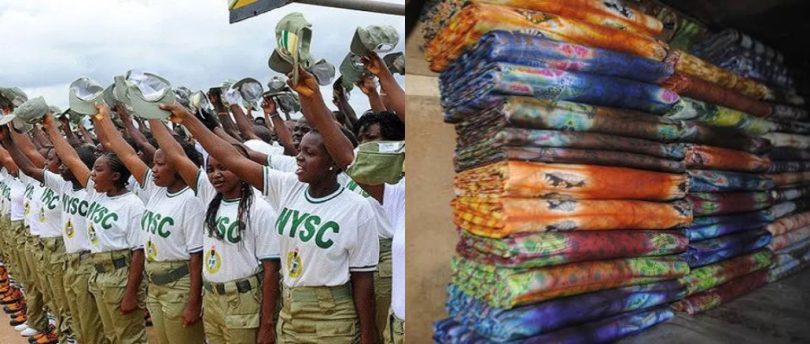
The Federal Government has announced plans to replace the iconic khaki uniform worn by members of the National Youth Service Corps (NYSC) with locally produced Adire fabric as part of a major reform aimed at promoting local industries and boosting Nigeria’s economy.
The Minister of Youth Development, Ayodele Olawande, made the announcement on Thursday during an appearance on Channels Television’s The Morning Brief, where he outlined the government’s vision for modernising the NYSC scheme.
According to the minister, the decision to adopt Adire aligns with the Federal Government’s “Buy Nigeria” policy by encouraging the use of locally made products while supporting indigenous textile manufacturers.
“It’s Adire. So, Adire is being produced in Nigeria. We have them in Ogun, we have them in Kwara, we have textile industry. Let’s put our money back into the country,” Olawande said.
He explained that replacing the traditional khaki uniform with Adire would help revive the country’s textile industry, create more opportunities for local artisans and manufacturers, and ensure that government spending directly benefits Nigerian businesses.
Beyond the uniform change, Olawande disclosed that the Federal Government is also restructuring the NYSC posting system to ensure corps members are deployed according to their academic qualifications, professional skills and areas of expertise.
According to him, the new posting model is expected to make the one-year national service more productive by placing graduates in organisations where they can make meaningful contributions while gaining relevant work experience.
The minister noted that the reforms are part of broader efforts to reposition the NYSC scheme, strengthen local industries, create economic opportunities and improve the overall impact of national service on both corps members and the country.
The proposed changes have already generated conversations among Nigerians, particularly over the planned replacement of the NYSC’s long-standing khaki uniform with Adire, a fabric widely regarded as one of Nigeria’s cultural and textile symbols.
The Federal Government says the reforms are designed to modernise the scheme while ensuring that national resources are invested in locally produced goods and services.