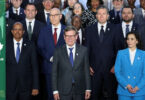
The Patriotic Union of Kurdistan (PUK), a principal Kurdish political party, has agreed to transfer the Kirkuk governorship to the Iraqi Turkmen Front (ITF) as part of a power-sharing agreement reached in August 2024. [Getty]
A Turkmen is set to become governor of Kirkuk for the first time since the 2003 US-led invasion of Iraq, following a political deal tied to Baghdad’s power-sharing system, local media reported.
Kirkuk, an oil-rich and multi-ethnic province located approximately 250 kilometres northeast of Baghdad, remains a disputed territory under Article 140 of Iraq’s constitution. Delays in implementing this article have contributed to ongoing local tensions.
The Patriotic Union of Kurdistan (PUK), a principal Kurdish political party, has agreed to transfer the Kirkuk governorship to the Iraqi Turkmen Front (ITF) as part of a power-sharing agreement reached in August 2024. This decision followed a vote by Turkmen and Arab lawmakers to elect Nizar Amedi, a PUK member, as president of Iraq.
According to sources cited by KirkukNow, a multiethnic agreement to rotate key administrative positions is expected to be implemented soon, with the governorship to be transferred to the Turkmen, as confirmed by Turkmen Front official Sawsan Abdul Wahid.
Current governor Rebwar Taha, representing the PUK, did not respond to requests for comment. The New Arab also contacted Mardin Tahsin Gökkaya, a prominent figure in the ITF, who declined to comment, stating he is not authorised to speak to the press.
According to the 2024 agreement, Taha was to retain the governorship until the end of 2025, after which the position would be transferred to the Turkmen in early 2026 and subsequently to Arab representatives. However, delays in the parliamentary election of the Iraqi president postponed the implementation of this agreement.
Arab leaders in Kirkuk have expressed cautious support for the decision. Azam al-Hamdani emphasised the importance of a peaceful and balanced rotation of power, while also highlighting ongoing concerns regarding unresolved detainee and missing persons cases from 2014, when Kurdish forces assumed control of Kirkuk after the Iraqi army was unable to defend the city from Islamic State militants.
The Iraqi army expelled Kurdish forces from Kirkuk in 2017 following the Kurdish referendum on independence from Iraq.