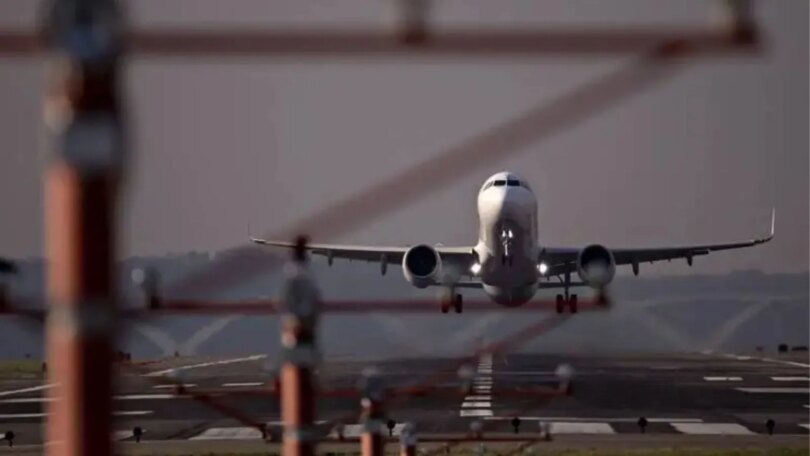
India has made it mandatory for all international travellers arriving in the country to fill an online health self-declaration. (File Photo)
As health authorities track the ongoing Ebola outbreak in Africa, India has launched AIR SUVIDHA 2.0 to strengthen airport surveillance. Announced Thursday by the Ministry of Civil Aviation, the contactless digital platform requires all international arrivals to fill out a health self-declaration form online before boarding. The move follows the WHO’s decision to classify the outbreak in central Africa as a global health emergency.
The portal, called Air Suvidha 2.0, was launched on 25 June and applies to all passengers flying into India from any country including the large number of Indians travelling from the UAE, where direct flights to Indian cities operate daily.

What is the form and what does it ask?
The self-declaration form, available at airsuvidha.civilaviation.gov.in, can be filled within 24 hours of the start of the journey. Passengers are advised to complete it during web check-in to speed up the arrival process. The form covers three things: a 21-day travel history, any known exposure to Ebola-affected areas, and the presence of symptoms such as fever, body aches or bleeding.
On arrival, passengers only need to show the downloaded form at the International Travel Health Desk or immigration counter no physical paperwork needs to be filled at the airport. The portal shares data in real time with airport health officers, immigration officials and state health surveillance teams, allowing authorities to identify and respond to at-risk travellers without physical contact.
Why has India introduced this now?
The trigger is a WHO declaration made on 17 May 2026, which classified the Ebola outbreak in the Democratic Republic of Congo and Uganda as a Public Health Emergency of International Concern the highest level of alert under international health law. The outbreak has been confirmed as Bundibugyo virus disease, a rare strain of Ebola for which there are currently no approved vaccines or treatments, according to Khaleej Times.
Story continues below this ad
Countries bordering the DRC and Uganda including South Sudan have been identified as high-risk for further spread. India’s civil aviation authority and Delhi International Airport Limited said the portal was launched to protect both arriving passengers and airport staff while keeping the process contactless.
What is the Ebola outbreak about?
Ebola spreads through close contact with bodily fluids and has killed more than 15,000 people in Africa over the past five decades. The current outbreak was declared in northeastern DRC on 15 May, though health officials believe the virus had been circulating before it was formally identified.
WHO Director-General Tedros Adhanom Ghebreyesus said the situation was serious but containable. “The outbreak is moving fast, and we are still playing catch-up,” he said. “We need to stop the outbreak where it is, support countries that are responding today, and ensure that neighbouring countries are ready to detect and act quickly if cases appear.” He added: “This is a serious outbreak and it is one we know how to stop but we need to move fast and together.”
The WHO and the African CDC have together committed $518 million over the next six months to tackle the outbreak, focusing on surveillance, laboratory testing and infection control.
What should Indian travellers do?
Story continues below this ad
Fill the Air Suvidha 2.0 form at airsuvidha.civilaviation.gov.in within 24 hours of departure, ideally during web check-in. Carry the downloaded form to the airport.
If you have travelled to or through DRC, Uganda or South Sudan recently, expect additional screening on arrival.
(With inputs from agencies)