Flour Mills of Nigeria, FMN, through its agro subsidiary, Great Agri Input Limited, GAIL, has targeted the cultivation of 10,000 hectares of wheat across 13 states in the 2026/2027 planting season.
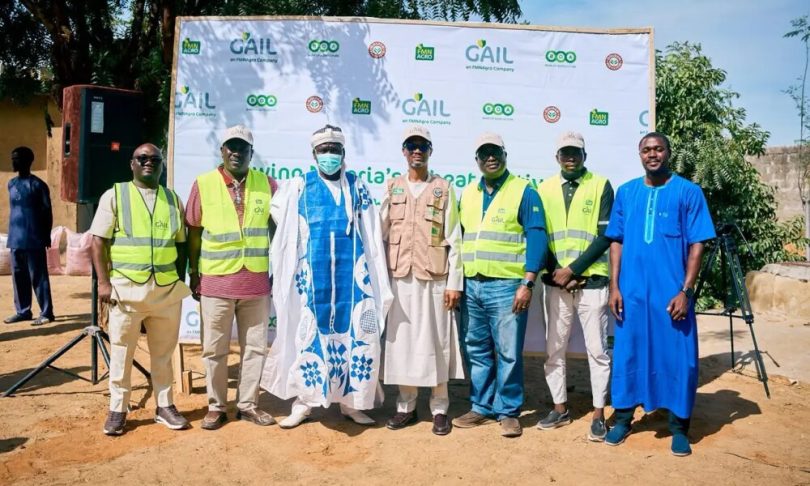
The company announced the target during the flag-off of the new wheat planting season in collaboration with the Bank of Agriculture (BOA) at Taura Maje, Jigawa State.
The event, which attracted community leaders, farmers, cooperative societies, representatives of FMN and BOA, and other stakeholders, featured the distribution of agricultural inputs to farmers to mark the commencement of the planting season.
The initiative is part of FMN’s efforts to increase domestic wheat production, strengthen smallholder farmers’ participation and reduce Nigeria’s dependence on imported agricultural raw materials.
Speaking at the event, the Managing Director of FMN Agro and Group Director, Strategic Engagement and Partnership, Sadiq Usman, said the company had sustained investments in local agricultural production for more than two decades.
He said the company’s local content development programme covered wheat, maize, soybean, sugar cane, cassava and palm trees.
“FMN, through Great Agri Input Ltd (GAIL), for over two decades has been consistent in content localisation in Nigeria with the intent of driving food security and reducing dependency on imported raw materials.
“Wheat is an integral raw material in our productions; thus, GAIL is right at the forefront of providing high-yielding seedlings, agronomic support to farmers, partnerships and market for the locally grown wheat,” he said.
Usman said the company would leverage existing partnerships and investments to expand cultivation, support more farmers and strengthen Nigeria’s domestic wheat value chain.
He said the new planting season was building on five years of progress in local wheat production, adding that the programme had influenced more than 50 per cent of Nigeria’s wheat cultivation and aggregation.
According to him, over 170,000 farmers have benefited from training, agricultural inputs, produce offtake and extension services, while the initiative has contributed to the creation of more than 300,000 direct and indirect jobs for youths.