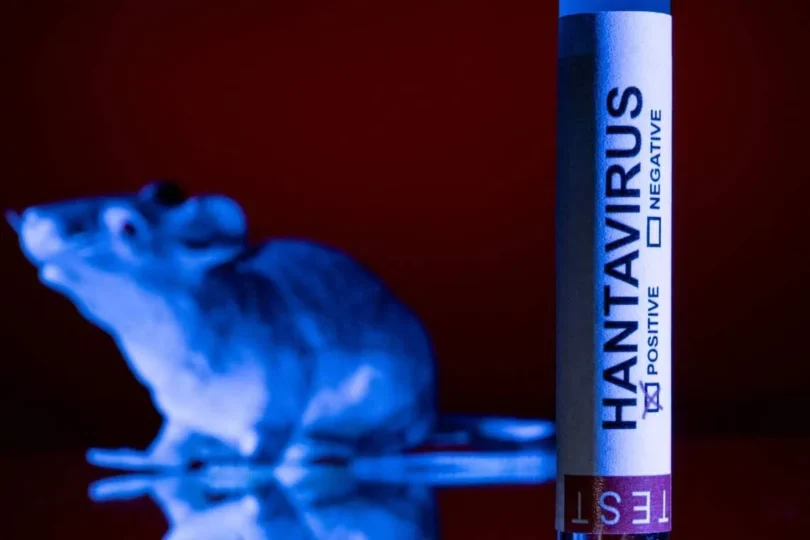
PARIS – Thrust back into the front line by a deadly hantavirus outbreak, infectious disease experts have to balance informing the public about its potential risks without provoking undue fear of a Covid-scale pandemic.
The deaths of three cruise ship passengers during a rare hantavirus outbreak has sparked international alarm – and flashbacks to when the world tipped into a pandemic six years ago.
Among the living, seven people have been confirmed to have hantavirus, including a French woman in a critical condition, while an eighth case is considered “probable”, according to an AFP tally.
All the suspected infections have been among people who were onboard the ship, however several nations have quarantined those who were in contact with passengers.
The World Health Organization has said it expects more cases to emerge but emphasised there “is no sign that we are seeing the start of a larger outbreak”.
In a throwback to the Covid-19 era, the outbreak has put infectious disease specialists, virologists and epidemiologists back into the news.
When epidemiologist Antoine Flahault addressed a French governmental health conference alongside other health experts on May 12, he urged scientists, journalists and the general public to “be wary of preconceived notions”.
There are important lessons to be learnt from how the science of Covid-19 was communicated, the professor at the Paris Cite University told AFP later.
“First, that we did not know everything. Second, that knowledge was evolving… and that there were very lively debates among scientists on aspects that sometimes surprised the public,” Prof Flahault said.
Mr Luc Ginot, who served as a regional public health director in France during the pandemic, said it was important doctors did not “disseminate just any information that might disrupt the coherence of the overall health response”.
Health experts – and the WHO – have been emphasising that hantavirus is not comparable to Covid-19, and that the risk to the wider public remains low.
Unlike Covid-19, the Andes strain of hantavirus is not new, and a few previous human-to-human transmission events have been studied.
However, some experts have also called on health authorities not to overstate what is known about hantavirus while trying to tamp down pandemic fears.
“I’m not particularly worried there will be much onward spread of hantavirus,” epidemiology professor at Brown University in the US Jennifer Nuzzow rote on Bluesky.
“But I am concerned that authorities are making confident statements based on very limited data.”
Prof Nuzzo felt “there’s too little data” to indicate whether infected people needed to be displaying symptoms – or be in “close, prolonged contact” – to transmit the virus to others.
Research into a 2018 outbreak in the Argentina region of Patagonia, where the Andes strain is endemic, found that most cases were transmitted on the first day an infected person had a fever.
However, a few people were found to have caught the virus from a man sitting more than a metre away at a birthday party.
Public Health France director Caroline Semaille also said it could not be ruled out that people transmit the virus “48 hours before the onset of symptoms”.
Prof Flahault also urged caution about the time it takes between being infected with the Andes strain and symptoms showing, which is thought to be up to six weeks.
This is a “neglected tropical disease” and further research could reveal a longer or shorter incubation period, he said.
The fatality rate of the virus, commonly cited as around 40 per cent, could also be quite different outside of rural areas of Argentina where there may be little health infrastructure, he added.
For example, when patients with the similarly deadly Ebola are treated in Europe or the United States, “the fatality rate is zero”, he said.
There are no treatments or vaccines specifically targeted at hantavirus.
But that has not stopped conspiracy theories and disinformation about vaccines and hantavirus spreading widely online – another echo of the Covid-19 era.
French infectious disease specialist Nathan Peiffer-Smadja said that “managing an outbreak is not about reassuring people and downplaying the situation… nor is it about predicting the next Covid-19”.
“It’s about providing transparent information,” he wrote on Bluesky. AFP