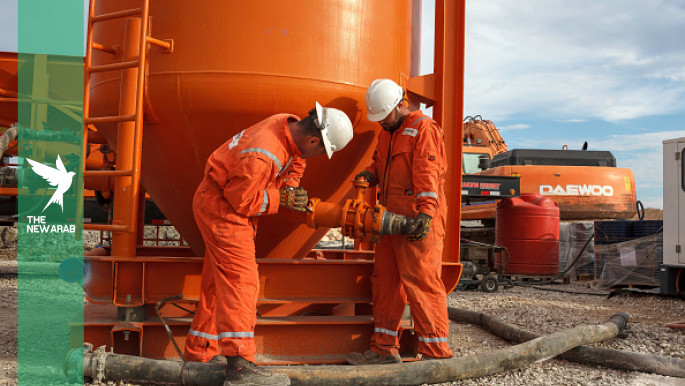
Foreign companies have scaled back operations and delayed investment plans in Iraq following attacks on Western-linked sites during the recent US-Israeli war on Iran. [Getty]
Western diplomatic missions and foreign companies operating in Iraq are conditioning their full return to the country on receiving stronger security guarantees following a wave of attacks during the recent US-Israeli war on Iran, according to Iraqi officials and analysts.
During the opening days of the US-Israel war on Iran, diplomatic missions and foreign companies based in Baghdad, Basra, Erbil, Sulaymaniyah, Duhok, and Anbar came under repeated drone and rocket attacks, forcing many companies, including BP, TotalEnergies, Schlumberger, Eni, Kuwait Energy, and ExxonMobil to evacuate staff and temporarily suspend operations.
The attacks targeted American, British and other Western-linked facilities, heightening fears among international investors and diplomats about Iraq’s security environment amid ongoing regional tensions and continued US threats to resume military action against Iran.
The withdrawals have had immediate economic and diplomatic consequences, particularly in Iraq’s electricity, oil and gas sectors, where foreign investment plays a major role.
The partial or full departure of foreign missions has also disrupted visa services and slowed the work of humanitarian organisations operating in environmental, displacement and education programmes.
An Iraqi Foreign Ministry official told The New Arab that most diplomatic missions and foreign companies were now demanding explicit security guarantees before returning fully to Iraq.
“Some missions have returned only with essential staff and in limited numbers, which can be considered a partial return, while others are still operating remotely without personnel inside embassy compounds,” the official said.
“The security factor is the only reason why the situation has not returned to normal. The continued possibility of another war between Iran and the United States also makes a full return unlikely for now,” the official added.
The Iraqi government is currently working to rebuild confidence through a series of security and political measures to protect diplomatic missions and key infrastructure sites.
Authorities are also reorganising security deployments and intensifying contacts with foreign governments and companies to persuade them to resume operations.
However, analysts say the success of those efforts depends on Baghdad’s ability to assert state authority and curb the influence of armed groups operating outside official institutions.
Security analyst Saif Raad warned that continued attacks on diplomatic missions and foreign companies threatened Iraq’s international standing and economic recovery.
“The restoration of international and investment activity in Iraq is directly linked to the state’s ability to impose stability and protect foreign interests,” Raad told The New Arab.
“The attacks on embassies and foreign headquarters during recent escalations created a negative impression internationally and raised real concerns among foreign companies and investors about the business and security environment inside Iraq,” he added.
Economy expert Nasser al-Tamimi also warned that continued instability could severely damage Iraq’s investment climate, particularly in energy and infrastructure projects that depend heavily on foreign partnerships.
He said ongoing insecurity risked pushing international companies to freeze projects or relocate investments to more stable countries in the region.
“Iraq urgently needs international partnerships and foreign expertise to implement reconstruction and development projects,” Tamimi said.
“Any decline in international activity inside Iraq will not only affect the economy but will also slow development projects, reduce job opportunities and impact services,” he added.