PARIS, April 17 – President Emmanuel Macron on Friday defended editorial diversity after more than 100 authors quit the venerable French publishing house Grasset this week in protest at the growing influence of its top investor, conservative billionaire Vincent Bollore.
Bollore’s outlets have shifted sharply to the right in recent years, focusing on crime and immigration and giving frequent airtime for politicians from Marine Le Pen’s far-right National Rally party.
In an open letter, dozens of Grasset authors – including Dany Laferriere and Dominique Bona – said they refused to be “hostages in an ideological war that seeks to impose authoritarianism everywhere in culture and the media”.
“We don’t want our ideas, our work, to be his property,” the authors added.
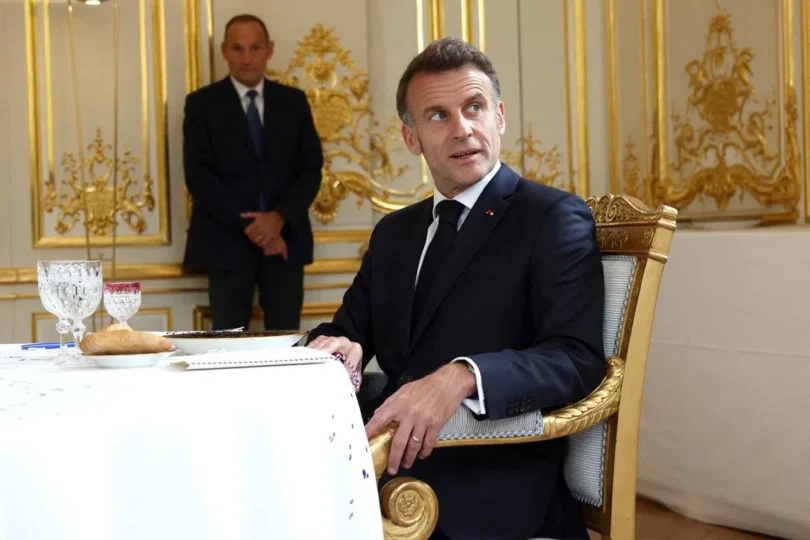
Speaking to reporters at the Paris Book Festival, Macron said, “I think it is very important to express and uphold (editorial) diversity, respect for authors, the history of these publishing houses and their identities.”
The authors’ protest was prompted by the exit of the publisher’s chief executive, Olivier Nora, who left the publishing house on Tuesday without an explanation.
French media reported Nora was pushed out by the publishing group’s owner, Louis Hachette Group, after a dispute about whether and when to publish a book by French-Algerian writer Boualem Sansal about his detention in Algeria.
Bollore is the biggest shareholder in Louis Hachette, with a 31% stake, through which he also controls media outlets such as the Journal du Dimanche and CNews. He is also the main shareholder of media conglomerate Vivendi.
Louis Hachette and Bollore did not respond to a request for comment. Previously, Bollore has said critics have wrongly portrayed him as an enemy in a cultural battle over media and power, and has described himself as a “scapegoat”.
Founded in 1907, Grasset, the publisher of Marcel Proust and Irene Nemirovsky, became part of the Hachette group in 1954. Under Nora’s tenure as president, which began in 2000, it published works by authors including Nobel laureate Han Kang and Isabel Allende. REUTERS