OMOGBOLAHAN L.A. BABAWALE
A Journey of Perseverance, Professional Excellence and National Service
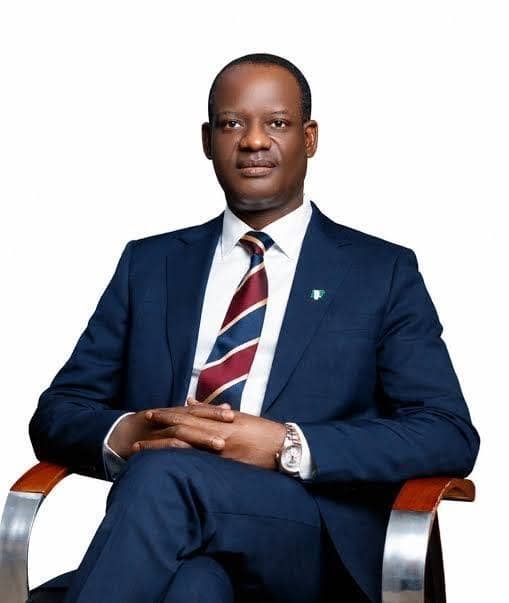
The story of Professor Taiwo Oyedele is a compelling illustration of how determination, professional discipline, intellectual curiosity and consistent investment in personal development can transform humble beginnings into a distinguished career of national significance. Born on 18 June 1975 and raised in Ikaram Akoko, Ondo State, Oyedele’s journey to the pinnacle of Nigeria’s economic administration did not begin in the corridors of political power. Rather, it evolved through education, professional training, years of corporate service and an expanding reputation for expertise in taxation and fiscal policy. His rise offers an instructive narrative about the value of perseverance, the importance of professional competence and the opportunities that emerge when knowledge is combined with sustained commitment to excellence.
Oyedele’s educational journey reveals an important dimension of his character: the willingness to pursue a goal even when the route to achieving it differs from the original plan. Following an unsuccessful attempt to secure university admission to study accounting, he pursued his ambition through the polytechnic system, studying accountancy and finance at Yaba College of Technology. He subsequently obtained professional qualifications and continued to expand his academic horizons through executive education at institutions including the London School of Economics and Political Science, Yale University and Harvard Kennedy School. His experience demonstrates that setbacks need not become permanent barriers to progress. With determination and adaptability, an individual can turn an unexpected detour into a platform for achievement. His subsequent academic engagement, including his association with Babcock University, further reflects his interest in the relationship between professional practice, scholarship and the development of future leaders.
The corporate chapter of Oyedele’s career is particularly remarkable. He joined PricewaterhouseCoopers (PwC) in 2001 and spent approximately 22 years building his expertise within one of the world’s leading professional services networks. Through successive responsibilities, he rose to become Fiscal Policy Partner and Africa Tax Leader, occupying senior leadership positions and gaining experience across tax advisory, regulatory affairs, business strategy, policy advocacy and organisational development. His responsibilities extended beyond Nigeria, encompassing a wider African landscape involving more than 30 countries. Such progression was not merely a change in professional title; it represented the accumulation of technical knowledge, institutional experience and leadership responsibilities over an extended period. His corporate career established a foundation from which he could engage more effectively with the complex relationship between taxation, investment, government revenue and economic growth. It also positioned him to appreciate the concerns of businesses operating within regulatory environments where excessive complexity and overlapping taxes can undermine productivity and discourage investment.
Beyond his corporate responsibilities, Oyedele cultivated a reputation as an educator, author, mentor and contributor to Nigeria’s fiscal policy discourse. He served in professional and policy-related capacities associated with the Institute of Chartered Accountants of Nigeria, the Chartered Institute of Taxation of Nigeria and the Nigerian Economic Summit Group, among other institutions. His involvement in tax policy discussions reflected a sustained interest in making taxation more transparent, predictable and supportive of economic activity. Equally significant is his work through the Impact Africa Foundation, which focuses on education, mentoring and opportunities for young Africans. These activities provide a broader perspective on his professional journey — achievement need not be measured exclusively by corporate advancement or personal recognition, but can also be evaluated through the contribution an individual makes to institutions, professional knowledge and the development of others. In this respect, Oyedele’s trajectory combines technical specialisation with an interest in education, mentorship and public policy.
A defining turning point came in August 2023, when President Bola Ahmed Tinubu appointed Oyedele to chair the Presidential Committee on Fiscal Policy and Tax Reforms. The appointment brought his accumulated corporate and policy experience directly into the national reform process. The committee was tasked with addressing longstanding weaknesses in Nigeria’s tax architecture, including multiple taxation, administrative fragmentation, compliance difficulties and the need to improve revenue mobilisation without imposing unnecessary burdens on citizens and productive enterprises. Its work became an important component of the Tinubu administration’s Renewed Hope Agenda, particularly the ambition to establish a simpler, more coherent and growth-oriented fiscal framework. The significance of this assignment lies in the challenge of translating technical knowledge into practical institutional change. Effective tax reform must balance the government’s legitimate need for revenue with the capacity of households and businesses to pay, while strengthening public confidence in the fairness and efficiency of the tax system. Oyedele’s leadership of the committee therefore represented a transition from advising on fiscal matters to helping shape a national policy programme with implications for investment, public finances and economic opportunity.
In 2026, Oyedele’s journey advanced into executive government when President Tinubu nominated him as Minister of State for Finance in March. His subsequent elevation to Minister of Finance and Coordinating Minister of the Economy in April marked another major milestone, placing him at the centre of Nigeria’s economic management. The appointment brought his experience in corporate advisory services, tax policy and fiscal reform into a role demanding coordination across government priorities, revenue generation and economic development. His trajectory is particularly relevant to the Renewed Hope Agenda because the success of economic reform depends not only on announcing policies but also on implementing them effectively, communicating their implications clearly and ensuring that their benefits translate into improved economic opportunities. As Nigeria continues to confront the challenges of revenue mobilisation, investment, employment and inclusive growth, the responsibility before its economic leadership is to convert policy direction into measurable improvements in the lives of citizens. Oyedele’s experience provides a substantial professional foundation for this task, although the ultimate assessment of his ministerial leadership must rest on demonstrable outcomes.
Ultimately, the story of Professor Taiwo Oyedele is one of gradual progression — from a young man pursuing an accounting ambition through an alternative educational route, to a seasoned professional who spent more than two decades at PwC, a recognised contributor to fiscal policy discussions, a leader of a presidential tax reform initiative and, eventually, Nigeria’s Minister of Finance and Coordinating Minister of the Economy. His journey reinforces the enduring value of education, resilience, professional integrity and the disciplined development of expertise. For young Nigerians, it offers an important lesson that the path to distinction may be neither immediate nor perfectly predictable, but consistent preparation can create opportunities for greater responsibility. For the Tinubu administration, his appointment represents the deployment of specialised professional experience in pursuit of fiscal reform and economic transformation. The larger test, however, remains the extent to which this experience can be translated into a fairer tax system, stronger public finances, a more supportive business environment and improved prosperity for Nigerians. That is where a remarkable personal trajectory must ultimately meet the demands of national service.
Omogbolahan L.A BABAWALE
Public Affairs Analyst
Life Camp, Abuja
[email protected]