Finance chiefs of the Group of Seven countries agreed on April 17 to step up cooperation with resource-rich countries and multilateral development banks, with the aim of becoming less dependent on China for critical minerals.
The finance ministers and senior officials of the group reached the agreement at a meeting in Washington, held with like-minded partners and mineral-producing countries, including Argentina, Australia, India, Indonesia, South Africa and South Korea, officials said.
“We specifically discussed how to strengthen the supply chains of critical minerals,” Japanese Finance Minister Satsuki Katayama told reporters.
“It’s a win-win situation for everyone. We can secure stable suppliers across a wide range of countries.”
Referring to countries endowed with valuable natural resources, she said: “For them, it provides an opportunity for new business and growth.
“Given the potential for collaboration, I believe this holds significant promise for the future.”
The meeting, co-chaired by France and Japan, was attended by the heads of the World Bank, the Asian Development Bank and other international financial institutions.
With support from multilateral development banks and on the initiative of France, which holds the 2026 G-7 presidency, members of the group are seeking to diversify supply chains for critical minerals and reduce the global over-reliance on China, according to a senior Japanese official.
Unlike a US-led initiative aimed at creating a “preferential trade zone” for critical minerals with allies and partners, the official indicated that the French idea is more down-to-earth, focusing on developing business projects that benefit all parties involved.
The US proposal, announced earlier in 2026, is designed to insulate Washington’s partners from developments in global markets by setting reference prices within the trade zone through adjustable tariffs.
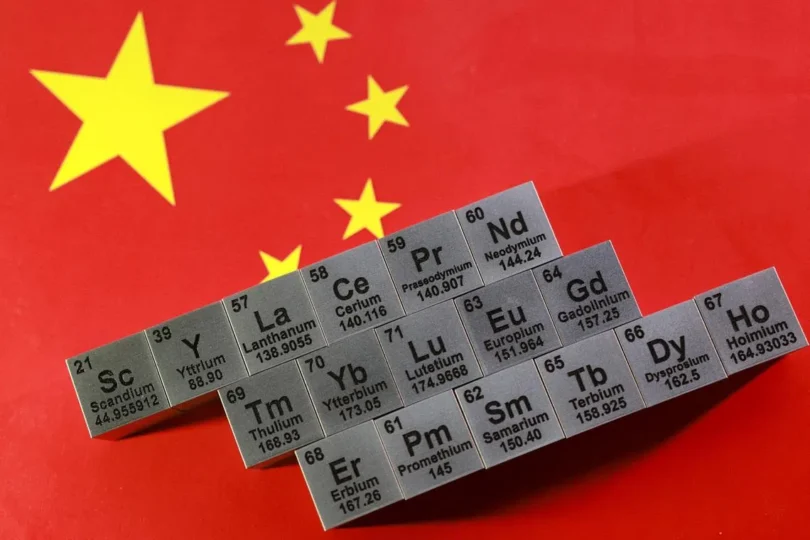
China mines around 70 per cent of the world’s rare earths and refines about 90 per cent of them, which are essential for high-tech manufacturing.
Ms Katayama suggested that it is important for countries to reduce their dependency on China for critical minerals. KYODO NEWS