
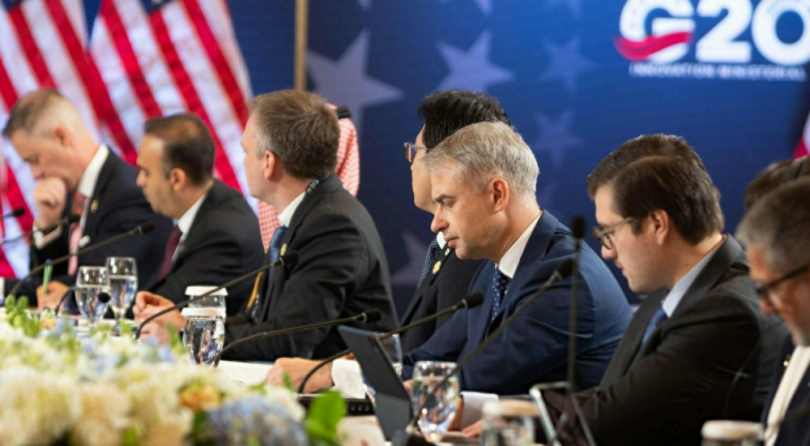
The G20 has backed stronger regulatory and supervisory frameworks for digital assets and stablecoins, citing the need to protect financial stability and maintain trust in monetary and payment systems.
The position was contained in the G20 Chair’s Statement issued after the second meeting of G20 Finance Ministers and Central Bank Governors held in Asheville, North Carolina, on August 31 and September 1, 2026.
The finance ministers and central bank governors said digital financial innovation, including digital assets, could support broad-based economic growth, while stressing the need for regulation as the sector expands.
“We recognize the transformative role that digital financial innovation, including digital assets, can play in supporting broad-based economic growth and the key role of the private sector in driving this innovation,” the statement said.
The G20 said countries must advance regulatory and supervisory frameworks that preserve financial stability while supporting innovation in digital finance and digital assets.
“We also recognize the importance of safeguarding financial stability and maintaining trust in the monetary and payment system in the face of this transformation,” it said.
The group committed to “advancing responsible and effective regulatory and supervisory frameworks” that would establish clear pathways for digital financial and digital asset innovation.
It said the regulatory approach would also take account of cross-border opportunities and challenges linked to digital assets.
On stablecoins, the G20 said it was looking forward to findings from the Financial Stability Board (FSB) on the cross-border implications of global stablecoin arrangements.
The G20 reaffirmed its commitment to improving cross-border payments and called on countries to expand large-value payment system operating hours and encourage the use of the harmonised ISO 20022 data model.
It also called for measures to facilitate the cross-border transmission of financial services-related data, while taking account of data security and domestic legal frameworks.
The G20 called on countries with significant virtual asset use to strengthen implementation of anti-money laundering and counter-terrorism financing standards.
It urged the Financial Action Task Force (FATF) to ensure that jurisdictions with significant virtual asset use implement FATF standards on virtual assets as a priority.
“We welcome the FATF’s efforts to strengthen public-private partnerships and enhance information-sharing to better detect and disrupt illicit finance at speed and scale,” the statement said.