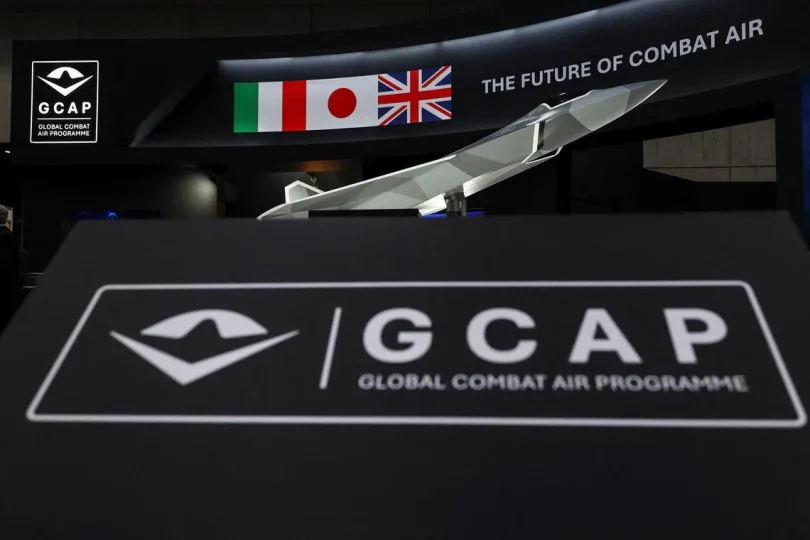
FARNBOROUGH, England, July 20 – Plans for the new Global Combat Air Programme fighter jet to be in service by 2035 will not change even if a new country joins the British, Italian and Japanese programme, the chief executive of the joint venture designing the plane said on Monday.
There has been mounting speculation that the trio could open the door to another country after a rival Franco-German fighter programme collapsed in June, leaving European defence alliances in flux and raising concerns about potential new delays.
Canada has reached a deal to become an observer to the programme, a source told Reuters last week and an announcement is expected on Tuesday, an initial step that does not require any financial commitment.
Marco Zoff, CEO of the Edgewing joint venture behind the plane, told reporters at the Farnborough Airshow that the timeline would not be derailed if new partners joined.
“There is such pressure and such direction from our three governments to keep the timing strict and to deliver that I think we will find a way to accommodate (…) not jeopardizing the final timeline,” he said.
Seeing China’s military expansion as a security threat, Japan is seen as particularly anxious to maintain the target of 2035, which is when its F-2 fighters are due to start retiring.
In a speech at Farnborough on Monday, Japanese Defence Minister Shinjiro Koizumi highlighted the importance of partnerships but did not address the timeline directly.
NET POSITIVE
The Edgewing venture developing GCAP, a sixth-generation stealth fighter, is jointly owned by BAE Systems, Leonardo and Japan Aircraft Industrial Enhancement, and it secured a £4.6 billion ($6.19 billion) contract from Britain, Italy and Japan earlier in July.
Italy’s defence minister said in June a new partner would help share that cost, and Leonardo told Reuters that Germany would be a particularly valid partner given its expertise. Saudi Arabia has also looked at GCAP.
Canada, which wants to diversify its defence spending away from the U.S., could deepen its GCAP cooperation at a later date if it joins.
Zoff said any new partner would be a “net positive”.
“We’re basically doing things quicker in respect to the standard times of industrial defence,” he said, adding that the focus now was on completing the concept assessment phase, due by the end of 2027, while conversations were ongoing about the future footprint for assembling the jet in the three countries. REUTERS