National

General Ike Nwachukwu At 86: A Life Of Service, Leadership And National Duty

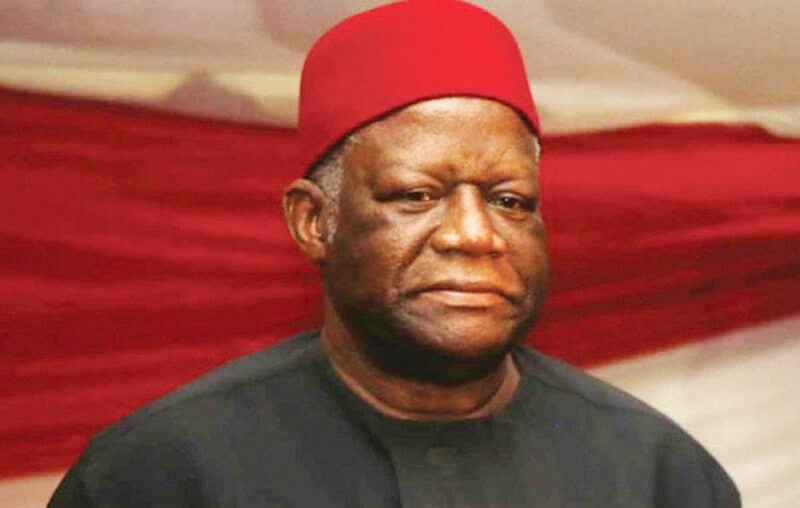
It is gratifying to celebrate General Ike Nwachukwu at 86. Eighty-six years is a remarkable milestone, but beyond the celebration of longevity lies a more compelling story—the story of a life that has traversed the military, politics, diplomacy, governance and community leadership.

Few Nigerians can claim such a diverse trajectory in public service.

General Nwachukwu has been a gallant soldier, a distinguished Army General, Governor of the old Imo State, Minister of Foreign Affairs, Minister of Labour and Productivity, Senator of the Federal Republic of Nigeria, and community leader. Each of these positions carries its own responsibilities, challenges and demands. Taken together, they constitute an extraordinary record of national engagement.

His journey is, in many respects, intertwined with the history of Nigeria itself.

I had admired this great Nigerian and quintessential leader, General Ike Nwachukwu, from afar, but I later had the rare privilege of working closely with him through the activities of the People’s Democratic Party (PDP) National Elders Committee for Peace and Reconciliation. The committee was constituted on Wednesday, July 1, 2009, under the leadership of Prince Vincent Ogbulafor, then National Chairman of the ruling PDP, as part of the party’s efforts to strengthen reconciliation and promote greater unity among its members.

The 15-member standing committee was chaired by General Ike Nwachukwu and included some of the country’s distinguished political leaders and statesmen. Among its members were Prof. Jerry Gana; Senator Danjuma Goje; Rt. Hon. Gabriel Suswan, representing the PDP Governors’ Forum; Chief James Ibori, representing former PDP governors; Chief Ebenezer Babatope; Ambassador Hassan Adamu; Alhaji Shuaibu Oyedokun; Dahiru Mangal; Hajia Zainab Maina, representing women; Ambassador Ladan Shuni, representing the National Chairman; and Senator Anyim Ude, among others.

Dr. Musa Babayo, then PDP Deputy National Secretary and Chairman of TETFUND, served as Secretary to the Committee.

The Committee was given a broad but important mandate: to build on the reconciliation efforts of the PDP National leadership; ensure the speedy resolution of misunderstandings that might still exist in some states; encourage past and present political office holders to work harmoniously in the interest of the party; and create an atmosphere of peace and concord within the party.

As Chairman, General Nwachukwu discharged his responsibilities with diligence, integrity and transparency. In my assessment, his stature, experience and reputation for fairness contributed significantly to the stability of the PDP during this period and gave credibility to the Committee’s reconciliation efforts.

At the time, I was the Special Assistant (Media and Public Affairs) to the National Chairman of the PDP. I was also chosen to serve as a member of the three-member secretariat of the Committee, alongside Sir Anicho Okoro and George Korgba, a former Registrar of the University of Jos and then Special Assistant to the PDP National Secretary.

It was General Nwachukwu who chose me to serve as the Media Coordinator of the Committee. It was a great opportunity to work with him and to observe closely a man whose reputation I had previously known largely from afar.

Working with General Nwachukwu brought his leadership qualities to life for me. I experienced first-hand his depth of intellect, discipline and extraordinary attention to detail. He was a man who took his responsibilities seriously. He could examine a document with remarkable concentration, ensuring that every comma was in its proper place.

That experience gave me a deeper appreciation of the man beyond the military uniform, political offices and impressive titles. Above all, General Nwachukwu is a man of integrity. He is humble almost to a fault, deliberate in his conduct, measured in his words and deeply conscious of the responsibilities that come with leadership. He is a great listener, the kind of person who gives careful attention to others before offering his own thoughts. Beneath the discipline of the soldier is a thoughtful and approachable personality, grounded in wisdom and quiet confidence.

He is also a devoted Christian, though not one defined by mere church-going. His faith is reflected more in the values he embodies and the way he conducts himself. In him, I have seen the virtues of wisdom, patriotism and selfless service. These qualities, to me, are as important as the offices he has occupied and the accomplishments associated with his name.

Perhaps this is what makes his journey particularly remarkable. The man has never appeared to me to be defined by the power or prominence that came with his positions. Rather, his positions seemed to be expressions of a deeper sense of duty—to his country, to his fellow citizens and to the causes he was called upon to serve.

An illustrious son of Ovim in Isuikwuato Local Government Area of Abia State, Ike Nwachukwu completed his secondary education at Yaba City College, Lagos, in 1959. His first professional engagement was in journalism. He became a reporter with the West African Pilot before joining the military, where he rose through the ranks to become a General.

His military career unfolded during one of the most turbulent periods in Nigeria’s history. The military was not merely a profession for his generation. At different points, it became an institution at the centre of national affairs, with officers called upon to assume responsibilities far beyond the traditional functions of the armed forces.

One of the less frequently discussed aspects of General Nwachukwu’s military career was his role in the difficult period following the Nigerian Civil War.

According to a profile published by Vanguard on May 20, 2022, while serving as Deputy Secretary of the Joint Military Council at Dodan Barracks, Lagos, in 1970, Ike Nwachukwu helped in the reabsorption and reintegration of returnee Igbo former Biafrans into the Nigerian Army Officers Cadre. Among those mentioned were Ndubuisi Kanu, Ebitu Ukiwe, Chijioke Kaja and Lambert Iheanacho.

Whatever broader views may be held about the post-war policies and decisions of the authorities at the time, the particular contribution attributed to General Nwachukwu is worthy of recognition. His role in helping these former Biafran officers return to the Army was a significant responsibility at a sensitive period in the country’s history.

He subsequently rose to other senior professional appointments in the Nigerian Army, including Military Secretary, Adjutant-General and Provost-Marshal, before serving as General Officer Commanding the 1st Mechanised Division. These appointments reflected the breadth of responsibility entrusted to him during his military career.

Following the December 31, 1983 coup that brought Major General Muhammadu Buhari to power, Ike Nwachukwu was appointed Military Governor of the old Imo State in January 1984.

As Governor, he oversaw the permanent relocation of Imo State University to its permanent site at Uturu, in what is now Abia State, after the university had operated from five different locations. It is today known as Abia State University.

Following the August 27, 1985 coup led by General Ibrahim Babangida against the Buhari regime, Nwachukwu returned to full military duties as Adjutant-General of the Nigerian Army. He subsequently served as Minister of Employment, Labour and Productivity from 1986 to 1987.

It was as Minister of Labour that he conceptualised and nurtured the establishment of the National Directorate of Employment (NDE). At a time when Nigeria was confronting severe economic difficulties, rising unemployment and the consequences of the Structural Adjustment Programme, the NDE was conceived as an institutional response to the growing challenge of unemployment.

Its mandate included designing and implementing employment-generation programmes, promoting attitudinal change, reducing poverty and enhancing wealth creation. The agency became an important part of Nigeria’s response to the unemployment crisis of the period.

In 1987, Ike Nwachukwu became the second Igbo officer to attain the rank of Major General in the Nigerian Army after Major General Johnson Thomas Umunnakwe Aguiyi-Ironsi.

His career subsequently took him into the highest levels of military command and national administration. He served as General Officer Commanding the 1st Mechanised Division of the Nigerian Army, one of the Army’s important operational formations.

His transition from military command to diplomacy produced another significant chapter in his career. He served as Minister of Foreign Affairs on two occasions, first from 1987 to 1989 and again from 1990 to 1993.

As Foreign Affairs Minister, he introduced the concept of “Economic Diplomacy” into Nigeria’s foreign policy, seeking to align the country’s diplomatic engagement more closely with its economic interests and development objectives. It reflected an understanding that diplomacy could also serve as an instrument for advancing Nigeria’s economic interests in the international system.

With the return of democratic rule in 1999, General Nwachukwu entered another phase of public service. He was elected to the Senate on the platform of the Peoples Democratic Party, representing Abia North Senatorial District, and served from 1999 to 2003.

In 2005, he was again called upon to participate in a national conversation when he became a member of the National Political Reform Conference (NPRC) convened by President Olusegun Obasanjo to deliberate on major political, constitutional and structural issues affecting Nigeria. General Nwachukwu served on the Sub-Committee on Models and Structure of Government.

His participation in national constitutional conversations had, however, begun much earlier. He was also involved in the 1994 Constitutional Conference convened under the military administration of General Sani Abacha. In 2014, he again participated in the National Conference convened by President Goodluck Jonathan and was appointed to lead the South-East delegation. His leadership role at that conference was widely reported at the time.

At 86, General Nwachukwu belongs to a generation whose personal histories provide a window into Nigeria’s past. He has witnessed the country’s transition from colonial rule to independence, the political crises of the First Republic, the civil war, successive periods of military intervention, the return to democratic governance and the continuing struggle to build a stable and prosperous nation.

That breadth of experience carries with it something that cannot be acquired from books or classrooms alone: institutional memory. As those who participated directly in the defining events of Nigeria’s early decades grow older, their experiences become increasingly valuable to younger Nigerians seeking to understand how the country arrived at its present circumstances.

National

General Ike Nwachukwu At 86: A Life Of Service, Leadership And National Duty

It is gratifying to celebrate General Ike Nwachukwu at 86. Eighty-six years is a remarkable milestone, but beyond the celebration of longevity lies a more compelling story—the story of a life that has traversed the military, politics, diplomacy, governance and community leadership.

Few Nigerians can claim such a diverse trajectory in public service.

General Nwachukwu has been a gallant soldier, a distinguished Army General, Governor of the old Imo State, Minister of Foreign Affairs, Minister of Labour and Productivity, Senator of the Federal Republic of Nigeria, and community leader. Each of these positions carries its own responsibilities, challenges and demands. Taken together, they constitute an extraordinary record of national engagement.

His journey is, in many respects, intertwined with the history of Nigeria itself.

I had admired this great Nigerian and quintessential leader, General Ike Nwachukwu, from afar, but I later had the rare privilege of working closely with him through the activities of the People’s Democratic Party (PDP) National Elders Committee for Peace and Reconciliation. The committee was constituted on Wednesday, July 1, 2009, under the leadership of Prince Vincent Ogbulafor, then National Chairman of the ruling PDP, as part of the party’s efforts to strengthen reconciliation and promote greater unity among its members.

The 15-member standing committee was chaired by General Ike Nwachukwu and included some of the country’s distinguished political leaders and statesmen. Among its members were Prof. Jerry Gana; Senator Danjuma Goje; Rt. Hon. Gabriel Suswan, representing the PDP Governors’ Forum; Chief James Ibori, representing former PDP governors; Chief Ebenezer Babatope; Ambassador Hassan Adamu; Alhaji Shuaibu Oyedokun; Dahiru Mangal; Hajia Zainab Maina, representing women; Ambassador Ladan Shuni, representing the National Chairman; and Senator Anyim Ude, among others.

Dr. Musa Babayo, then PDP Deputy National Secretary and Chairman of TETFUND, served as Secretary to the Committee.

The Committee was given a broad but important mandate: to build on the reconciliation efforts of the PDP National leadership; ensure the speedy resolution of misunderstandings that might still exist in some states; encourage past and present political office holders to work harmoniously in the interest of the party; and create an atmosphere of peace and concord within the party.

As Chairman, General Nwachukwu discharged his responsibilities with diligence, integrity and transparency. In my assessment, his stature, experience and reputation for fairness contributed significantly to the stability of the PDP during this period and gave credibility to the Committee’s reconciliation efforts.

At the time, I was the Special Assistant (Media and Public Affairs) to the National Chairman of the PDP. I was also chosen to serve as a member of the three-member secretariat of the Committee, alongside Sir Anicho Okoro and George Korgba, a former Registrar of the University of Jos and then Special Assistant to the PDP National Secretary.

It was General Nwachukwu who chose me to serve as the Media Coordinator of the Committee. It was a great opportunity to work with him and to observe closely a man whose reputation I had previously known largely from afar.

Working with General Nwachukwu brought his leadership qualities to life for me. I experienced first-hand his depth of intellect, discipline and extraordinary attention to detail. He was a man who took his responsibilities seriously. He could examine a document with remarkable concentration, ensuring that every comma was in its proper place.

That experience gave me a deeper appreciation of the man beyond the military uniform, political offices and impressive titles. Above all, General Nwachukwu is a man of integrity. He is humble almost to a fault, deliberate in his conduct, measured in his words and deeply conscious of the responsibilities that come with leadership. He is a great listener, the kind of person who gives careful attention to others before offering his own thoughts. Beneath the discipline of the soldier is a thoughtful and approachable personality, grounded in wisdom and quiet confidence.

He is also a devoted Christian, though not one defined by mere church-going. His faith is reflected more in the values he embodies and the way he conducts himself. In him, I have seen the virtues of wisdom, patriotism and selfless service. These qualities, to me, are as important as the offices he has occupied and the accomplishments associated with his name.

Perhaps this is what makes his journey particularly remarkable. The man has never appeared to me to be defined by the power or prominence that came with his positions. Rather, his positions seemed to be expressions of a deeper sense of duty—to his country, to his fellow citizens and to the causes he was called upon to serve.

An illustrious son of Ovim in Isuikwuato Local Government Area of Abia State, Ike Nwachukwu completed his secondary education at Yaba City College, Lagos, in 1959. His first professional engagement was in journalism. He became a reporter with the West African Pilot before joining the military, where he rose through the ranks to become a General.

His military career unfolded during one of the most turbulent periods in Nigeria’s history. The military was not merely a profession for his generation. At different points, it became an institution at the centre of national affairs, with officers called upon to assume responsibilities far beyond the traditional functions of the armed forces.

One of the less frequently discussed aspects of General Nwachukwu’s military career was his role in the difficult period following the Nigerian Civil War.

According to a profile published by Vanguard on May 20, 2022, while serving as Deputy Secretary of the Joint Military Council at Dodan Barracks, Lagos, in 1970, Ike Nwachukwu helped in the reabsorption and reintegration of returnee Igbo former Biafrans into the Nigerian Army Officers Cadre. Among those mentioned were Ndubuisi Kanu, Ebitu Ukiwe, Chijioke Kaja and Lambert Iheanacho.

Whatever broader views may be held about the post-war policies and decisions of the authorities at the time, the particular contribution attributed to General Nwachukwu is worthy of recognition. His role in helping these former Biafran officers return to the Army was a significant responsibility at a sensitive period in the country’s history.

He subsequently rose to other senior professional appointments in the Nigerian Army, including Military Secretary, Adjutant-General and Provost-Marshal, before serving as General Officer Commanding the 1st Mechanised Division. These appointments reflected the breadth of responsibility entrusted to him during his military career.

Following the December 31, 1983 coup that brought Major General Muhammadu Buhari to power, Ike Nwachukwu was appointed Military Governor of the old Imo State in January 1984.

As Governor, he oversaw the permanent relocation of Imo State University to its permanent site at Uturu, in what is now Abia State, after the university had operated from five different locations. It is today known as Abia State University.

Following the August 27, 1985 coup led by General Ibrahim Babangida against the Buhari regime, Nwachukwu returned to full military duties as Adjutant-General of the Nigerian Army. He subsequently served as Minister of Employment, Labour and Productivity from 1986 to 1987.

It was as Minister of Labour that he conceptualised and nurtured the establishment of the National Directorate of Employment (NDE). At a time when Nigeria was confronting severe economic difficulties, rising unemployment and the consequences of the Structural Adjustment Programme, the NDE was conceived as an institutional response to the growing challenge of unemployment.

Its mandate included designing and implementing employment-generation programmes, promoting attitudinal change, reducing poverty and enhancing wealth creation. The agency became an important part of Nigeria’s response to the unemployment crisis of the period.

In 1987, Ike Nwachukwu became the second Igbo officer to attain the rank of Major General in the Nigerian Army after Major General Johnson Thomas Umunnakwe Aguiyi-Ironsi.

His career subsequently took him into the highest levels of military command and national administration. He served as General Officer Commanding the 1st Mechanised Division of the Nigerian Army, one of the Army’s important operational formations.

His transition from military command to diplomacy produced another significant chapter in his career. He served as Minister of Foreign Affairs on two occasions, first from 1987 to 1989 and again from 1990 to 1993.

As Foreign Affairs Minister, he introduced the concept of “Economic Diplomacy” into Nigeria’s foreign policy, seeking to align the country’s diplomatic engagement more closely with its economic interests and development objectives. It reflected an understanding that diplomacy could also serve as an instrument for advancing Nigeria’s economic interests in the international system.

With the return of democratic rule in 1999, General Nwachukwu entered another phase of public service. He was elected to the Senate on the platform of the Peoples Democratic Party, representing Abia North Senatorial District, and served from 1999 to 2003.

In 2005, he was again called upon to participate in a national conversation when he became a member of the National Political Reform Conference (NPRC) convened by President Olusegun Obasanjo to deliberate on major political, constitutional and structural issues affecting Nigeria. General Nwachukwu served on the Sub-Committee on Models and Structure of Government.

His participation in national constitutional conversations had, however, begun much earlier. He was also involved in the 1994 Constitutional Conference convened under the military administration of General Sani Abacha. In 2014, he again participated in the National Conference convened by President Goodluck Jonathan and was appointed to lead the South-East delegation. His leadership role at that conference was widely reported at the time.

At 86, General Nwachukwu belongs to a generation whose personal histories provide a window into Nigeria’s past. He has witnessed the country’s transition from colonial rule to independence, the political crises of the First Republic, the civil war, successive periods of military intervention, the return to democratic governance and the continuing struggle to build a stable and prosperous nation.

That breadth of experience carries with it something that cannot be acquired from books or classrooms alone: institutional memory. As those who participated directly in the defining events of Nigeria’s early decades grow older, their experiences become increasingly valuable to younger Nigerians seeking to understand how the country arrived at its present circumstances.