
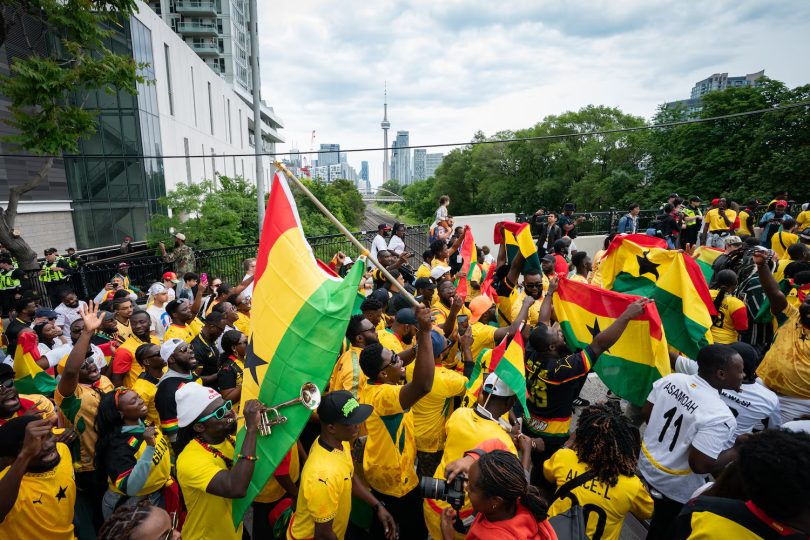
Ghanaian nationals have recorded the highest number of asylum applications among visitors who travelled to Canada for the 2026 FIFA World Cup, according to figures released by Immigration, Refugees and Citizenship Canada (IRCC). At least 175 people who entered Canada as visitors for the tournament have filed asylum claims, with……
Ghanaian nationals have recorded the highest number of asylum applications among visitors who travelled to Canada for the 2026 FIFA World Cup, according to figures released by Immigration, Refugees and Citizenship Canada (IRCC).
At least 175 people who entered Canada as visitors for the tournament have filed asylum claims, with Ghana accounting for the largest share among the countries involved.
Canada hosted 13 World Cup matches in Toronto and Vancouver and issued about 26,000 visitor visas to international fans who travelled to watch the tournament.
According to a report by The Globe and Mail, 25 Ghanaian nationals who listed the FIFA World Cup 26 as part of their visa applications later applied for refugee protection after arriving in Canada.
Ghana’s national team played Panama in Toronto on June 17 during the tournament.
The IRCC data showed that asylum claims were also submitted by citizens of several other African countries, including Egypt, Senegal, Kenya, Nigeria and Burundi.
Fifteen Egyptian nationals who travelled to watch Egypt’s match against New Zealand in Vancouver on June 21 later filed asylum claims, while 15 Colombian nationals also applied for refugee protection after attending their country’s group-stage match against Switzerland in Vancouver on July 7.
The figures showed that 10 Senegalese nationals sought asylum after entering Canada for the tournament. Senegal played its final group-stage match against Iraq in Toronto on June 26.
Some applicants came from countries that did not qualify for the World Cup. They included 15 Kenyans, 10 Chinese nationals, 10 Bangladeshis, 10 Nigerians, and five citizens each from Burundi, Nepal and Pakistan.
The IRCC also recorded five asylum claims from individuals who entered Canada through an electronic travel authorisation (eTA) rather than a visitor visa.
The development mirrors similar cases recorded during previous international sporting events, where some visitors used major tournaments as an opportunity to seek protection abroad.
During the 2010 Vancouver Winter Olympics, 22 people applied for asylum in Canada, including seven individuals identified by immigration officials as members of the Olympic community.
At the 2012 London Olympics, 82 athletes and officials sought asylum in the United Kingdom, including participants from Cameroon, Eritrea and Rwanda.