“The media cannot be gagged and will report what happens, including any malpractice,” the communiqué said.
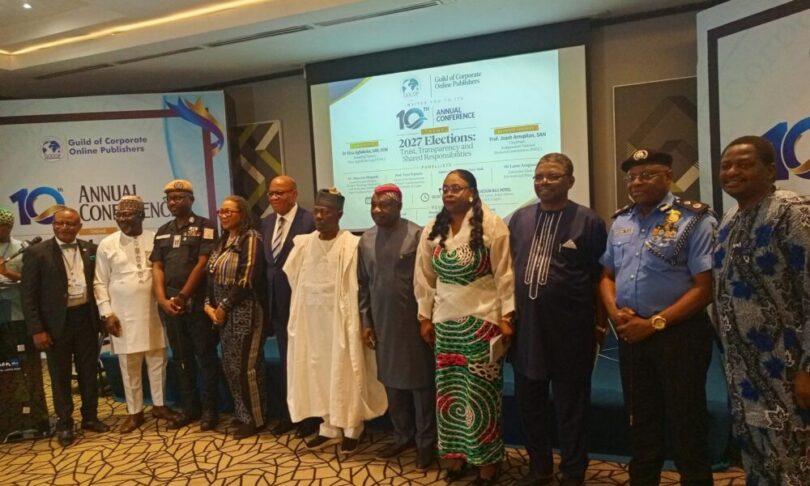
The Guild of Corporate Online Publishers (GOCOP) has called for a court interpretation of the Electoral Act 2026 and the Nigerian constitution for clarification on media reports of exit polls, election projections and independent result tallies ahead of the 2027 general elections.
It urged the Nigeria Union of Journalists (NUJ), GOCOP and other media organisations to seek the interpretation of Section 60 of the Electoral Act 2026 alongside Section 39 of the Nigerian constitution, which guarantees freedom of expression, including the right to receive and impart information.
GOCOP stated that judicial clarification would help establish how the provisions apply to election reporting, particularly the publication of exit polls, projections and independent tallies.
“The media cannot be gagged and will report what happens, including any malpractice,” the communiqué said.
The guild also called on the Independent National Electoral Commission (INEC) to provide timely information on election preparations, including logistics, technology tests and result management.
The guild proposed a digital channel through which editors could verify reports of incidents at polling units, security developments and technical problems before publication.
It said it welcomed a three-point pact proposed by INEC on fact-checking, editorial self-regulation and voter education.
The communiqué noted that GOCOP’s executive council would engage the commission on implementing the proposals without compromising editorial independence.
The communiqué also urged INEC to work with relevant authorities to ensure that electoral offenders were prosecuted and the outcomes made public.
On voter education, the guild called for electoral laws, regulations and guidelines to be translated into major Nigerian languages. It recommended accessible materials for persons with disabilities, including braille ballot guides, tactile posters and sign-language support.
It also proposed local-language broadcasts and town hall meetings to reach voters in rural and riverine communities.
The guild urged INEC to provide clear information on Permanent Voter Card (PVC) collection centres, opening hours and requirements.
This newspaper had reported that the collection of PVCs was scheduled to begin on 9 October.
GOCOP warned that fake news, unverified leaks and artificial intelligence-generated deepfakes could undermine confidence in the 2027 elections, heighten tensions and discourage voter participation.
It urged members to verify election-related information before publication and avoid circulating unverified polling-unit results, altered result sheets and inflammatory claims.
“Unverified polling-unit results, altered result sheets and inflammatory speculations have no place on GOCOP platforms,” the communiqué said, warning that breaches could attract sanctions under the guild’s code.
It also cautioned publishers against prioritising speed over accuracy, using clickbait or allowing partisan and proprietorial interests to influence election coverage.
The guild said reports of operational delays should be supported by verified information and sufficient context rather than presented as evidence of wider electoral failure without proof.
The conference urged the National Assembly to enact legislation to improve women’s participation and representation in the electoral process.
It also called on political parties to make candidate selection more transparent and address consensus arrangements that exclude women.
On the economy, GOCOP said the cost of living should be a major issue in the campaigns. It called for clearer explanations of fuel subsidy policy and domestic crude pricing, saying conflicting accounts had left Nigerians uncertain about candidates’ positions.
The communiqué also referred to Executive Order 9 on NNPC Limited and the debate over domestic crude pricing.
The guild said technology alone could not guarantee credible elections without public confidence in electoral institutions.
It cited a survey presented at the conference which reportedly found that only 38 per cent of Nigerians believed in the credibility of elections. However, the communiqué did not identify the survey or provide details of its methodology.
GOCOP also said INEC had outlined structural, technological and logistical preparations for the polls, including improvements to result-integrity systems, the use of artificial intelligence in data auditing and cyber defences developed with partners, including Google and Microsoft.
On election security, the guild said the Nigeria Police Force had reported relatively peaceful polls since February 2026, with no shootings, attributing this to intelligence-led operations.
It urged the police and other security agencies to remain professional, impartial and guided by the law throughout the electoral process.
The guild also called on eligible voters to collect their PVCs, participate in the elections and hold elected officials accountable. It urged Nigerians to verify claims before sharing them.
Citing Botswana’s 2024 election, in which the governing Botswana Democratic Party lost power after 58 years, GOCOP said credible electoral institutions could support peaceful political change.