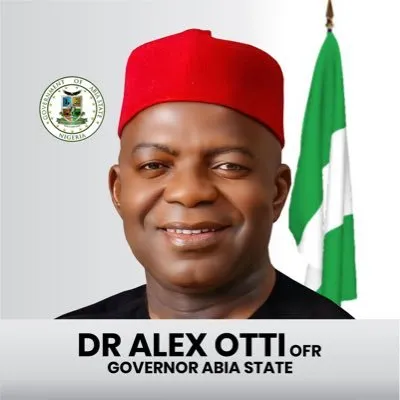
Politics in Nigeria is gradually shifting from the era where rhetoric alone determined electoral success. Across the country, many citizens are becoming more interested in leaders who can demonstrate competence, accountability, and measurable results. If this trend continues, Abia State Governor, , may emerge as one of the strongest presidential contenders ahead of the 2031 general election.
When Alex Otti assumed office as governor of Abia State in 2023, expectations were high. Years of underdevelopment had left many residents demanding real change rather than political promises. Within a relatively short period, his administration began pursuing infrastructure renewal, improving the state’s financial management, renovating schools and hospitals, investing in security, and restoring public confidence in governance.
Whether one agrees with every policy of his administration or not, there is a growing perception among many Nigerians that Abia is experiencing a different style of leadership—one that prioritizes execution over political drama. This perception is perhaps one of Otti’s greatest political assets.
History has shown that Nigerians often reward governors who establish strong records in their states. Former governors such as Bola Tinubu, Muhammadu Buhari (though a former military Head of State before becoming governor), and others built national political influence largely on the strength of their leadership narratives. Alex Otti appears to be gradually building a similar reputation centered on performance.
Another factor that could strengthen his chances in 2031 is his background outside traditional politics. Before entering public office, Otti had a successful career in banking and management. This gives him the image of someone who understands economic reforms, financial discipline, and institutional management—qualities many Nigerians increasingly demand as the country battles inflation, unemployment, and economic uncertainty.
Perhaps more importantly, his leadership style has attracted attention beyond Abia State. In today’s digital age, governance is no longer judged only by residents of a particular state. Through social media and online news platforms, projects and reforms quickly gain national visibility. Every completed road, renovated school, improved healthcare facility, or transparent financial decision contributes to building a national political brand.
Regional politics may also work in his favor. Since Nigeria returned to democratic rule in 1999, the South-East has produced no elected president. By 2031, conversations about equity, inclusion, and zoning may become even stronger. If Nigerians begin searching for a credible candidate from the region with an impressive governance record, Alex Otti could naturally become part of that conversation.
However, good governance alone will not guarantee a presidential victory. Nigerian presidential elections are complex. They require a formidable political structure, broad national acceptance, alliances across all six geopolitical zones, substantial grassroots support, and the ability to navigate the country’s diverse ethnic, religious, and political interests. Performance in one state, while important, is only one piece of the larger puzzle.
Furthermore, sustaining the momentum will be crucial. Nigerians will judge Otti not only by his first few years in office but by the lasting impact of his administration. Delivering consistent improvements in infrastructure, education, healthcare, security, job creation, and economic development throughout his tenure would strengthen any future national ambition.
Ultimately, if Alex Otti continues to govern with transparency, fiscal responsibility, and visible results, his name is likely to feature prominently whenever discussions about credible presidential hopefuls for 2031 begin. Nigerians are increasingly looking for leaders who can point to tangible achievements rather than campaign slogans.
The road to the Presidency remains long and uncertain, and many political dynamics between now and 2031 could reshape the landscape. Yet one lesson remains constant: good governance creates political capital. If Alex Otti continues on his current path and successfully translates state-level achievements into a compelling national vision, he may well position himself as one of the leading contenders for Nigeria’s highest office in 2031.
By: Godwin Offor