
There is a point at which the debate over history ceases to be an academic exercise and becomes a contest over identity, memory and ownership.
That is where the current argument surrounding the words “Igbo,” “Ibo” and “Ugbo”, as well as the historical traditions linking Ugbo, Ile-Ife and other ancient Yoruba communities, appears to be heading.
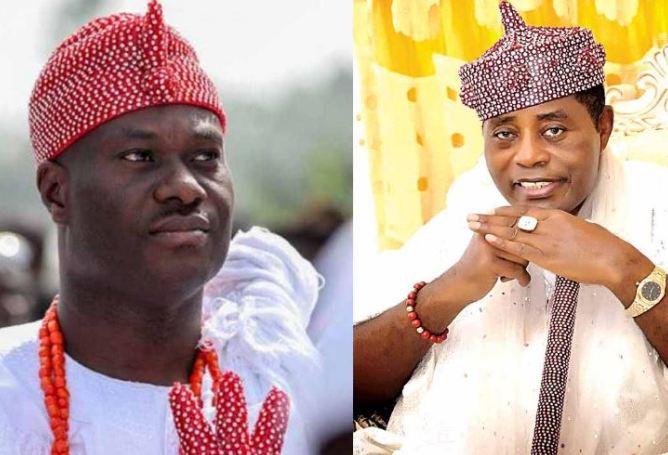
A claim attributed to Ope Oluwa has reignited an old and sensitive question: Who owns the history of Ugbo, and can the traditions surrounding Ile-Ife, Moremi and the Ugbo people legitimately be transferred to the history of the Igbo people of southeastern Nigeria?
These are not questions that should be settled by insults, ethnic triumphalism or social-media shouting matches. They deserve evidence.
One argument advanced by Oluwa is that “Ibo,” rather than “Igbo,” was historically used by some prominent members of the ethnic group, particularly in older writings, and that the spelling “Igbo” became more prominent in later decades. The argument further suggests that the similarity between Igbo and Ugbo has been exploited to create a historical connection between the Igbo of southeastern Nigeria and the Ugbo people associated with present day Ondo State.
Whether every aspect of that argument survives historical scrutiny is another matter.
But one thing is certain: similarity in names does not, by itself, establish common ancestry.
This is precisely where the debate requires intellectual discipline.
The history of Nigeria is filled with names that sound alike but have completely different origins, just as communities with different names can share ancient migration traditions. Oral history, linguistic evidence, archaeology, anthropology and written records must therefore be examined together before anyone can make sweeping claims about the origins of a people.
The Ile-Ife tradition is particularly important.
For generations, Yoruba oral traditions have preserved accounts involving Moremi, Ugbo and Ile-Ife. The story of Moremi is deeply embedded in Yoruba historical and cultural consciousness, while Ugbo traditions remain particularly significant to the people of Ondo State.
The attempt by any modern ethnic group to appropriate, reinterpret or monopolise such traditions deserves scrutiny.
But scrutiny must apply to everybody.
It would be equally dangerous to take a complex oral tradition and declare, without sufficient evidence, that an entire modern population deliberately changed its name or manipulated history simply to appropriate another people’s ancestry.
History is more complicated than that.
Names evolve. Languages change. Communities migrate. Colonial administrators recorded indigenous names inconsistently. Scholars used different spellings. Political movements later adopted particular identities. Newspapers, books and government documents reinforced some spellings over others.
That is why the fact that an earlier writer used “Ibo” does not automatically prove that “Igbo” is a recent invention. Nor does the modern prevalence of “Igbo” automatically erase the historical usage of “Ibo.”
The same caution must be applied to Ugbo.
The Ugbo people of present-day Ondo State have their own traditions, historical consciousness and claims regarding their relationship with Ile-Ife. Those traditions should neither be dismissed nor casually rewritten to suit another people’s narrative.
At the same time, historical claims involving the Igbo, Edo, Anioma, Ika, Urhobo, Isoko and other peoples cannot responsibly be reduced to a simple story of one group “jumping” into Ile-Ife to steal another group’s history.
The Niger-Benue region has witnessed centuries of migration, interaction, intermarriage, warfare, trade and cultural exchange.
Nigeria’s peoples did not develop in sealed compartments.
That reality should make us more interested in evidence, not less.
OBI OF ONITSHA
The comments attributed to the Obi of Onitsha have added another dimension to the controversy.
The argument being made is that the monarch’s references to Ile-Ife, Moremi and Ugbo constitute an attempt to place the history of the Igbo people of southeastern Nigeria inside a tradition that properly belongs to the Ugbo people of present-day Ondo State.
That is a serious allegation.
But before such a conclusion is reached, the monarch’s exact words, the historical source upon which he relied and the context of his statement must be examined.
It is not enough to ask rhetorically: “What connection is there?”
The better question is: What does the evidence say?
If there is a documented historical, linguistic or migratory connection, let scholars produce it.
If there is none, let that also be established through credible scholarship.
What Nigeria does not need is another ethnic contest in which every community selects only those fragments of history that flatter its own identity.
AZIKIWE AND ACHEBE
The references to Nnamdi Azikiwe and Chinua Achebe also require careful handling.
Historical figures used different spellings and descriptions of ethnic identity at different times and in different contexts. The fact that a writer or political figure used “Ibo” is valuable evidence about the usage of the period, but it does not, standing alone, settle the entire linguistic and historical debate over “Ibo” and “Igbo.”
Achebe’s works are particularly important because his literature deliberately engaged with Igbo society, language, customs, worldview and colonial encounter.
But even Achebe’s terminology should be understood within the linguistic and historical context of his time rather than weaponised as a final verdict in a contemporary ethnic argument.
The same principle applies to Azikiwe.
Historical personalities should be sources of evidence not ammunition for ethnic warfare.
The real danger is not whether one person writes “Ibo” and another writes “Igbo.”
The real danger is what happens when Nigerians begin to believe that history is an ethnic property that must be conquered.
If Ugbo history belongs to the Ugbo people, it should be preserved and properly documented.
If the traditions of Ile-Ife establish particular relationships among ancient communities, those traditions deserve serious scholarship.
If Igbo oral traditions establish their own migration narratives, those traditions deserve the same respect.
And where the evidence is uncertain, intellectual honesty requires us to say: we do not know yet.
That is not weakness.
That is scholarship.
Nigeria has suffered enough from the politics of identity. We should not turn our ancient histories into another battlefield.
The answer to historical disagreement is not to shout louder. It is to dig deeper.
Let historians examine the oral traditions.
Let linguists examine the languages.
Let archaeologists examine the material evidence.
Let anthropologists examine the cultures.
Let historians compare ancient accounts with colonial records and contemporary scholarship.
And let every community tell its story without deliberately rewriting another community’s history.
Because history is not something that becomes true merely because a powerful person repeats it.
Neither does it become false because another person dislikes it.
The truth must survive the argument.
And when the evidence finally speaks, every Nigerian Yoruba, Igbo, Edo, Ijaw, Hausa, Fulani, Itsekiri, Urhobo, Isoko, Anioma, or otherwise must have the intellectual courage to listen.
Our histories may differ. Our memories may collide. But truth should never become the casualty.
By The Press Nigeria Editorial Board