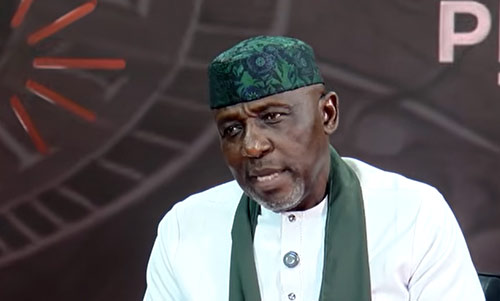
*Says “90% Of People Holding Political Offices In Nigeria Were Not Chosen By The People”
Former Imo State Governor, Senator Rochas Okorocha, has declared that the Federal High Court judgment nullifying Governor Hope Uzodimma’s emergence as the All Progressives Congress (APC) candidate for the Imo West Senatorial District has vindicated his position that he won the party’s primary election, insisting that the documents he presented before the court were genuine.
Okorocha, who spoke during a television interview following the judgment, described the ruling as a victory for justice and democracy, accusing Uzodimma of relying on documents allegedly containing inconsistencies to claim the APC senatorial ticket.
The Federal High Court sitting in Abuja had nullified Uzodimma’s emergence as the APC candidate for the Imo West senatorial election scheduled for January 16, 2027, and directed the Independent National Electoral Commission (INEC) to recognise Okorocha as the party’s candidate.
The court held that the evidence presented established Okorocha as the winner of the APC primary election conducted on May 18, 2026.
The judgment followed a legal dispute arising from conflicting records of the primary election, with both politicians claiming to have secured the party’s nomination.
INEC’s original report recognised Uzodimma as the winner with 230,464 votes against Okorocha’s 1,098 votes, while another disputed document subsequently emerged indicating that Okorocha won with 150,780 votes.
The conflicting documents became central to the litigation, with INEC referring one of the disputed records to security agencies for investigation.
Reacting to the judgment, Okorocha said the court’s decision demonstrated that even a sitting governor could lose a political contest when the judiciary examined the evidence independently.
“The ruling today is indeed something very interesting. A new chapter in Nigerian political story that a sitting Governor could lose primaries, and that a Chairman of APC governors’ forum, put in that big way, because justice spoke loud and spoke very courageous,” he said.
The former governor maintained that his satisfaction was not merely because the court declared him the rightful candidate but because the judgment, in his interpretation, addressed questions surrounding the authenticity of the documents he relied upon.
He said allegations and speculation concerning the disputed primary election had created the impression that his documents were questionable.
According to him, the judgment vindicated his position.
He further alleged that the documents relied upon by Uzodimma were questionable, suggesting that the governor’s camp had attempted to substitute the authentic results of the primary election.
Okorocha, however, acknowledged that the governor retained the constitutional right to challenge the judgment on appeal.
Explaining the circumstances surrounding the conflicting election results, Okorocha argued that INEC does not conduct political party primaries but merely monitors the exercises and receives relevant documents from political parties.
“At no point does INEC conduct party primaries,” he said.
“INEC is only a custodian of whatever the party deposits.”
He claimed that the APC had directed that the results should not be announced at the state level because the party intended to make the official announcement.
According to him, the records initially transmitted from Imo State to INEC headquarters favoured him, but the results subsequently submitted for publication differed from those records.
Okorocha said he obtained certified copies of the documents relating to the primary election directly from INEC after making the necessary application and payment.
“Remitta can’t lie,” he said, referring to the payment platform through which he obtained the documents.
He maintained that the records he obtained from INEC preceded the documents subsequently presented in support of Uzodimma’s nomination.
According to him, his certified documents were obtained on July 22, 2026, while the competing document was dated August 22, 2026.
He described the latter as an afterthought.
The former governor identified several alleged inconsistencies in the documents relied upon by Uzodimma, which he said were examined during the proceedings.
He claimed that one document indicated that the APC primary election was conducted on May 16, 2026, whereas the actual exercise took place on May 18, 2026.
According to him, the discrepancy raised questions about the authenticity of the document.
“So it means his election was conducted two days before the election. That’s an irregularity,” he said.
Okorocha also questioned a document describing Uzodimma as a consensus candidate, arguing that such a description was inconsistent with the conduct of a direct primary election in which votes were allocated to competing aspirants.
“How could you have been declared a consensus candidate when I had marks?” he asked.
He further alleged that letters associated with the Resident Electoral Commissioner contained differences in their certification and the authorities to whom they were addressed.
According to him, the document supporting Uzodimma was certified through the APC, while his own was obtained as an INEC-certified record.
Okorocha also alleged that the results submitted in support of Uzodimma’s nomination appeared to have been completed by one person across the 12 local government areas of Imo West.
He claimed that some of the records contained incomplete ward results and other irregularities.
By contrast, he maintained that the results supporting his nomination were consistent.
“Assuming, but not conceding, that both documents were actually certified by INEC, one is irregular. One is saying consensus, while there was a direct primary. One is saying the election took place on the 16th, while my own says it took place on the 18th,” he said.
Okorocha argued that the alleged inconsistencies supported his contention that the documents presented in favour of Uzodimma did not accurately reflect the outcome of the primary election.
He also revisited the political rivalry between himself and the incumbent governor, accusing Uzodimma of being excessively interested in acquiring political power.
“You see, you cannot change people’s character. You are who you are, and to be honest to you, Hope has never won any election,” he said.
The former governor referred to the disputed 2019 Imo governorship election, maintaining that the circumstances surrounding Uzodimma’s emergence as governor continued to raise questions in his mind.
Uzodimma became governor following a Supreme Court judgment in January 2020, which overturned the election of Emeka Ihedioha.
Okorocha criticised what he described as irregularities in Nigeria’s electoral system, alleging that political influence and manipulation sometimes determine who emerges as a candidate or occupies public office.
He argued that politicians should obtain public support through legitimate democratic processes rather than rely on their positions or influence.
Asked why he decided to challenge Uzodimma’s nomination, Okorocha explained that he approached the court after discovering that the party had recognised the governor despite the documents he possessed indicating that he had won the primary election.
“I got my documents and I said that I won the election. Then I went to court when they declared him that he was a winner. I was shocked,” he said.
The former governor also questioned the political implications of Uzodimma seeking election to the Senate while still serving as governor.
He noted that Uzodimma’s current tenure was expected to end in January 2028, approximately one year after the scheduled senatorial election.
Referring to Section 183 of the 1999 Constitution, Okorocha argued that the Constitution did not contemplate a governor abandoning an existing mandate to assume another elected office before completing the tenure.
He maintained that a person could not simultaneously occupy two incompatible public offices.
However, his interpretation of the constitutional provision remains a legal argument rather than a separate judicial determination established by the interview.
The former governor also rejected suggestions that his lawsuit was filed outside the constitutional period prescribed for pre-election matters.
During the interview, he was confronted with the argument attributed to Uzodimma’s legal team that a challenge to a party primary must be instituted within 14 days of the relevant event, whereas his action was said to have been commenced 87 days after the primary.
Okorocha dismissed the argument, insisting that the applicable period should be calculated from when an aggrieved aspirant became aware of the event giving rise to the complaint.
He explained that he initially believed he had won the primary election because the certified documents in his possession supported that position.
According to him, he could not reasonably have challenged an outcome he believed was already in his favour.
“I can’t sue myself as a winner,” he said.
He maintained that he became aware of the dispute only after discovering that Uzodimma’s name had been submitted or published as the APC candidate.
The question of whether the action complied with the constitutional limitation period could become an issue in any appeal against the judgment.
On the possibility of Uzodimma challenging the ruling, Okorocha expressed confidence that the judgment would withstand further judicial scrutiny.
“I don’t think Hope will appeal, I don’t think so, because it’s too glaring,” he said.
“But if he appeals, well, let’s see. He has a right of appeal anyway.”
Although Uzodimma has indicated an intention to challenge the judgment, Okorocha insisted that the Federal High Court’s decision had settled the dispute for the time being.
“No, no, for now it has settled. For now, I’m the APC [candidate],” he said.
He maintained that the judgment established his present position as the party’s candidate, subject to any subsequent decision by a superior court.
The former governor also dismissed suggestions that the APC structure in Imo State was opposed to his candidacy.
He claimed to have played a foundational role in establishing the party in the state and challenged the legitimacy of some individuals speaking against him in the name of the APC.
“Which APC in Imo? I was the founding father of this party. The structure of APC in Imo State is Rochas,” he said.
He also questioned why the Imo State Government would involve itself in a dispute concerning the nomination of a political party candidate.
According to him, the contest was between two aspirants seeking the APC ticket and not between himself and the state government.
“What does state government have to do with election between me and Hope as a person? It’s not Imo State government contesting for election. It is Hope, for crying out loud,” he said.
Okorocha further criticised what he described as the excessive influence of political officeholders over party structures and electoral processes.
He claimed that many people occupying political offices in Nigeria did not emerge through the genuine choice of voters.
“If democracy is practised the way it should be practised, 90% of people holding office in Nigeria cannot hold office,” he said.
“Most of them are not through the choice of people. These are people who are imposed, opportunists who find their way in.”
Asked whether the criticism also applied to him, Okorocha rejected the suggestion and maintained that his political success had been based on public acceptance.
He insisted that electoral victories should reflect the will of the electorate rather than the influence of political institutions or security agencies.
The former governor also accused Uzodimma of failing to maintain a close relationship with ordinary residents of Imo State.
He argued that effective political leadership required regular engagement with citizens rather than remaining isolated in government offices.
According to him, political leaders must demonstrate concern for the people through direct interaction and visible participation in community affairs.
Okorocha contrasted his criticism of Uzodimma with his assessment of President Bola Tinubu, whom he described as a politician with a longstanding connection to ordinary Nigerians.
He maintained that Tinubu had demonstrated an ability to relate to people across different communities and political backgrounds.
The former governor subsequently turned to the 2027 presidential election, urging political leaders and voters in the South-East to support Tinubu’s re-election bid.
He argued that the Igbo should adopt a strategy of political alliances rather than allow regional sentiments to determine their participation in national politics.
According to him, the South-East risks weakening its influence in national political negotiations if it continues to operate without effective alliances with other regions.
Okorocha said he had previously met with Igbo stakeholders who initially rejected the suggestion that they should support Tinubu.
He explained that after discussing the political implications of their position, some of those present became more receptive to his argument.
The former governor maintained that Tinubu had longstanding personal and political relationships with prominent Igbo individuals, particularly in Lagos.
He argued that those relationships should be considered when assessing the President’s political engagement with the South-East.
According to Okorocha, the region should move beyond what he described as emotional political decisions and embrace strategic cooperation.
“We must do politics of strategy, strategic alliance,” he said.
He cited Tinubu’s support for former President Muhammadu Buhari in 2015 as an example of political compromise and alliance-building.
Okorocha argued that Tinubu could have pursued his own presidential ambition at the time but chose to support Buhari, a decision he said contributed to the APC’s electoral victory.
He maintained that the South-East should adopt a similar approach by supporting Tinubu in 2027 to strengthen its prospects in future presidential contests.
The former governor said he had previously supported the agitation for an Igbo presidency and had personally pursued the ambition.
However, he argued that political circumstances had changed and that the region should reconsider its strategy.
“Why should Igbo gamble four years?” he asked.
He warned that the South-East could face political isolation if it refused to build alliances with other regions.
“We cannot, as an island, make any meaningful political impact,” he said.
Okorocha also addressed the presidential ambition of former Labour Party candidate Peter Obi, describing him as a close personal friend while explaining why he preferred Tinubu for the 2027 election.
He maintained that his position was not based on personal hostility towards Obi but on his assessment of the political opportunities available to the South-East.
“I don’t want to support Obi or he’s my brother. I love him more than you can think, and if you ask him today, I’m one of his best friends,” he said.
“But what I’m thinking about, we should be wiser. We should not gamble with the future of our children.”
He urged the region to reconsider its political approach.
“We should better stop protesting and start partnership,” Okorocha declared.
The former governor argued that supporting Tinubu could place the South-East in a stronger position to negotiate for political power after the President completes a possible second term.
He suggested that Tinubu, having served one term, would have only four more years if re-elected, making an alliance with him potentially more advantageous than supporting another candidate who could seek two terms.
According to him, the South-East should evaluate presidential candidates based on the long-term political benefits of supporting them.
He also addressed the possibility of supporting former Vice-President Atiku Abubakar, maintaining that Tinubu presented a more strategic option for the region.
Okorocha argued that political negotiations should take account of presidential tenure, regional relationships and the prospects of future power rotation.
He acknowledged that the South-East had previously supported presidential candidates from other regions without necessarily obtaining the political benefits anticipated.
However, he insisted that this should not discourage the region from pursuing alliances.
The former governor also expressed support for the idea of a broad political coalition involving individuals from different parties.
He said he was not formally a member of what was described during the interview as a rainbow coalition but considered the idea useful.
“No, I’m not a member, but I commend that idea. It’s a wise idea. There’s nothing wrong with it,” he said.
Okorocha credited the Minister of the Federal Capital Territory, Nyesom Wike, with promoting the approach and said political leaders should be willing to support candidates outside their parties when they believed such candidates could provide effective leadership.
According to him, governance should sometimes take precedence over rigid party loyalties.
He suggested that political figures in the Peoples Democratic Party and other parties could support Tinubu without necessarily abandoning their political identities.
The former governor argued that such cooperation could strengthen the South-East’s bargaining position within the national political system.
He also compared the APC’s electoral performance in the South-East during the Buhari administration with its performance under Uzodimma’s political leadership.
Okorocha claimed that he helped Buhari secure at least 25 per cent of the votes in the region during an earlier election, while alleging that the party performed poorly in the area during the last presidential election.
He maintained that effective political mobilisation required credibility and public acceptance.
Turning to his own senatorial ambition, Okorocha expressed confidence that he would not need an extensive campaign to secure victory in Imo West.
“I don’t need to campaign. What you have done speaks for you. I’m not a new person,” he said.
He argued that his previous record in public office and political relationships would influence voters.
Okorocha also said he expected to campaign alongside Tinubu and work with political leaders across the South-East to strengthen support for the President.
He identified Uzodimma’s political ambition as an obstacle to cooperation among some political leaders in the region.
According to him, the governor was seeking to occupy or influence too many political positions simultaneously.
He criticised Uzodimma’s involvement in party leadership, campaign structures and electoral activities outside Imo State.
“Sit down and govern your people,” Okorocha said.
He also rejected suggestions that he needed to form alliances with other political figures in Imo State to defeat Uzodimma.
According to him, the governor’s political influence was being exaggerated because of his current office.
Okorocha further alleged that he and members of his family had experienced intimidation and violence during the political rivalry.
He claimed that armed individuals associated with the governor had attacked a location where he was present and that he had been warned to leave for his safety.
The former governor also alleged that some of his relatives had suffered gunshot injuries in separate incidents connected, in his account, to political disputes.
He referred to the killing of APC politician Ahmed Gulak in Imo State while discussing what he described as insecurity and political violence in the state.
However, Okorocha did not present independently verified evidence during the interview establishing Uzodimma’s responsibility for the incidents he mentioned.
The allegations remain his claims and should not be treated as established findings against the governor.
Okorocha nevertheless maintained that the rivalry had caused him personal distress.
“Personally, I have suffered so much humiliation from his end,” he said.
He described Uzodimma as a politician who was excessively determined to retain or acquire power.
“He’s very aggressive about power. He can do anything to get power,” Okorocha alleged.
The presenter acknowledged that the allegations made during the interview had not been tested and indicated that Uzodimma’s camp should be afforded an opportunity to respond.
The dispute originated from a suit filed by Okorocha at the Federal High Court in Abuja on August 13, 2026, through his counsel, O. J. Aboje.
The suit, marked FHC/ABJ/CS/1854/2026, named INEC, Uzodimma and the APC as defendants.
Okorocha sought a declaration that the publication of Uzodimma’s name as the APC candidate for Imo West was unconstitutional and invalid.
He also asked the court to direct INEC to recognise and publish his name as the duly nominated candidate and restrain the APC and Uzodimma from presenting the governor as the party’s candidate.
In addition, he raised questions concerning the constitutional implications of Uzodimma seeking a Senate seat while serving a governorship tenure expected to end on January 14, 2028.
In an affidavit sworn by his son, Amen Rochas, Okorocha maintained that the APC conducted a direct primary election on May 18, 2026, in which he secured 150,780 votes against Uzodimma’s 102,158 votes.
However, the results subsequently announced by the party’s primary election committee declared Uzodimma the winner with 230,464 votes.
The conflicting figures formed part of the dispute eventually brought before the Federal High Court.
With the court now ruling in Okorocha’s favour, the former governor maintains that he is the lawful APC candidate for the January 2027 senatorial election.
Nevertheless, Uzodimma’s indicated intention to appeal means the dispute may not have reached its final judicial conclusion.
Any appeal could require a superior court to consider the validity of the competing primary election records, the timing of Okorocha’s lawsuit and the legal basis of the Federal High Court’s decision.
For Okorocha, however, the immediate importance of the judgment extends beyond his senatorial ambition.
He described the ruling as a demonstration that political influence does not necessarily determine the outcome of judicial proceedings.
He maintained that the decision had strengthened his confidence in the judiciary and provided an opportunity for the APC to resolve its internal disputes ahead of the 2027 elections.
The former governor concluded that the judgment represented a political breakthrough for him and his supporters, insisting that the court had vindicated his claim to the Imo West senatorial ticket.
.. “Hope Uzodimma Has Never Won Any Election” — Okorocha Dares Uzodimma To Appeal Imo West Judgment, Insists Justice Has Prevailed … NewsNGR.