More than 10,000 people have been infected with cholera in a huge outbreak of the illness in Nigeria. The cases are focused on the conflict-hit Borno state in the north-east of the country. Cholera is an infection that can cause severe diarrhoea and is mainly found in parts of Africa and Asia in areas without a clean water supply.
The illness is endemic and seasonal in Nigeria where only 14% of its population of more than 200million have access to safely managed drinking water supply services, according to government data from 2020. The situation is sometimes worse in Borno, both in the state capital of Maiduguri, which is densely populated, and in remote communities with poor sanitation and hygiene due in part to being out of the close reach of health authorities. Doctors Without Borders (MSF) said at least 46 people have died from the infection at its medical facilities since the outbreak began in early May.
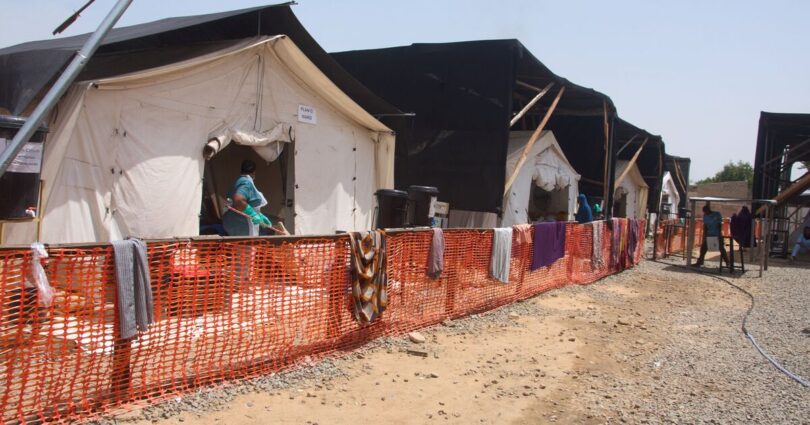
The medical charity, which is working alongside state health authorities, has set up a treatment centre in Maiduguri as clinics struggle to deal with a surge in cases.
Stuart Alexander Zimble, MSF’s Head of Country Office in Nigeria, told The Telegraph: “When we opened our cholera treatment centre, it was with 120 beds. Right now we’re at about 251 beds… in some of the [treatment centres], there is even over occupancy.”
He added: “In the last couple of days, there’s [been] a stabilisation in the numbers… but it’s still a situation we’re concerned about.”
Mr Zimble said Nigeria’s health ministry has requested more than three million oral cholera vaccine doses.
Earlier this month, MSF reported 74 people had died since the cholera outbreak began.
Communities in Borno have been left with fragile health systems following nearly two decades of violent extremism from the Boko Haram insurgent group.
Cholera can be contracted from drinking water or eating food contaminated with cholera bacteria, Vibrio cholerae.
The illness can be life-threatening without treatment which involves replacing lost fluids, including rehydration solutions or in more severe cases, fluids given through a vein in hospital.
The World Health Organisation says cholera can be fatal within hours if not treated.
The disease, which is nearly always waterborne, can cause symptoms such as having lots of watery diarrhoea, feeling sick or being sick, stomach pain and dehydration.
It can spread quickly in areas where sewage and drinking water aren’t adequately treated, according to the US’ Centers for Disease Control and Prevention.