
MAZI EJIMOFOR OPARA
Yesterday in Abia State, the news was impossible to miss.
The First Lady, Senator Oluremi Tinubu, stood before the women of Akwete and announced a ₦2 billion donation to support their craft. Her charge was simple and direct: _“You should take the Akwete fabric to the Nation.”_
It felt like a national moment. Cameras flashed. Headlines ran. But for those who have been watching closely, this attention didn’t start yesterday.
It started four years ago, in Anambra.
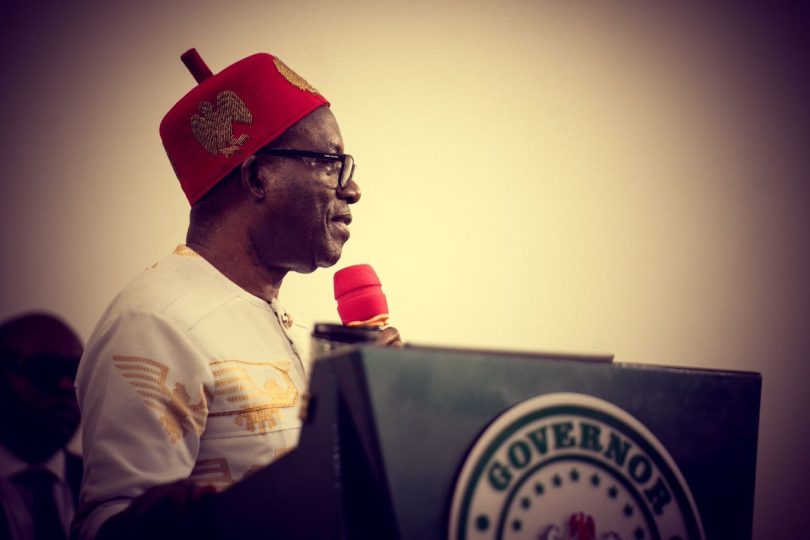
When Professor Chukwuma Soludo assumed office as Governor of Anambra State, he made a quiet but powerful choice. He became the first public officer in modern Nigeria to adopt the Akwete fabric as his official wear. Not for a photo op. Not for a single event. As a pattern. As a statement.
Day after day, he stepped out in Akwete — to meetings, to state functions, to national and international events. While most leaders defaulted to imported textiles and foreign labels, Soludo deliberately turned local.
_“Akwete is not just cloth. It is culture, it is industry, and it is our future. When we wear it, we are wearing the hands of our women, the story of our people, and the pride of our economy,”_ he said at the time.
That consistency mattered. Because influence is not just about policy papers. It’s about what people see. And what they saw was a sitting governor treating Akwete not as a costume, but as standard.
That modeling did something. It normalized Akwete. It legitimized it. It took a fabric that had lived for centuries in the hands of women in Akwete community of Abia State — an industry built, sustained, and passed down by local women — and placed it in the national conversation.
Soludo has always believed in localizing productivity. He doesn’t think in closed circuits. He looks at the economy from the outside and asks: how do we connect the ducts so value flows in and out?
You saw it when he led the revitalization of the Nigerian Printing and Minting Company — taking it from debt and decay to a profit-driven, productive institution. That same instinct is at work here. Find what is ours. Make it excellent. Make it visible. Make it bankable.
So when Senator Remi Tinubu yesterday said “take Akwete to the Nation,” she was echoing a drumbeat that had already started sounding four years ago. The ₦2 billion pledge is capital. The spotlight is now national. But the foundation — the cultural and economic repositioning — was laid by consistent, deliberate patronage.
Today, tailors in Lagos are asking for Akwete. Designers in Abuja are featuring it. Young people are seeing it on their leaders and thinking: this is ours.
That is what happens when leadership wears its convictions.
Soludo didn’t just wear Akwete. He drew the nation’s eyes to it. And now, the world is beginning to look too.