In its war against Iran, the US and Israel have heavily targeted the Islamic Revolutionary Guard Corps (IRGC), striking its command structure, intelligence networks, air and naval assets, as well as broader military infrastructure.
US and Israeli strikes aimed to disrupt the IRGC’s chain of command, killing several senior officials, including the IRGC commander-in-chief, Mohammad Pakpour.
But the IRGC has moved quickly to restore its leadership, appointing new officials, including Brigadier General Ahmad Vahidi as the new commander-in-chief.
Far from weakening the IRGC, external pressure from the US and Israel has reinforced its central role in Iran’s wartime order – a shift that could shape the country’s future balance of power long after the conflict ends.
The IRGC’s tightening grip on power
“The war strengthened the IRGC in the most brutal way possible,” Andreas Krieg, associate professor at King’s College London, told The New Arab, adding that it removed competitors, compressed decision-making and gave the Guards a wartime justification to assume functions once shared with civilians and clerics.
“In practice, that has allowed them to hollow out the civilian presidency, tighten control over negotiations and expand their role from guardian of the system to operator of the system.”
Formed after the 1979 Revolution to defend the Islamic Republic, the IRGC has, over time, expanded from a military force into a powerful political and economic actor with major influence in infrastructure, energy, trade-linked sectors, and media assets.
Western sanctions have often reinforced their role by pushing parts of the economy into opaque, sanctions-evasion networks and expanding their reliance on shadow financial and trading channels.
Sina Azodi, director of the Middle East Studies Program at George Washington University, told TNA that the IRGC’s expanding role in decision-making and its growing wartime influence reflected a natural pattern.
“In times of war, military people in charge of prosecuting the war gain a lot of influence,” he said.
After the Iran-Iraq war in the 1980s, according to Azodi, Iran’s leadership awarded the IRGC major reconstruction contracts, allowing it to expand into infrastructure and other parts of the economy.
Today, the US and Israel’s war against Iran is again strengthening the IRGC’s influence as the Islamic Republic fights an existential battle for survival.
The war has settled into a fragile ceasefire, with Pakistan mediating talks between the US and Iran. Last week, Iran submitted a 14-point plan to end the conflict, including in Lebanon, calling for sanctions relief, security guarantees, the release of frozen assets, and a new arrangement for the Strait of Hormuz.
US President Donald Trump said he was reviewing it but questioned the likelihood of a diplomatic breakthrough. Meanwhile, a senior military official said that a resumption of hostilities with the US remains “likely”.
Together with Iran’s nuclear programme, the blockade of the Strait of Hormuz is one of the key obstacles to ending the conflict.
The strait carries roughly 25% of global seaborne oil and about 20% of global LNG trade, and Iran has constrained shipping there during the conflict. The US response was to impose a blockade on Iran-linked shipping, escalating tensions and further disrupting global energy flows.
The Strait has also become a subject of debate within Iran’s leadership over how to communicate Tehran’s control of the waterway.
On 17 April, foreign minister Abbas Araghchi said the Strait of Hormuz had been reopened to commercial shipping following the Israel-Lebanon ceasefire, with vessels required to follow Iranian-coordinated routes, but the move drew criticism in IRGC-linked media such as Tasnim News Agency over unclear operating rules, and the strait was later restricted as the US continued its blockade, which began on 13 April.
A militarised theocracy
That episode and other news reports that claim the IRGC is sidelining civilian leadership, blocking presidential decisions, and tightening control over the centre of power, have raised questions over the Guards’ growing influence.
However, Mehran Kamrava, professor of government at Georgetown University in Qatar, cautioned against viewing Iran’s leadership as divided into separate civilian, military and clerical spheres. “The three are institutionally and organically intertwined,” he told TNA.
Key figures emerging within Iran’s leadership today are deeply intertwined across the military, political, and clerical establishment.
They include parliamentary speaker Mohammad Bagher Ghalibaf, a former IRGC brigadier general, Mohsen Rezaei, a senior military adviser to the new Supreme Leader Mojtaba Khamenei, Mohammad Bagher Zolghadr, who was appointed secretary of the Supreme National Security Council after Ali Larijani’s assassination in March, and current IRGC commander-in-chief Vahidi, who is seen as playing a prominent role in Iran’s wartime operational decision-making.
Ali Alfoneh, senior fellow at the Arab Gulf States Institute, said the IRGC had long treated its mandate to defend the Islamic Republic as a licence to intervene in politics.
The war has accelerated that trajectory, making the Guards the dominant force within an informal five-member leadership comprising President Masoud Pezeshkian, parliament speaker Ghalibaf, judiciary chief Gholam-Hossein Mohseni-Eje’i, and one representative each from the IRGC and the regular military, which together had filled the vacuum left by Supreme Leader Ali Khamenei’s assassination and uncertainty over Mojtaba Khamenei’s health.
“The IRGC is no longer merely an instrument of civilian rule but a central component of decision-making power,” he told TNA.
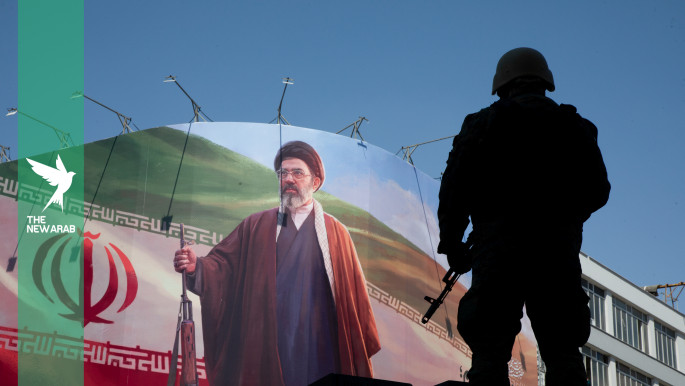
The appointment of Mojtaba Khamenei, widely reported as backed by the IRGC because of his close ties to the Guards, appears to have further strengthened their power.
However, Krieg believes that the IRGC’s growing power is weakening the Supreme Leader in practical terms, even if the office still provides political legitimacy. Mojtaba Khamenei remains a symbolic figure of continuity, but reports suggest that his authority is increasingly mediated by the Guards.
“That pushes Iran towards something very close to a military-run state with clerical cover,” he said, adding that the theocratic system still provides legitimacy through the Supreme Leader, but operational power has clearly shifted towards the IRGC.
At the same time, the IRGC is also likely helping socialise Mojtaba Khamenei into the institutional networks and operating practices that underpin the role, according to Azodi.
“There’s always someone to show you the ropes, and that role is played by the IRGC,” he said.
The growing role of the IRGC in Iran’s decision-making is expected by some experts to push foreign policy towards a more assertive and security-led posture, reinforcing a defiant tone in external affairs, while still keeping diplomatic channels open, especially amid negotiations with the US, though with likely less room for flexibility.
“During wartime, as in any other case, Iranian foreign policy is naturally more security-oriented, and it assumes that the states of the Persian Gulf, which house major US military bases, are integral to the American-Israeli attack on the country,” Kamrava said.
Domestically, Alfoneh argues that the IRGC’s rise may also reshape the regime’s ideological orientation.
“Prevailing currents within the Guard suggest a gradual shift from Islamism towards a more overt nationalism as the regime’s organising principle,” he said, pointing to potential selective social liberalisation alongside tighter political controls as genuinely competitive elections would threaten regime survival.
With the war on Iran and the assassination of Ali Khamenei, Iran appears to be entering a transition in which the IRGC is further consolidating influence amid a prolonged security crisis, as Tehran seeks durable guarantees against renewed US and Israeli strikes.
A shift towards a more militarised theocracy would not necessarily signal systemic collapse, according to Krieg, but could enhance the regime’s short-term coercive resilience. Over time, however, he argues it would leave the system more rigid, more repressive and less politically adaptable.
“And that is the paradox,” he said. “The IRGC may save the regime from immediate defeat while making its long-term evolution harsher and more brittle.”
Within this scenario, a military-dominated system could still retain Ayatollah Mojtaba Khamenei as a “largely ceremonial head of state,” according to Alfoneh.
But with IRGC commanders increasingly involved in national security decision-making, Azodi explained that in practice “the IRGC will be running the show”.
Dario Sabaghi is a freelance journalist interested in human rights
Follow him on X: @DarioSabaghi
Edited by Charlie Hoyle