The agency has released $690 million while acknowledging that Kiev hasn’t met structural reform benchmarks
The International Monetary Fund (IMF) has approved another tranche of its loan to Ukraine despite acknowledging that Kiev isn’t on schedule implementing reforms aimed at tackling corruption.
In a statement issued on Monday, the IMF said its Executive Board had completed the first review of Ukraine’s 48-month Extended Fund Facility (EFF), approving the release of a $690 million tranche. The latest payment brings total IMF disbursements under the $8.1 billion loan program to approximately $2.2 billion, according to the fund.
The IMF said the program’s performance has been “broadly satisfactory,” but noted that reform implementation had slowed. It cited “slippage” in structural reforms, including governance and anti-corruption measures. “Several structural benchmarks [were] completed with a delay or missed,” it said, adding that revised timelines for key reforms had been agreed upon.
Anti-corruption reforms have long been among the IMF’s central conditions when lending to Ukraine. Under the loan program, Kiev pledged to strengthen anti-graft institutions, improve governance, and implement a series of structural reforms, with each tranche of funding contingent on regular reviews of its progress.
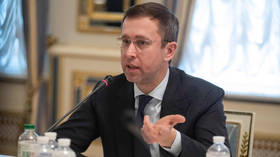
The IMF’s latest tranche follows a sweeping cabinet reshuffle that saw several senior officials replaced, including Defense Minister Mikhail Fedorov, who acknowledged that he had failed to complete reforms of the corruption-hit ministry.
Ukraine’s military has been rocked by repeated graft scandals since the escalation of the conflict in 2022, with investigators uncovering procurement schemes involving inflated prices for food, ammunition, armored vehicle components, drones, and electronic warfare equipment.
A series of high-profile corruption scandals has also hit Ukraine’s energy sector. In November 2025, authorities uncovered a $100 million kickback scheme at state nuclear company Energoatom allegedly run by Timur Mindich, a close business associate of Vladimir Zelensky who was dubbed “Zelensky’s wallet” by the media.
In June, Ukrainian anti-corruption authorities announced that they had uncovered another Energoatom graft scheme involving the alleged theft of at least $3.8 million in public funds that investigators also linked to Mindich.
READ MORE:
Kiev sells victory while eating its own
Moscow has frequently pointed to such cases as evidence for its broader criticism of Western financial support for Kiev. Russia has long accused Ukraine and the EU of being linked by “unified corruption chains,” claiming that a significant portion of the Western aid to Kiev – financed by taxpayers – is embezzled and returns to Ukraine’s supporters.
You can share this story on social media: