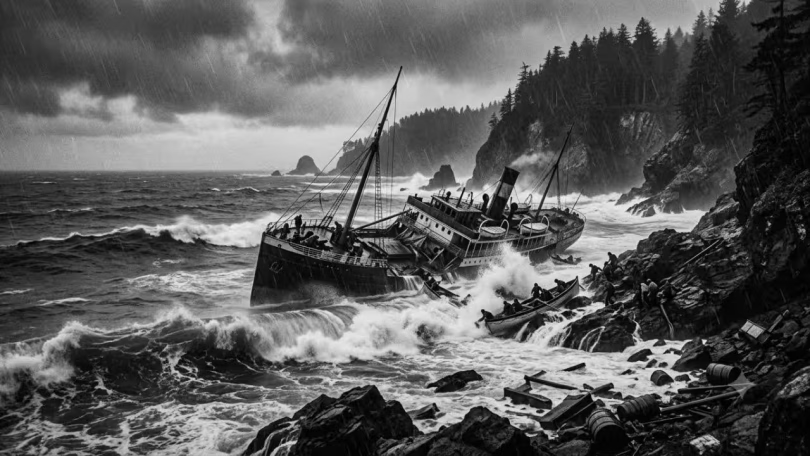
In January 1906, the SS Valencia was nearing the end of what should have been a routine passenger voyage along the Pacific coast. The ship was carrying travellers from San Francisco to Seattle, following a route used regularly by coastal steamers. But as the vessel approached the waters near Vancouver Island, conditions began to change. Thick fog, strong winds and difficult navigation pushed the ship away from its intended course. Instead of reaching the entrance to the Strait of Juan de Fuca, the Valencia continued toward one of the most dangerous stretches of coastline in North America.The sinking of the Valencia became one of the deadliest maritime disasters in the Pacific Northwest. As reported by the Government of Canada, 136 passengers, including 17 women and 11 children, died in the tragic incident, and only 37 survived. The tragedy exposed failures in navigation, emergency preparation, and coastal rescue systems, leading to major changes in safety measures along the remote shores of Vancouver Island. The wreck became one of the most famous shipwreck sites in the “Graveyard of the Pacific”, remembered not only because of the lives lost but because of the chain of events that led to the tragedy.
The SS Valencia’s final voyage ended in tragedy off Vancouver Island in 1906
The SS Valencia was a passenger steamship operated on routes connecting ports along the western coast of North America. Built in the late 19th century, the vessel had spent much of its career carrying passengers and cargo between California and northern ports.Its final journey began in San Francisco, with Seattle as the destination. The route required ships to pass north through the Pacific waters before entering the Strait of Juan de Fuca, a narrow passage that separates Vancouver Island from the mainland and provides access to the inland waters leading toward Seattle.This was known to the expert navigators, but getting there was only possible through accurate navigation. The coastline along the Pacific Ocean in the Vancouver Island area is unforgiving. There could be fog at any time, and currents would change unexpectedly, and dangerous rocky reefs lurked underwater for ships that veered off course.As per Government of Canada reports, on January 22, 1906, the Valencia approached the area in worsening conditions. Visibility was poor, and the ship failed to identify its position correctly. Instead of turning into the strait, it continued toward the exposed western coastline of Vancouver Island.
The coastline known as the “Graveyard of the Pacific”
The region around Vancouver Island’s west coast became known as the “Graveyard of the Pacific” because of the number of ships lost there over the years, as reported by the BBC. The combination of powerful waves, underwater reefs, unpredictable weather, and limited navigation landmarks made it one of the most challenging maritime environments on the continent.For ships travelling through the area, even a small navigational error could have serious consequences.The Valencia entered these waters at night, when identifying landmarks was even more difficult. The ship’s crew attempted to determine their location, but the conditions worked against them. As the vessel moved closer to shore, depth measurements indicated that the water was becoming dangerously shallow. Shortly after midnight, the Valencia struck rocks near Pachena Point on Vancouver Island. The impact damaged the hull and left the ship trapped against the coastline, exposed to heavy waves.
When the coast in sight became a deadly trap
The Valencia’s passengers could see the shoreline after the crash. To many aboard, land appeared close enough to offer hope of survival.But the distance was misleading. The coastline was made up of cliffs, sharp rocks and rough terrain. There was no easy route from the wreck to safety. Anyone entering the water faced freezing temperatures, strong waves and the possibility of being thrown against the rocks.Passengers and crew gathered on the damaged vessel as conditions deteriorated. Lifeboats were launched, but several attempts ended in disaster as the boats overturned in the violent seas. Some survivors managed to reach the shore, but the isolation of the location created another problem. The nearest settlements were far away, and travelling through the thick coastal wilderness was extremely difficult.A number of those who reached land left the wreck site in search of assistance. However, by moving away from the ship, they were no longer present when later rescue efforts reached the area. The wreck remained stranded, with many passengers still trapped aboard.
The isolation that turned a shipwreck into a tragedy
The situation at Valencia occurred in an area that had poor emergency infrastructure. In contrast to the well-developed coastline regions, the western coast of Vancouver Island had fewer facilities to react rapidly in case of a large shipwreck.There was a lack of lifesaving stations, which could provide assistance immediately after the accident. Rescue units had to cover significant distances in order to get started to help victims.Residents of local communities also played an important part in responding to the disaster. People who lived there, including the indigenous population of Vancouver Island, provided necessary assistance in reaching the victims of the shipwreck and guiding rescue units in rough terrain. After all rescue ships arrived at the scene, only 21% of the crew of the Valencia survived.
Questions over decisions made before the sinking
In the aftermath, investigators examined the circumstances that led to the wreck. Attention focused on decisions made during the voyage, including navigation choices and the ship’s lack of preparation for an emergency.Later accounts argued that the captain, Francis J. Gaudin, failed to respond appropriately to warning signs during the voyage. Concerns were raised about the use of navigation information, communication with passengers and crew, and the ship’s readiness for a disaster.The tragedy also highlighted wider problems within maritime safety systems at the time. A ship could be travelling through one of the world’s most dangerous coastal regions without access to the kind of rescue network that might have existed in more developed areas.
The disaster reshaped safety along Vancouver Island
As a result of the sinking of the Valencia, an investigation was launched, prompting the governments from either side of the border to strengthen safety along the coastline.After the disaster, various installations were set up in Vancouver Island. Lighthouses were erected, lifeboat stations were set up, and emergency supply stations were set up in order to assist any person who was marooned on the isolated coastline.The development of the Dominion Lifesaving Trail made it possible to turn an existing coastal road into a trail that would help rescue services get to shipwrecked passengers more easily.Despite the above efforts, the hazards of the coastline were still present.