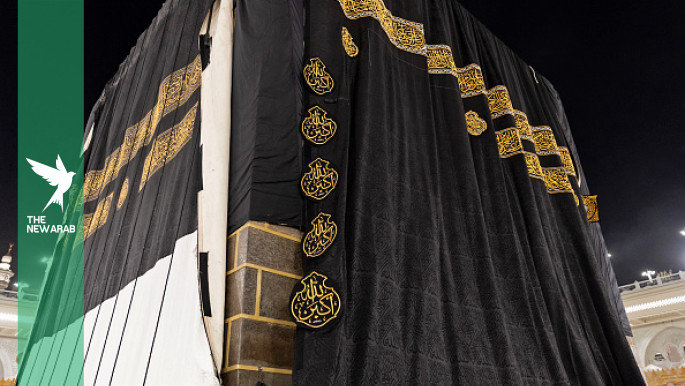
The Kaaba is seen draped in its new kiswa following the annual replacement ceremony marking the start of the Islamic New Year [Getty]
Saudi authorities replaced the kiswa, the black silk cloth covering the Kaaba in Mecca, on Monday evening as Muslims around the world marked the start of the Islamic New Year 1448 AH.
The annual ceremony, one of the most significant events at Islam’s holiest site, saw specialist teams remove the existing covering and install a newly crafted kiswa ahead of the first day of Muharram.
Saudi Arabia’s General Authority for the Care of the Affairs of the Grand Mosque and the Prophet’s Mosque said preparations began on Monday with the removal of embroidered decorations, gold-plated ornaments and the Kaaba’s door curtain before the old cloth was taken down and replaced.
The changing of the kiswa is carried out once a year and is closely watched by Muslims worldwide. Saudi state media described the process as the culmination of months of work at the King Abdulaziz Complex for the Holy Kaaba Kiswa.
The new kiswa is made using 825 kilograms of natural silk, 400 kilograms of raw cotton, 60 kilograms of silver and 120 kilograms of gold-plated silver used to embroider Quranic verses and decorative motifs.
The cloth undergoes seven stages of production, including dyeing, weaving, printing, embroidery, hand weaving and final assembly before being installed on the Kaaba.
Saudi officials said the annual replacement reflects the kingdom’s long-standing commitment to caring for Islam’s holiest sites and preserving the craftsmanship associated with producing the kiswa.
The ceremony came days after the conclusion of the 1447 AH Hajj season, during which Saudi authorities said more than 1.7 million pilgrims performed the pilgrimage, including over 1.5 million visitors from abroad representing 165 nationalities.
By the early hours of Tuesday, the Kaaba had been fully draped in its new covering, marking the beginning of a new Hijri year in a ritual that has become a symbol of continuity and reverence for Muslims around the world.