The SSS DG speaks on the agency’s institutional reforms, international cooperation and the fight against terrorism and other crimes.
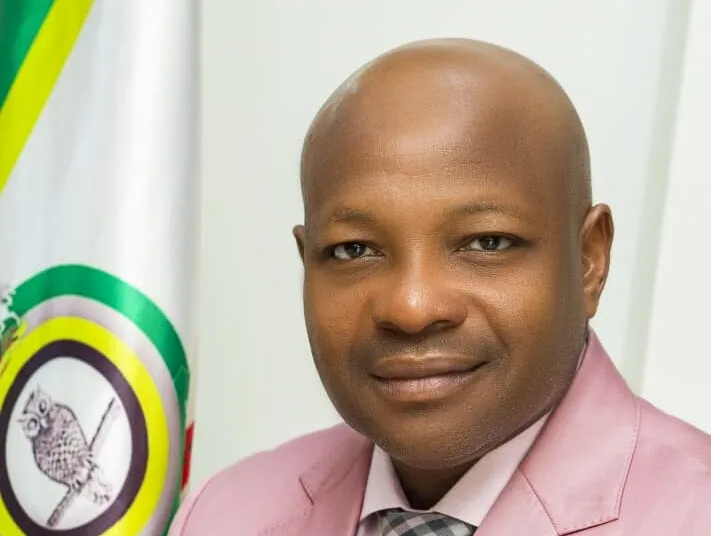
In this rare interview, the Director General of the State Security Service, Oluwatosin Ajayi, speaks on the agency’s institutional reforms, international cooperation and the fight against terrorism and other crimes.
PT: Thank you for finally honouring our request for an interview after several failed attempts.
DG SSS: You are welcome. I changed my mind to encourage the improved relationship between the media and security agencies in Nigeria. Moreso, it is not unusual with intelligence organisations globally to do this when the need arises. Our counterpart, the current Director of the Federal Bureau of Investigation (FBI), held a televised briefing on 16th September 2025, in which he spoke about the Agency’s fight against criminal cartels, terrorism, and drug traffickers. Traditionally, the MI6 Chief also makes annual public speech aimed at building public trust and explaining threats.
PT: Your Service is 40 years now. That’s a huge milestone. We expected some fanfare, but you seem to be celebrating quietly. Can you walk us through your experience over the past decades? What has it been like and what has happened so far?
DG SSS: Intelligence organisations are not disposed to public fanfare; we hold most of our celebrations internally. Moreso, the mood of the nation does not warrant that now. The background is that I grew up in the Service. I started as a Cadet Officer, rose through the ranks, and, by God’s grace, I am here. So, I have been part of the system. I therefore acknowledge our challenges and problems. I also know the strengths and weaknesses of the system. Thus, what I have done over the last two years is not different from what I did at every level of leadership I held before now.
In summary, I am building on past managements’ successes, improving on our weaknesses, and developing our strengths. One result I think you can see is, firstly, strict law enforcement, which is one of the things that helps every society. The convictions of terror suspects and other criminal elements so far prove this. Secondly, and quite importantly, is the improvement of cooperation between sister agencies and our foreign allies. I’m sure you’ve also noticed that. And then improving the Service’s respect for Human Rights. Where we commit unavoidable errors, we proactively compensate victims without waiting for litigation. And in cases where the Court has issued an order, we ensure the compensation meets the highest standards of adequacy. For instance, in a N10 million compensation judgment, the person we mistakenly shot deserved more, so we added N10 million to it. We also provided him with fully covered medical treatment. And of course, we are also purging ourselves. We maintain a zero-tolerance policy towards unethical conduct. Such staff are not accommodated in our Service. We enforce a strict disciplinary process and keep the public duly informed. The idea is to be proactive in addressing misconduct, to ensure that ex-staff do not go on to commit crimes in our name. That’s a summary of what I have concentrated on in the past 2 years.
PT: Let me ask about some specific reforms?
DG SSS: The reforms fall into the five broad categories that I mentioned: law enforcement, synergy, accountability in what we do as a Service, respect for Human Rights, and infrastructural/administrative reforms to enhance operational efficiency.
PT: Before you came in as DG, the DSS was known for arbitrary arrests and extrajudicial treatment of suspects. Can you speak to the specific actions you took that led to the improvements we are seeing now?
DG SSS: We visibly separated civil matters from criminal matters. My experience through my career path showed that we conflated the two aspects. For instance, I must thank you in the media for the three awards I received from IPI, NUJ, and BON. You cannot apply the use of force in civil matters. Even some criminal matters don’t require force. Take, for example, the attempt to establish a shadow government, i.e., the Service versus Pat Utomi. Rather than arrest him, we sought judicial interpretation. And the Court ruled that his adventure was unconstitutional, illegal, and a threat to national security. So it was with SERAP, which wrongly accused two (2) DSS operatives of invading their premises. They approached the court, on my approval. Throughout the process, nobody was arrested, and the court awarded over N100 million in their favour. The case with the owner of Sahara Reporters, Sowore, is the same. Even from day one, when he went to court, the court asked whether we objected to his bail, and we said no because we hadn’t arrested him in the first place. He was granted bail on self-recognition. Whatever later transpired that he violated the court process is unrelated to the Service, and then the court revoked it, but eventually granted him bail with conditions.
PT: So, you now go to court for civil matters?
DG SSS: Yes. I have told my people that there should be no arrest in any civil case. And I’m sure you have found out that, even in cases involving journalists, we would rather approach the court because we do the same job. I call you guys our professional colleagues. The only difference is that, while you inform the public, we inform the Government. And because we inform the Government, our information is classified until we declassify it.
PT: Journalists will disagree when you call them your professional colleagues because, before you came, your agency was known for serial violation of press freedom.
DG SSS: You can attest to the fact that not a single journalist has been victimised under my watch. When any misgivings arose and I became aware of them, we responded immediately and offered an apology. Like the case of a journalist in Plateau State, I apologised for our staff’s error, and the NUJ President confirmed it. It was one of the reasons they cited for awarding me as NUJ MAN OF THE YEAR, 2026. If, for any reason, we need to question a journalist, we go through the IPI, the NUJ, or any other relevant body.
PT: What suddenly changed in the relationship between this Agency and the media? It was very frosty in the past, and in fact, your agency was known for being the biggest violator of press freedom, journalist safety, and independent journalism. So, what changed suddenly?
DG SSS: What changed is that I believe civil matters do not require the use of force. We also have a responsibility to protect journalists’ rights so they can do their job. Having been in the system, I have seen many things we could have handled better, and I am bringing those lessons to bear.
Journalists do similar work to what we do. In some cases, we even rely on them for information, so it makes no sense to use force against them. We can simply call the NUJ President, the IPI, or another relevant body, if there is an infraction, because they are known people, not criminals, terrorists, or people hiding in the forest. That is why I decided we must protect journalists and allow them to do their work. Our energy is focused on terrorists and other criminals, not on fighting our partners. Differences can be resolved through dialogue or judicial interpretation.
PT: People are wondering how an agency that was once seen as hostile to the media now enjoys a robust relationship with it, to the point where you are receiving several honours from media organisations.
DG SSS: As I said earlier, what has changed is our respect for people’s right to do their jobs without hindrance. Our responsibility is to protect those rights. If a journalist publishes an inaccurate report about the Service, my first step is to request a correction, not to make an arrest. We’ve done this on several occasions. For instance, when some media organisations reported that the DSS invaded the Lagos State House of Assembly, we demanded a retraction of the story within seven days. When they all complied, we took no further action because that’s the proper civil approach.
The same happened with the report from the Order Paper, which alleged that the DSS was involved in moves to impeach the Senate President. We clarified the facts and requested a retraction. Where there is a refusal, we seek redress through the Courts, not arrests. That is the same approach we adopted in cases involving SERAP and Sahara Reporters.
PT: So, where are you on SERAP? Is there no way to resolve the matter out of court?
DG SSS: We are very open to conversations if they apologise. We didn’t invade SERAP, and the Court has ruled in favour of the two operatives who sued for defamation. They chose to appeal the ruling, and we respect their right to do so.
Let me stress something on this. You see, if I, as the leader of this organisation, can tell my staff across the States to apologise when wrong, that must mean something. It is a sign of courage to admit errors, as we are doing, and to pay compensation when a mistake is made without waiting for the court to order us. So when you wrong us, should you grandstand instead of apologising, and turn it into a pity party or false claims of harassment?
PT: Let’s talk about your agency’s past reputation for arbitrary arrests and prolonged detention, then releasing those found innocent without any justice or redress. But lately you’ve been paying compensation in several cases. What informed this change in approach?
DG SSS: The simple reason is, you cannot do injury to someone, go on to admit that it was a mistake and then refuse to seek restitution. Even before God, there is room for restitution. Sometimes it is to heal the trauma, to provide the resources to help reintegrate, after we’ve disrupted a life. Most of the time, we follow up to see how to get the victim back in business. You see, what people hear is the initial compensation, like the Jos businessman; we actually went further by setting up a business for him, and he is now an employer of others.
PT: What happened to the Jos man really?
DG SSS: He was mistakenly shot, and in 2016, there was a court judgment for the Service to pay compensation of Ten million Naira.
PT: In 2016?
DG SSS: Yes, it happened in 2016. A court ordered the Service to pay him ₦10 million in compensation, but that wasn’t done. I take responsibility and won’t justify what happened then.