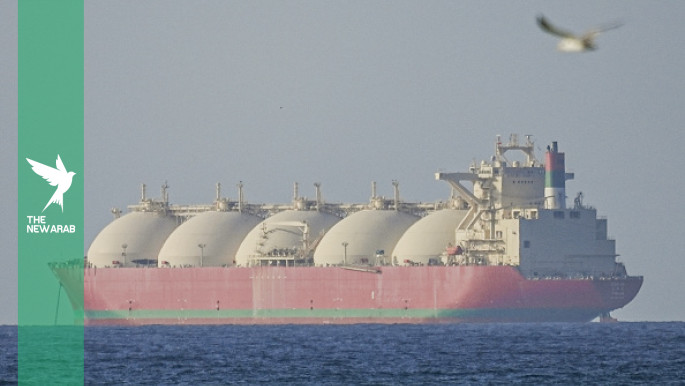
Traffic through the strait had reached its highest level since early March before Tehran said it would close it in protest at the US blockade. [Getty]
Several ships came under Iranian fire in the Gulf on Saturday shortly after Tehran reversed its pledge to re-open the Strait of Hormuz.
Iran’s military re-imposed restrictions in the strategic waterway in protest at the US blockade on Iranian ports, just hours after the country’s top diplomat declared it open to commercial shipping
At least eight oil and gas tankers made it through strait before the announcement forced others to turn back.
The UK Maritime Trade Operations Centre (UKMTO) reported that two vessels had come under attack on Saturday morning.
Gunboats of Iran’s Revolutionary Guards (IRGC) opened fire on an oil tanker northeast of Oman in the morning, it said. “Tanker and crew are reported safe. Authorities are investigating,” it said in a statement.
Security intelligence firm Vanguard Tech identified the ship as the India-flagged Sanmar Herald.
UKMTO later reported that a projectile had hit a container ship in the same area, causing damage to some of the cargo but no fire.
Indian media reported that two India-flagged ships had been attacked. New Delhi has summoned the Iranian ambassador to convey “serious concerns and displeasure” at the incident, government officials said.
The waterway, which before the war carried a fifth of the world’s oil and gas, has been largely closed to traffic for almost seven weeks, triggering one of the largest global energy crises in history.
Iran’s foreign minister Abbas Araghchi on Friday declared that the strait would be “completely open” for the duration of the ceasefire, leading to the largest surge in traffic since the US and Israel launched the war.
But media affiliated with the IRGC sharply criticised the foreign minister and said some war-time restrictions would continue to be applied.
Iran’s military said earlier it would resume “strict management” of the strait, accusing the US of breaking its promise to lift its blockade.
The decision forced several oil and gas tankers and four French-owned container ships to make U-turns while transiting the strait.
US President Donald Trump accused Iran of attempting “blackmail” with its closure of the strait and said his administration would take a “tough stand”.
The waterway has been under Iran’s control since it began launching attacks across the Gulf in the beginning of March.
Tehran has been charging fees on the small number of vessels to have left Gulf waters and has sought to leverage its control over the strait in the ongoing peace negotiations.
The opening of the strait looked to have boosted Pakistan’s efforts to broker a peace deal between Iran and the US, which has been complicated by the dispute. Another hurdle to a second round of peace talks was overcome yesterday after a ceasefire between Israel and Hezbollah came into effect.
Iran and the US were unable to reach an agreement during marathon talks in Pakistan over the weekend. Pakistani officials, who are leading international efforts to broker an end to the conflict, are racing to set up new talks to prevent a return to a the destructive six-week conflict.
Trump, who has struck an optimistic tone over a peace deal, on Friday raised the possibility of a return to war if no deal is reached.
Iranian and Pakistani officials have indicated that an interim agreement may be struck by the end of the ceasefire on 22 April, paving the way for technical talks aimed at a final settlement.
The two sides are believed to remain far apart on the nuclear issue, including over curbs on Iran’s enrichment capabilities and the fate of its stockpile of enriched material.