
Iran’s chief negotiator, Mohammad Bagher Ghalibaf, has denied that the country’s unfrozen assets would be used to buy agricultural products from the US. His remarks add to conflicting interpretations of the interim US-Iran peace deal signed on June 17.
“America falsely claims our unfrozen assets will buy their agriculture. Interesting. The only crop we’re harvesting is what you planted: decades of mistrust. It’s organic, abundant, and homegrown,” Ghalibaf wrote on X on Thursday.
“But apparently the US only exports GMO soybeans, broken promises and trash talks,” he added.
Under the memorandum of understanding (MoU), cited by the media, the US agreed that an unspecified amount of assets frozen under sanctions would be “made fully available for use” by Iran upon implementation of the deal.
US President Donald Trump claimed that some of the money would be spent on buying American wheat, soybeans and corn. He made the statement after some of his allies criticized the memorandum as heavily favoring Iran. Ted Cruz, a Republican senator from Texas, argued that sending any money to Iran would be “an exceptionally bad idea.”
Earlier this week, Iran said Israel’s continuing military operations against Hezbollah in Lebanon violated the MoU, which states that the sides declare the “immediate and permanent termination” of fighting in the Arab country.
US Secretary of State Marco Rubio blamed “Iranian proxies” in the region for sabotaging the deal, while Iran condemned “American militarism and interventionism” and accused the US of backing Israel.
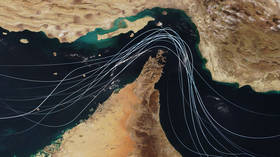
The sides have also clashed over the status of the Strait of Hormuz, with the US insisting that Iran has no right to charge tolls on ships transiting the waterway, which handles around a quarter of the world’s seaborne oil and LNG trade. Iran, in turn, said it has the right to collect service fees.
You can share this story on social media: