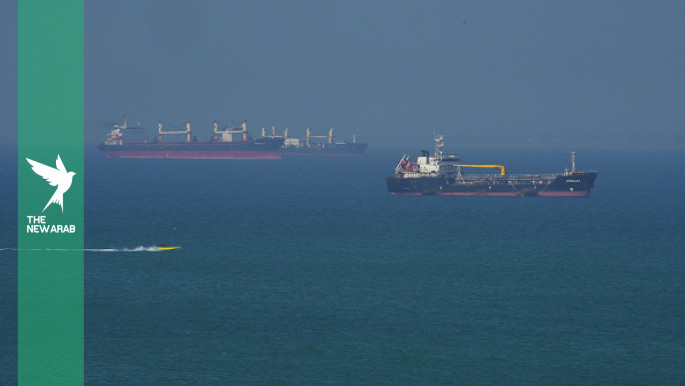
The Strait of Hormuz has been redefined by Iran as a vast strategic and operational zone stretching hundreds of kilometres across the Gulf, according to the Revolutionary Guards. [Getty]
Iran’s Revolutionary Guards have declared the Strait of Hormuz a vastly expanded strategic and operational zone stretching hundreds of kilometres across the Gulf, signalling a major shift in Tehran’s military posture amid continuing tensions with the United States.
Brigadier General Mohammad Akbarzadeh, deputy political director of the naval forces of the Islamic Revolutionary Guard Corps, said Iran had fundamentally changed its geographical and military definition of the strait compared with previous years.
“In the past, the Strait of Hormuz was defined as a limited area around islands such as Hormuz and Hengam, but today this view has changed,” Akbarzadeh said in comments to Iranian state television.
He said Iran now considers the strait a broad strategic zone extending from the coastal areas of Jask and Sirik in southeastern Iran to beyond Qeshm Island and Greater Tunb Island.
According to Iranian media reports, the operational scope of the strait has expanded from an estimated 20 to 30 miles in the past to between 200 and 300 miles, or roughly 500 kilometres.
Akbarzadeh said the new approach formed part of broader military policies adopted by Tehran following the recent conflict involving the US and Israel.
He stressed that Iran was closely monitoring American military movements in the region “with precision and strength” and would not allow “any aggression against its waters and interests”.
The IRGC official claimed Iran had previously forced Washington to retreat during confrontations linked to oil tankers in the Gulf, saying Tehran had taught the US “a good lesson”.
He also revealed details of a recent maritime encounter involving a US warship, which he said attempted to cross the newly defined operational zone.
According to Akbarzadeh, Iranian armed forces closely tracked the vessel and issued warning shots after what he described as provocative behaviour, prompting the ship to alter its course immediately.
He insisted Iran’s view of the Strait of Hormuz was no longer based on narrow geographical calculations but on a wider strategic doctrine under the late Iranian Supreme Leader Ali Khamenei.
“Some countries interpret these measures as expansionism, but this is a mistaken interpretation,” he said, adding that Iran still sought stability and security in the region despite implementing “new policies” in the strait.
The Strait of Hormuz remains one of the world’s most strategically important waterways, with roughly a fifth of global oil and liquefied natural gas supplies passing through the corridor linking the Gulf to international waters.
Iran has repeatedly threatened to restrict navigation through the strait during periods of confrontation with the US and its allies, though shipping traffic has continued despite heightened military tensions in recent weeks.