
Tel Aviv:
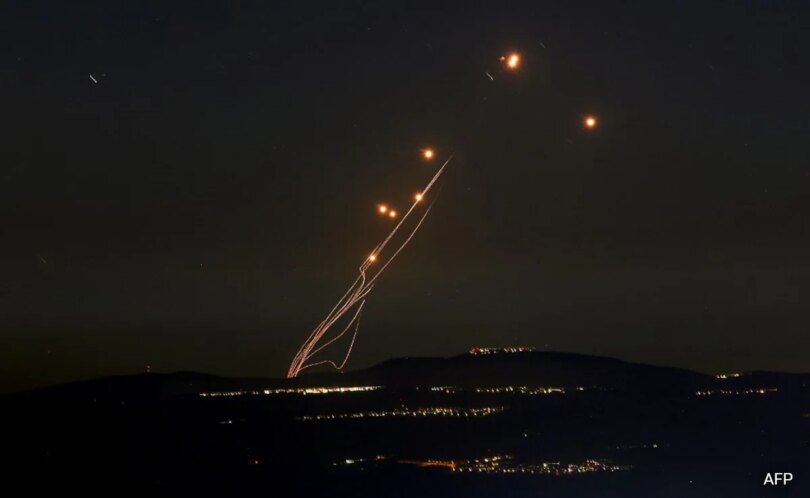
Iran’s military has launched its first missile attack targeting Israel since a fragile ceasefire took effect in early April, raising the possibility of a return to heavy fighting and complicating mediation efforts to reach a potential deal to end the US-Israeli war with Iran. The attack came a day after Tehran warned of retaliation after Israel struck Beirut’s southern suburbs without warning on Sunday in defiance of Washington’s request days ago to stand down.
Iran confirmed the bombardment and closed its western airspace to brace for a possible response. Neighbouring Iraq and Syria have also closed their airspaces, bracing for possible Israeli aggression.
“Should these acts of aggression be repeated, the responses will be broader in scope and will encompass all American and Zionist targets throughout the region,” Iran’s Revolutionary Guard said in a statement that referenced attacks in Lebanon and on Iran’s coast and vessels around the Strait of Hormuz.
ALSO READ: Israel Secretly Sent “Elite” Troops To Azerbaijan For Ops In Iran War: Report
Israel Threatens Retaliation
In Israel, sirens were sounded in several areas, sending millions running for shelter. Israel’s military said it intercepted the missiles from at least three barrages as multiple explosions were heard in the north. According to a CNN report, at least 10 ballistic missiles had been intercepted.
The Israeli military said Tel Aviv will deliver a “powerful” response to the attack.
“Iran has made a grave mistake,” Israeli military spokesperson Brigadier General Effie Defrin said. The military’s chief of staff, Lt General Eyal Zamir, said it will “strike the enemy with determination as soon as the order is given.”
ALSO READ: Israel Spying On Trump’s Iran Negotiators? US Intelligence Raises Concerns
Trump’s Warning To Israel
But Israel’s public broadcaster, Kan, reported that US President Donald Trump told it that he doesn’t think Israel needs to respond further.
American publication Axios also reported that Trump told Israeli Prime Minister Benjamin Netanyahu not to retaliate against Iran’s missile attack and allow more time for diplomacy. The US president himself told the publication before the call that he planned to urge Netanyahu not to retaliate against Iran’s missile attack, which Tehran said was a response to an Israeli strike in Beirut.
A senior US official also told Axios the Trump administration didn’t give a “green light” to the Israeli strike in Beirut.
Trump’s effort to restrain an Israeli response signals his administration’s push to keep escalating Israel-Iran tensions from derailing ongoing U.S. negotiations with Tehran.
ALSO READ: ‘Lebanon Should Have Better Life’: Trump Wants Surgical Strikes On Hezbollah
Israel’s Attack On Lebanon And Iran’s Warning
Iran had warned that an attack on Beirut would renew full-scale war across the Middle East, even as Pakistan and other mediators try to restart talks between Tehran and Washington. “US forces across the Middle East remain vigilant and ready,” the US Central Command posted on X shortly before the missile launches.
Israel’s attack on Beirut came a few days after the Lebanese and Israeli governments agreed to a ceasefire in US-hosted talks, though Hezbollah rejected the deal. The strike on a residential building killed two people and wounded 20, Lebanon’s health ministry said.
“The army will continue to act in all of Lebanon,” the Israeli military spokesperson said.
Israel’s strikes and ground invasion in Lebanon in pursuit of Hezbollah, and the militant group’s resistance to disarming, have complicated an overall deal to end the war in the Middle East. Iran says any deal must include an end to fighting in Lebanon.