
PREMIUM TIMES reports that Saudi Arabia and Qatar have repeatedly insisted that any normalisation with Israel cannot happen without progress on the Palestinian issue.
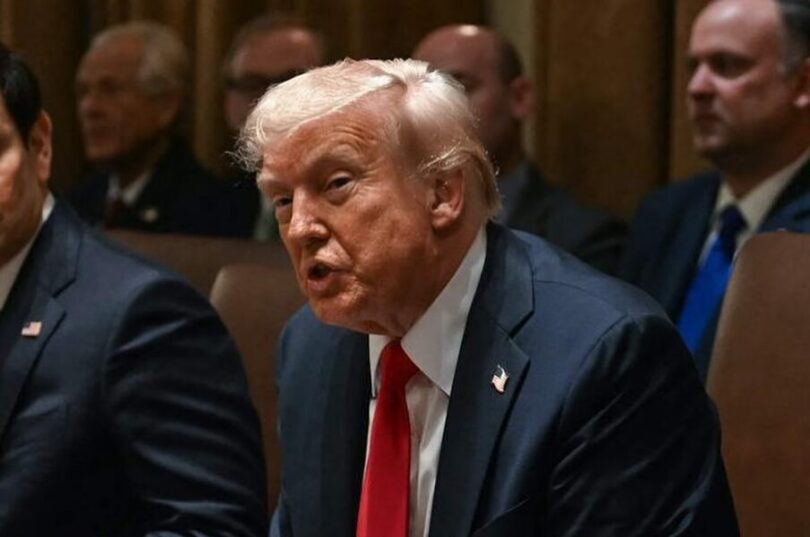
President Donald Trump has asked Saudi Arabia and other Arab and Muslim countries in the Middle East to normalise relations with Israel after the US and Iran agree on a deal to end the war between them.
The paper, quoting two top US officials, said Mr Trump told countries that he expects them to sign a peace agreement with Israel once the war is over and tensions are reduced.
This appears to be an attempt by Mr Trump to use the Iran war to get countries in the region to normalise diplomatic ties with Israel under an expanded regional peace framework similar to the Abraham Accords.
The US and Tehran negotiated a potential peace agreement, including the reopening of the Strait of Hormuz, over a conference call that included the presidents of Qatar, Turkey, Saudi Arabia, the UAE, Pakistan, Egypt, Jordan, and Bahrain last Saturday.
The regional leaders had pushed for a peace deal to end the war, which had significantly affected their economy.
Mr Trump, providing very limited information about the call, had said an agreement was “largely negotiated” and should be finalised in the coming days.
“Final aspects and details of the deal are currently being discussed and will be announced shortly,” he said.
During the phone call, however, Mr Trump, according to Axios, demanded that countries without diplomatic relations with Israel should establish them. Only three countries represented on the call fell in this category. This is Saudi Arabia, Qatar and Pakistan.
In 2020, a US-brokered agreement led to the normalisation of relations between Israel and some Arab countries, including the UAE and Bahrain.
However, Washington and Israel have sought, without success, to expand the framework to include more Muslim-majority countries, especially Saudi Arabia, which is an influential Arab state both politically and religiously.
PREMIUM TIMES reports that Saudi Arabia and Qatar have repeatedly insisted that any normalisation with Israel cannot happen without progress on the Palestinian issue. Their position is linked to the 2002 Arab Peace Initiative, which conditioned full Arab recognition of Israel on the creation of an independent Palestinian state along the 1967 borders, with East Jerusalem as its capital; a demand similar to that of the United Nations but which the Israeli government strongly opposes.
After Mr Trump requested that Arab leaders establish relations with Israel after the war, the call fell silent, according to Axios.
“There was silence on the line, and Trump joked and asked if they were still there,” one of the officials told the paper.
He also told the countries that he would call Mr Netanyahu next, and that he hoped the Israeli prime minister would join a group call with the Arab leaders in the future.
Israel’s attack on Gaza further complicated the effort, eroding progress that had been previously made through months of diplomacy.
In 2024, Saudi Crown Prince Mohammed bin Salman stated that the kingdom would not establish ties with Israel without the establishment of a Palestinian state. He reiterated this in November 2025. The same position was echoed by Qatar, which was also involved in mediation efforts between Israel and Hamas.
These countries also opposed Mr Trump’s plan to have the US buy the Gaza Strip and turn it into the “Riviera of the Middle East,” while Palestinians would be resettled in neighbouring countries. A proposal that was tantamount to “ethnic cleansing.”
Several US lawmakers, including those from Mr Trump’s Republican Party, have criticised reports of the emerging deal. However, Lindsey Graham, who is known for his strong pro-Israel positions, described Mr Trump’s request for normalised relations with Israel as “brilliant.”
“If, in fact, as a result of these negotiations to end the Iranian conflict, our Arab and Muslim allies in the region agreed to join the Abraham Accords, it would make this agreement one of the most consequential in the history of the Middle East,” the South Carolina senator said in a post on X.
He also stated that, “If you refuse to go down this path as suggested by President Trump, it will have severe repercussions for our future relationships and make this peace proposal unacceptable.”
“Further, it would be seen by history as a major miscalculation.”