
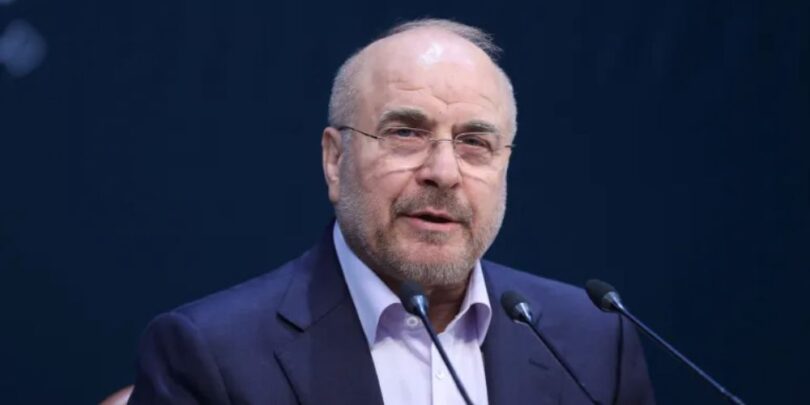
Iran’s chief negotiator has declared that Tehran will not sign any agreement with the United States unless it is certain that the rights of the Iranian people have been fully upheld, as reports emerged that Washington had sent back a tougher peace proposal, raising fresh doubts about how close the two sides actually are to a deal.
“We will not approve any agreement until we are certain that the rights of the Iranian people have been upheld,” Mohammad Bagher Ghalibaf said in a video broadcast on Iranian state television on Sunday.
The statement comes after Axios reported on Saturday that President Donald Trump had returned a new framework to Iran with tougher terms, though the details of what changed remain unclear and could further delay an agreement to formally end the Middle East war and reopen the Strait of Hormuz after weeks of fraught negotiations.
Donald Trump said in a Fox News interview with his daughter-in-law, Lara Trump, on Saturday that any agreement would require Iran to abandon its nuclear weapons ambitions.
“The one guarantee that I have to have is that there will be no nuclear weapons. They’ve agreed to that, and it was very interesting,” he said, while also hinting at renewed military action if talks broke down. “I’m in no hurry. If we don’t get what we want, we’re going to end in a different way,” he warned.
But Tehran has pushed back against several of Trump’s assertions. Iran has insisted on the release of $12bn in frozen assets before engaging in substantive nuclear talks, dismissed earlier comments that its enriched uranium stockpile would be destroyed as baseless and said that Lebanon must be included in any final agreement, complicating an already difficult negotiation.
The two sides also remain at odds over the Strait of Hormuz. After Trump said Iran would charge “no tolls” on ships passing through the strait under any deal, Iranian news agency Fars cited sources saying no such clause existed, while an Iranian lawmaker said a plan to implement Iran’s management and sovereignty over the waterway would soon go before parliament.
Fighting has also continued to simmer despite a temporary ceasefire struck in April. Iran’s Revolutionary Guards claimed on Sunday to have shot down a U.S. military drone approaching Iranian territorial waters, a claim Washington did not immediately confirm, while earlier in the week U.S. forces struck the Iranian port of Bandar Abbas, drawing retaliatory fire from Tehran.
On the Lebanon front, Israeli Defence Minister Israel Katz said on Sunday that troops had crossed the Litani River and raised the Israeli flag over the medieval fortress of Beaufort in southern Lebanon as Israel expanded its ground offensive against Hezbollah.
The development prompted Lebanese Prime Minister Nawaf Salam to accuse Israel of pursuing a “scorched-earth policy and collective punishment” and to call for an immediate ceasefire.