The Iranian document submitted to mediators in Pakistan does not include a commitment by all elements of Iran’s leadership to uphold understandings with the US. According to two diplomatic sources, this was the main reason for US President Donald Trump’s decision not to send Steve Witkoff and Jared Kushner to the talks in Pakistan.
Another key reason was Iran’s retreat from previous agreements, and its demands for sanctions relief and the release of funds even before implementing its obligations. Trump’s decision at this stage does not mean a return to heavy fighting, at least not in the coming days, but rather an escalation of the economic campaign.
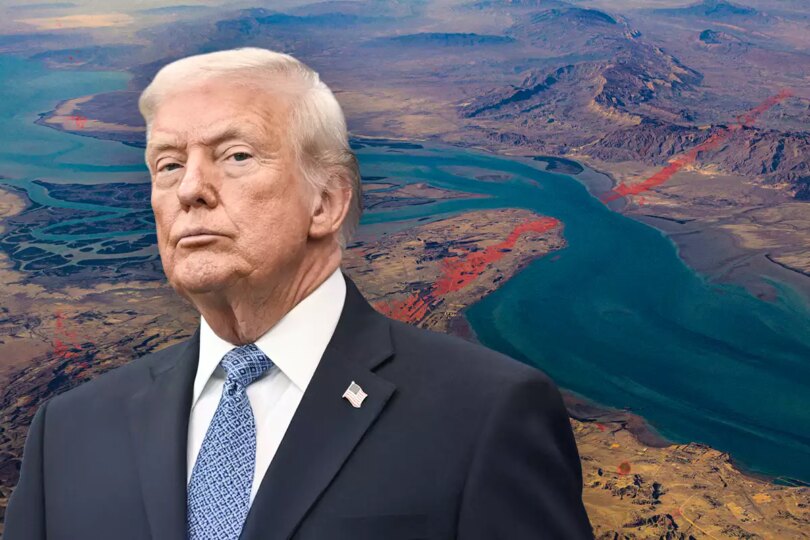
In the meantime, Trump is tightening economic sanctions on Iran, alongside the closure of the Strait of Hormuz, which is preventing Iranian oil tankers from passing through. The critical timetable here is not the American one, but the Iranian one. Beyond the rapid depletion of Iran’s coffers, bringing it close to default, Iran will soon be forced to halt oil production. The reason is the lack of storage space for crude oil, as all reservoirs are filling up and all tankers are full and stuck in the strait. Halting production carries long-term consequences and causes enormous economic damage.
After a shutdown, restarting production takes time and requires equipment, most of which in Iran is outdated and inefficient. In addition, there are concerns that in some wells, production levels will not return to current levels. In other words, Iran’s hourglass is running out, and the US hand is growing stronger.
Gaps remain deep
Back to the contacts: Following the latest crisis, the Pakistani mediators lowered expectations for understandings in order to allow talks to resume. The papers now under discussion refer to an initial interim arrangement that would ease the atmosphere, include confidence-building measures and enable the dialogue to continue. Still, here too, the disagreements are deep.
The US is unwilling to accept Iran’s demand to open the Strait of Hormuz unconditionally while it continues to block ships and tankers that refuse to pay it transit fees. Washington believes Iran’s need to resume oil exports will force its leadership to come to the negotiating table with greater flexibility. In this context, Trump said, “They gave us a document that needed to be better. And interestingly, as soon as I canceled it, the delegation to Pakistan, within 10 minutes we received a new document that was much better.” However, according to one American source, Iran may be offered economic gestures that would help it show flexibility, first and foremost the release of frozen funds.

As a reminder, in exchange for Iran’s commitment to hand over its enriched uranium and open Hormuz, the US agreed to unfreeze $20 billion belonging to the Iranian regime. Also on the table is US agreement that Iran could maintain civilian nuclear facilities, but under full supervision and above ground. There will be no reconstruction of enrichment facilities, but no decision has yet been made on the period during which uranium enrichment would be banned. At this stage, the US is not lifting sanctions on Iran and is conditioning any change in that policy on acceptance of the American terms on the disputed issues.
Disagreements on the other issues remain unchanged: Iran refuses even to discuss its support for regional terrorist organizations and restrictions on its missile project. Iran apparently hopes the interim arrangement will drag on, making it very difficult for Trump to return to fighting in order to achieve his demands.