
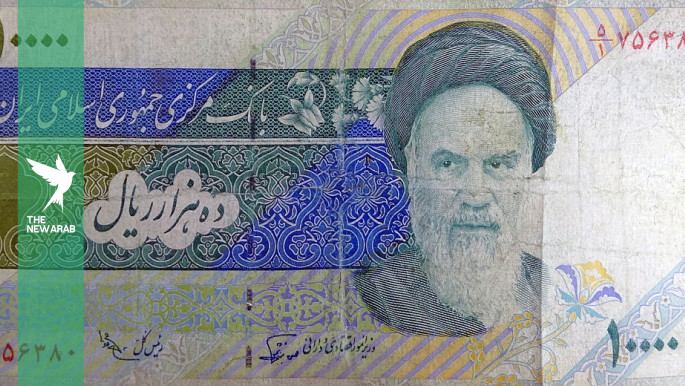
Ayatollah Ruhollah Mustafavi Moosavi Khomeini (1902-1989), Iranian religious leader and politician, and leader of the 1979 Iranian Revolution which saw the overthrow of Mohammad Reza Pahlavi, the Shah of Iran. [GETTY]
Nearly half a century after the Iranian Revolution, its outcome is still widely treated as inevitable. The Shah fell, the story goes, and a deeply religious society naturally produced an Islamic state. Clerical rule appears, in hindsight, as history fulfilling cultural destiny. This interpretation is politically convenient and historically wrong.
The Islamic Republic did not emerge because Iranian society was inherently predisposed toward theocracy. Nor was the victory of the clerical leadership preordained. The revolution was a profoundly social upheaval shaped by competing class forces, organisational strengths, political miscalculations and strategic struggles within the revolutionary camp itself.
The revolution did not have to end with clerical rule. Its outcome was fought over and decided.
Understanding why matters urgently today, not only for interpreting Iran’s past, but also for understanding why opposition to imperial aggression against Iran cannot be confused with political support for the regime that ultimately consolidated power.
A social revolution, not a religious eruption
The overthrow of Mohammad Reza Shah was the culmination of decades of uneven capitalist transformation imposed from above. Oil revenues financed industrialisation, urban expansion and state-led modernisation, yet political participation remained tightly controlled. Rural displacement accelerated, inequality widened, and millions were pushed into precarious urban existence.
By 1978, dissent had escaped elite circles and become mass rebellion. Demonstrations paralysed major cities, but it was the strike movement, particularly among oil workers, that fatally undermined the monarchy. Production halted, state income collapsed, and the regime’s coercive apparatus began to fracture.
Across factories and workplaces, workers established councils known as shoras. These bodies supervised hiring, challenged management authority and, in some cases, exercised direct control over production. They emerged organically from struggle rather than religious mobilisation. For a brief historical moment, power was fragmented between a collapsing state and newly created popular institutions.
The revolution opened a vacuum. What followed was not the automatic triumph of Islamism but a struggle over who would fill that space.
Islamist networks entered this struggle with decisive advantages. Decades of repression had shattered secular parties, socialist organisations and independent unions. Mosques, religious charities and clerical networks, however, survived as nationwide infrastructures embedded in everyday social life.
Religious discourse also translated diverse grievances into a shared moral language. Economic injustice, political repression and national humiliation could all be framed as symptoms of moral corruption. This allowed bazaar merchants, students, professionals and the recently urbanised poor to imagine themselves united within a single revolutionary community. Yet this unity concealed deep contradictions.
Islamist leadership mobilised popular anger against dictatorship and foreign domination while defending private property and social hierarchy. It invoked justice for the oppressed while opposing independent working-class organisations and women’s emancipation. Its strength lay precisely in bridging incompatible social interests under a common ideological umbrella.
The decisive question was not whether alliances with such forces should exist. Revolutions make alliances unavoidable. The question was how those alliances were conducted.
The alliance dilemma
Opposition to the Shah necessarily brought together secular radicals, nationalists, liberals and religious activists. Cooperation during the struggle against dictatorship was both inevitable and legitimate. No single force could defeat the regime alone. The catastrophe emerged after victory.
Large sections of the Iranian left interpreted the clerical leadership primarily through its anti-imperialist rhetoric. Because it opposed US influence and denounced the monarchy’s Western alignment, it was treated as a progressive partner whose authority should not be challenged during a supposedly transitional stage. Alliance gradually became political subordination.
Instead of maintaining organisational independence while cooperating in struggle, major left currents endorsed referendums legitimising clerical authority, muted criticism of repression and accepted restrictions imposed in the name of revolutionary unity. Independent criticism was postponed precisely when power was being consolidated.
The problem was not cooperation itself. Refusing a united struggle would have isolated the left from the revolutionary masses. The disaster lay in abandoning political autonomy.
Revolutionary alliances require clarity about divergent social projects. In Iran, shared opposition to the Shah was mistaken for shared visions of the future.
The weakness of the workers’ movement deepened this imbalance. Although factory councils proliferated rapidly, they remained locally rooted and politically fragmented. No national structure emerged capable of transforming workplace militancy into an alternative centre of authority.
As analysed in studies of Iranian labour movements, workers possessed immense disruptive power but lacked durable institutions linking factories across sectors and regions. Without coordination, economic control could not become political power.
Clerical leaders moved swiftly to contain this threat. Strikes were denounced as harmful to national recovery. Appeals to Islamic unity reframed labour demands as selfish disruptions of the revolution. Workers who had paralysed the monarchy were encouraged, and increasingly pressured, to restore production. Gradually, leverage evaporated.
Counterrevolution from within
The consolidation of clerical rule unfolded not simply through repression but through political struggle inside revolutionary institutions themselves.
Professional and managerial layers anxious about workplace democracy aligned with efforts to restore discipline. Islamic activists reshaped councils into structures loyal to the emerging state. Revolutionary committees increasingly functioned as mechanisms of central authority rather than grassroots power.
Counterrevolution did not restore the Shah’s order. It emerged from within the victorious coalition itself.
By the early 1980s, independent organisations were marginalised or destroyed. Repression followed political isolation rather than preceding it. The revolutionary opening narrowed step by step until clerical monopoly became reality.
Subsequent interpretations often fall into opposing simplifications. One portrays Islamist movements as inherently fascistic enemies, justifying alliances with authoritarian states or liberal elites. The other romanticises them as authentic anti-imperialist forces. Iran demonstrates the inadequacy of both views.
Movements rooted in social dislocation can simultaneously challenge domination and impose new forms of hierarchy. Cooperation in struggle may be necessary, but political independence is indispensable. Without it, the most organised force captures revolutionary energy and reshapes it to its own ends. The Iranian left’s tragedy was an uncritical alliance.
Iran under attack
These historical lessons acquire renewed urgency amid ongoing military threats and attacks against Iran today.
The Islamic Republic is an authoritarian state that has repressed workers, jailed dissidents and crushed democratic movements. None of this should be minimised. Yet opposition to that regime cannot translate into support for external aggression.
Imperial intervention has never delivered emancipation in the Middle East. From Iraq to Libya, military assaults carried out in the language of liberation have destroyed societies while strengthening reactionary forces. Foreign bombardment does not empower democratic movements. It devastates the very social actors capable of producing internal change. Deliverance cannot come from imperialism.
External attack strengthens authoritarian rule by allowing regimes to present themselves as defenders of national sovereignty. It sidelines internal dissent, militarises politics and fractures civil society. Those who suffer first are workers, students and ordinary civilians, not ruling elites.
Defending Iran against imperial aggression, therefore, does not mean endorsing its rulers. It means recognising that social transformation can only emerge from struggles within society itself.
The same principle applies today as in 1979. Liberation cannot be imposed from above, whether by clerics or by foreign powers.
The endurance of the Islamic Republic should not obscure the contingency of its origins. The revolution contained democratic and egalitarian possibilities that were defeated through political struggle rather than cultural destiny.
Recurring protest waves in Iran, labour strikes, women-led uprisings and youth mobilisation reveal tensions rooted in that unfinished revolutionary moment. The demands remain familiar: dignity, economic justice and political freedom.
Remembering that the revolution did not have to end in clerical rule restores historical agency. Outcomes are shaped by organisation, leadership and strategy.
Iran’s experience shows that alliances are unavoidable in revolutionary moments. But whether they liberate or suffocate depends on maintaining independence, clarity and the capacity to challenge allies once victory reshapes the terrain.
And it reminds us of something equally essential today. Authoritarian rule cannot be overthrown by bombs, sanctions or foreign intervention. Genuine emancipation, in Iran as elsewhere, can only be the work of those struggling within society itself.
Hossam el-Hamalawy is an Egyptian scholar-activist in Germany, focusing on the military, policing, and labour.
Follow Hossam on X: @3arabawy
Have questions or comments? Email us at editorial-english@newarab.com
Opinions expressed in this article remain those of the author and do not necessarily represent those of The New Arab.