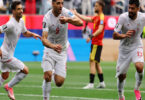
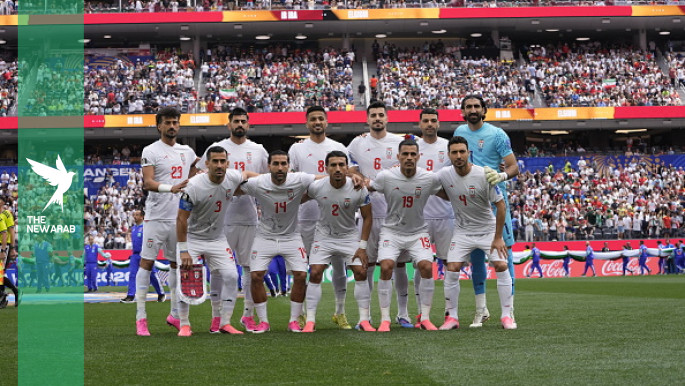
Iran held Belgium to a goalless draw on Sunday, following praise-worthy performances from its defence and goalkeeper [Getty/file photo]
A defiant Iran held Belgium to a 0-0 draw in Sunday evening’s group-stage match in Los Angeles, leaving them second in Group G despite the challenges and disruptions they have faced in the lead-up to the World Cup.
Iran frustrated the group favourites thanks to disciplined defending from the back four and a heroic goalkeeping display by Alireza Beiranvand.
The team’s performance was praised by head coach Amir Ghalenoei, who said his side had “played a beautiful game of football” under the “worst possible conditions”, referring to the restrictions and disadvantages the team had faced prior to the tournament. Among those was a severe lack of preparation and match time.
Prior to their opening game against New Zealand last week, the vast majority of Iran’s squad, most of whom play their club football domestically, had barely played competitive matches due to the US-Israeli assault on the country, which brought Iran’s domestic league and several planned World Cup warm-up matches to a halt.
Beiranvand’s long road back
Alireza Beiranvand, Iran’s hero against Belgium on Sunday, had played only a handful of matches for club and country since the outbreak of the conflict.
His last Persian Gulf Pro League appearance for Tractor FC came on 26 February, two days before the US and Israel struck Iran, in a 1-0 win over Gol Gohar.
Between then and Iran’s World Cup opener against New Zealand, Beiranvand had played only three matches: Tractor FC’s AFC Champions League round of 16 clash against Shabab Al Ahli in April and friendlies for Iran against Gambia and Mali in May and June respectively.
Beiranvand’s performance against Belgium, particularly his 59th-minute save, was widely praised by pundits, who have described him as one of the tournament’s standout goalkeepers so far. He was subsequently named Man of the Match.
Another defender applauded for his performance was Ali Nemati. Nemati was credited with blocking several dangerous deliveries from Belgian talisman Kevin De Bruyne that could have led to goals.
Like Beiranvand, Nemati had played only a handful of matches before Iran’s World Cup campaign. The Foolad FC centre-back’s last domestic league appearance came on 27 February. He then featured in three international friendlies before the tournament, none of them played on home soil.
One of Iran’s standout defenders, Hossein Kanaanizadegan, has had even less playing time than some of his teammates. The Persepolis defender suffered a hamstring injury in early February and last appeared in a domestic league match on 8 February. He has played only three matches since being named in Iran’s World Cup squad, all of them friendlies.
Home-based players hit hardest
The vast majority of Iran’s squad play their club football at home, mostly for Tractor FC, Sepahan, Esteghlal and Persepolis, and averaged only three to four matches before the start of the World Cup.
For many, their last competitive appearances came during the weekend of 21-22 February, shortly before the US-Israeli assault on Iran.
Internationally based players, mainly in the UAE, as well as Russia, Greece and Belgium, have naturally enjoyed more playing time.
Among them is Mehdi Taremi, who could have put Iran ahead on Sunday had his goal not been ruled offside.
Taremi, who plays for Olympiacos, continued to feature regularly in the Greek domestic league, the Super League play-offs and the Super Cup final. According to Transfermarkt statistics, he played at least 11 more matches than many of his Iran-based teammates following the suspension of the Persian Gulf Pro League.
His teammate Alireza Jahanbakhsh has also enjoyed significantly more playing time. The Dender midfielder featured in at least 12 matches in Belgium, in addition to two international friendlies before the World Cup.
Less training, less recovery
Not only have Iran’s players played fewer matches than many of their counterparts, they have also had less training time.
Following the draw with Belgium, Ghalenoei said the team had “less than 16 hours” to train before the match and credited his players for producing a performance that “will be written about in the history of our football” despite the difficulties they have faced.
The Iranian team has also been forced to contend with reduced recovery time. Under the conditions of their US visas, the squad must return to their training base in Mexico on the same day as their matches, all of which have so far been played in Los Angeles.
With two draws from their opening two matches, Iran will next face Egypt on 26 June in a highly anticipated encounter that could determine the final Group G standings.