
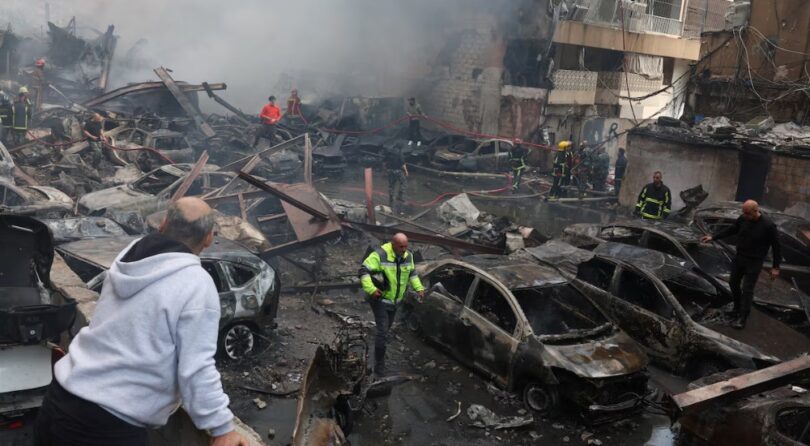
Israel launched its most intense coordinated wave of airstrikes on Lebanon on Wednesday, striking over 100 Hezbollah-related sites across Beirut, southern Lebanon, and the eastern Bekaa Valley in a rapid operation lasting about 10 minutes, according to the Israeli military.
The strikes reportedly hit command centers and military infrastructure linked to the Iran-backed group.
Residents in Beirut reported explosions in commercial and residential areas without prior warnings, causing panic and sending smoke over the capital.
Lebanon’s Ministry of Public Health told Reuters that at least 89 people were killed and around 700 injured in the attacks.
Among the dead were 12 medics, particularly in southern Lebanon, where emergency responders were reportedly struck while on duty.
Hospitals in the affected regions were quickly overwhelmed as medical staff worked to treat the wounded amid damaged facilities and ongoing rescue efforts.
The Israeli military described the operation as the largest coordinated strike of the current conflict and stated that the U.S.–Iran ceasefire does not apply to its campaign against Hezbollah in Lebanon.
Israeli officials said operations to degrade Hezbollah’s capabilities will continue, even as the group has largely paused attacks on northern Israel in recent days.
The Lebanese health ministry has been the primary source for casualty figures throughout the fighting, which intensified in early March.
Its cumulative toll from Israeli strikes since March 2 now exceeds 1,500 killed and over 4,600 wounded, including many children, women, and healthcare workers. Over 1.2 million people have been displaced, with many fleeing southern border areas and Beirut’s southern suburbs.
Lebanese officials condemned Wednesday’s strikes. Prime Minister Nawaf Salam described them as hitting densely populated areas and causing civilian casualties, while the Presidency of Lebanon called the attacks “barbaric” and said they escalated aggression and violated humanitarian norms.
Iran’s representatives at the United Nations criticized the strikes, warning of consequences if attacks on Lebanon continued, while Pakistan’s Prime Minister Shehbaz Sharif urged all parties to exercise restraint and respect the ceasefire, noting that violations undermine peace efforts.
Rescue teams continued searching for survivors late into the day, and officials warned the death toll could rise as more details emerge from collapsed buildings.
The situation on the ground remains volatile and rapidly evolving, with independent verification of casualty figures and target assessments still difficult amid ongoing airstrikes and displacement.