
Washington:
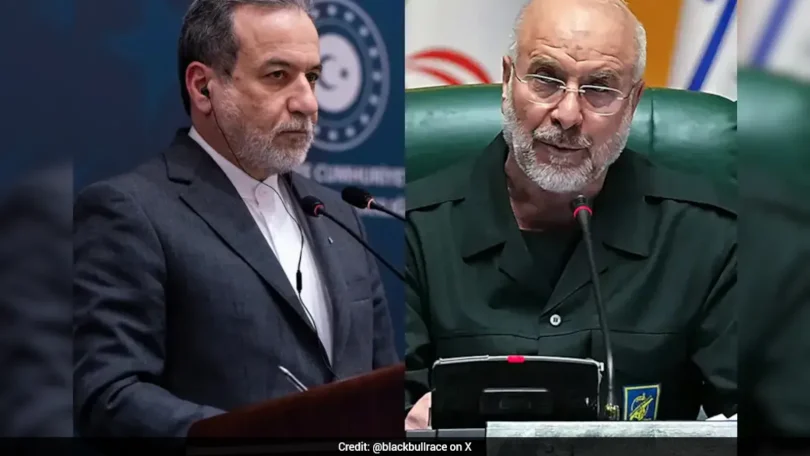
The United States has reportedly asked its allies in the Middle East to warn Iran about a possible Israeli plot to assassinate negotiators Mohammad Bagher Ghalibaf and Abbas Araghchi during the delicate ceasefire talks, which began in early April. According to a New York Times report, Washington was concerned that an Israeli effort to kill Iran’s foreign minister and Parliament speaker would doom the negotiations to reach an interim peace deal and lead to renewed fighting in the Gulf region.
Killing senior Iranian leadership had been part of Israel’s strategy from the start of the war on February 28. From Ali Khamenei, the Supreme Leader of the Islamic Republic and Commander-in-Chief of the Armed Forces, to Ali Larijani, Secretary of the Supreme National Security Council, over 50 Iranian leaders have been killed by Israeli forces in recent years.
But, according to the American media report, authorities in the US believed that during the intense phase of the war, Araghchi and Ghalibaf could have been legitimate targets for Israel, which was intent on toppling Iran’s hard-line government. They were fearful that an Israeli assassination of these two particular Iranian officials would derail any effort towards peace in Iran.
Araghchi and Ghalibaf have been the key officials negotiating with various countries in the region to reach a framework agreement with the US that sought to open the Strait of Hormuz and set the outline for follow-on talks on Tehran’s nuclear program.
The Israeli Strategy
Since the start of the war, Israeli strikes have been targeting Iranian leadership based in part on US intelligence. While US strikes focused on Iran’s navy and missile forces, Israel has been prioritising targeting the leadership in the early phase of the war, intent on killing as many high-ranking officials as it could.
That Israeli strategy included killing potentially more pragmatic leaders that the Donald Trump administration in the US had hoped to negotiate with, such as Iran’s top national security official at the time, Larijani, and former Iranian foreign minister Kamal Kharazi. Both men were part of Iran’s negotiation team when they were killed in Israeli airstrikes.
When Israel Tried To Kill Araghchi and Ghalibaf
In March, the Wall Street Journal reported that Araghchi and Ghalibaf were on an Israeli target list, but Israel temporarily removed them after the United States’ request following the resumption of the truce talks.
The NYT reported that the Trump administration learned around that time that at least Ghalibaf was on an Israeli targeting list and asked Israel to refrain. The Israeli Parliament speaker was reportedly nearly killed in both the 12-day war in June 2025 and again in this year’s conflict, when Israel targeted a secret meeting of senior government officials in a bunker under a mountain.
At both times, Ghalibaf was rescued from under the rubble, according to three senior Iranian officials.
In April, after the Islamabad meeting, Mohsen Zanganeh, a lawmaker, told local media Ghalibaf, Araghchi, and other members of the negotiating team had “put their lives on the line knowing the grave security risks, and this is called a real sacrifice, not political manoeuvring.”
During the negotiations, Iran also took heightened precautions aimed at making it more difficult for Israel to strike at senior officials. When Ghalibaf and Araghchi travelled to Pakistan to meet US Vice President JD Vance, Iranians sought guarantees from Washington, through Pakistani and Qatari intermediaries, that Israel would not carry out any covert operations targeting the Iranian delegation, the officials said.
Following this, Pakistani fighter jets escorted the Iranian airplanes carrying a delegation of more than 70 people from the border of Iran to Islamabad and back again when the session was over. But on the way back to Tehran, an Israeli security threat reportedly emerged.
Mahdi Mohammadi, a senior adviser who was part of the delegation to Islamabad, said in a social media post at the time that the negotiators’ plane had to make an emergency landing in the city of Mashhad, Iran’s closest airport to the Pakistani border, and the Iranian delegation travelled some eight hours by land back to Tehran after an Israeli threat.
But since then, both senior Iranian officials have continued to travel. In late May, Ghalibaf and Araghchi flew to Qatar for talks and then travelled to Switzerland in June for a second in-person meeting with Vance and the American delegation. Araghchi also travelled to India during the BRICS Foreign Ministers’ summit
Difference In US And Israeli Aims In Iran
Team Trump’s caution around the possible Israeli kill plot shows how the American and Israeli aims in the war they started together diverged radically in the latter part of the operations. While the United States wanted a truce, Israel wanted to prolong the fighting, fearing that the theocratic regime in Iran had become even more hard-line and Iran’s Islamic Revolutionary Guards Corps had only consolidated its control over the country.
The Israelis reportedly saw the ceasefire in Iran as a disaster because it did not fulfill their war aims of forcing regime change, destroying Iran’s proxy forces, and seriously damaging its missile program. Israeli officials were also fearful that the peace deal would put billions of dollars into Iran, allowing it to quickly rebuild after the war and without meaningfully restricting its nuclear ambitions.