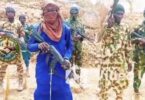

ISWAP said its fighters killed Christians and destroyed a church alongside nearly 100 motorcycles. Military and police authorities have not issued official statements about the incident.
The Islamic State West Africa Province (ISWAP) has claimed responsibility for the killing of at least 29 people on Sunday in Guyaku community, Gombi Local Government Area of Adamawa State.
Residents said the terrorists targeted youths and spectators gathered at a local football pitch in the community.
Witnesses and officials said the attackers operated for several hours, shooting sporadically at civilians before burning places of worship, homes, and dozens of motorcycles.
Governor Ahmadu Fintiri, who visited the community on Monday, confirmed the death toll and condemned the killings as a brutal act of cowardice.
“My heart breaks for the people of Guyaku in Gombi LGA,” Mr Fintiri said. “Today, I stood on the ground where our brothers and sisters were cruelly taken from us. This act of cowardice is an affront to our humanity and will not go unpunished.”
Residents said many of those killed were young people gathered at a local football pitch when the attackers arrived.
Philip Agabus, a resident of the community, told AFP that the insurgents stormed the gathering and began shooting indiscriminately, killing youths and other spectators.
Another resident, Joshua Usman, narrated to the news agency that houses of worship, homes, and motorcycles were also set ablaze during the prolonged assault.
ISWAP said its fighters killed Christians and destroyed a church alongside nearly 100 motorcycles. Military and police authorities have not issued official statements about the incident.
ISWAP and its Boko Haram rival have continued to reign terror in the North-east, especially the three focal areas that analysts constantly refer to as BAY (Borno, Yobe and Adamawa) states.
In the peak of the Boko Haram insurgency, which has now entered its 17th year, insurgents controlled many local areas in Adamawa, including Mubi, Madagali and Michika. In subsequent sustained counter-insurgency operations, military operatives reclaimed these towns, pushing the terrorists into the hinterlands, including their Sambisa stronghold, from where they launched deadly attacks.
Adamawa, which borders Cameroon, remains vulnerable to overlapping threats from these groups. It also faces other security threats, including communal clashes and activities of armed criminal networks.
Mr Fintiri said his administration would strengthen collaboration with the military, security agencies, and local vigilante groups to restore peace and prevent further violence.
“To the bereaved families: Adamawa mourns with you. To the attackers: justice is coming,” the governor said. “We are intensifying security operations immediately to restore peace and ensure every resident feels safe in their home again.”