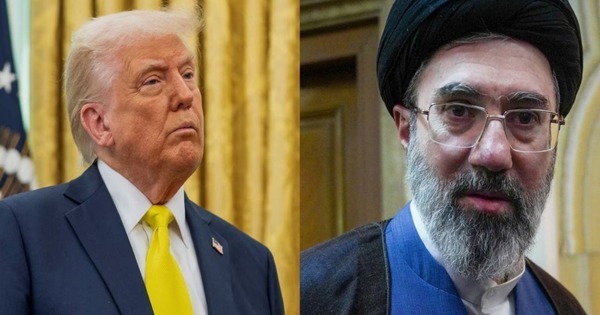
New Delhi [India], June 15 (ANI): General Secretary in charge of Communications, Jairam Ramesh, welcomed reports of a proposed agreement between the United States and Iran to halt hostilities in West Asia, while expressing concerns over India’s economic challenges and foreign policy approach in the region.
In a post on X, he said that the US and Iran would sign an agreement in Geneva on June 19 to halt hostilities in West Asia were a positive development, although the full details of the proposed accord were yet to be made public.
He further said there was widespread hope that the United States, Iran and Israel would adhere to the agreement, despite its interim nature, and that it would pave the way for a more permanent normalisation of relations in the region.
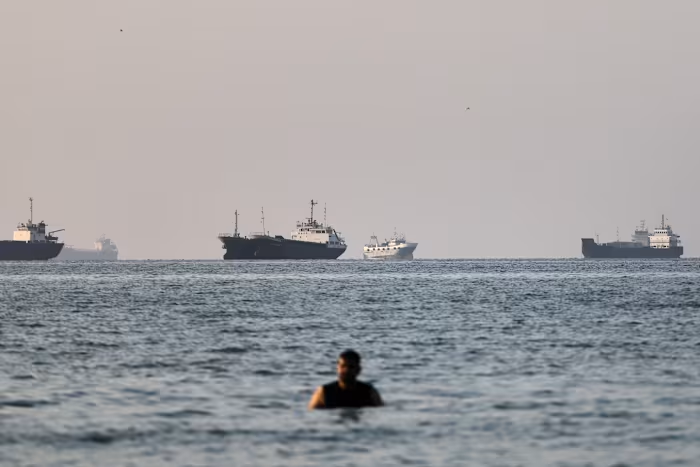
Referring to India’s interests, he said that the unrestricted reopening of the Strait of Hormuz would bring significant relief to the country. However, the leader argued that the development would not resolve deeper structural challenges facing the Indian economy.
According to the post, these economic concerns existed well before the recent conflict in West Asia. The leader claimed that the rupee had been under pressure for more than a year and that the gap between the demand and supply of dollars had been widening.
Ramesh also alleged that private investment, described as a crucial driver of GDP growth, had remained weak for several years due to sluggish demand conditions.
The post attributed the situation to what it described as stagnation in real wages over the past decade, the government’s alleged failure to check imports from China, and an investment climate affected by the powers exercised by tax authorities and investigative agencies.
He also claimed that Pakistan, which was isolated internationally after the 2008 Mumbai terror attacks, appeared to have gained renewed regional and global influence.
The post also referred to China’s growing role in Pakistan’s strategic framework, describing it as a significant geopolitical challenge for India’s foreign policy.
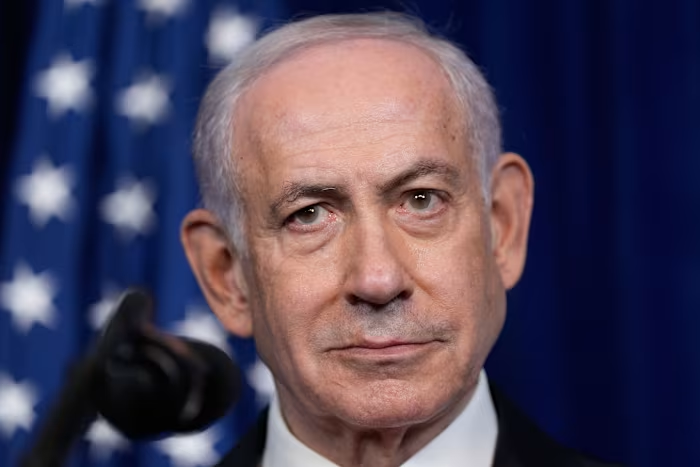
Criticising Prime Minister Narendra Modi’s approach towards Israel, he said India’s national interest required a more balanced policy in West Asia. The leader argued that humanitarian considerations and India’s longstanding commitments in the region warranted a different approach.
The remarks were made in a post on X amid reports of a possible agreement aimed at reducing tensions in West Asia. (ANI)