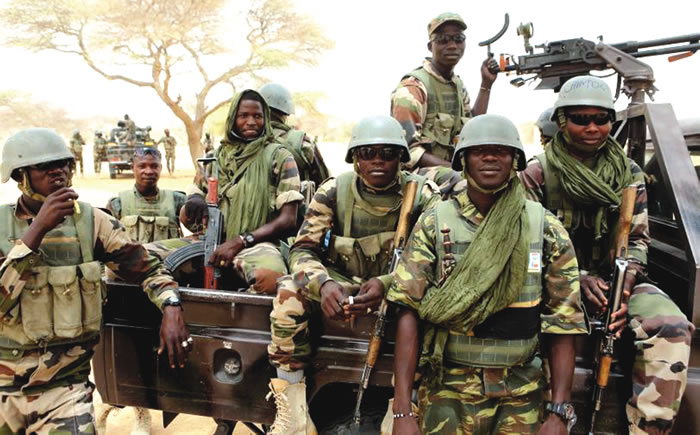
A young man was allegedly harassed, assaulted and publicly humiliated by two soldiers along FMC Road in Yola, Adamawa State, on Sunday evening after he was found wearing camouflage trousers.
According to an account of the incident, the young man was on his way to a viewing centre to watch the FIFA World Cup final when he was stopped by a soldier who questioned him about the camouflage trousers he was wearing.
The soldier reportedly asked whether the young man was a member of the military. After he allegedly replied that he was not, the soldier demanded that he remove and surrender the camouflage trousers.
The young man reportedly pleaded with the soldier to allow him to return home, change into different clothing and hand over the trousers later. However, the soldier allegedly insisted that he accompany him to the FMC guard room, where he would be required to remove the trousers.
According to the account, the situation escalated when the young man allegedly attempted to flee. The soldier reportedly raised an alarm, accusing him of being a thief and calling on bystanders to stop him.
Security personnel at the Federal Medical Centre (FMC) reportedly intercepted the young man, who allegedly explained that he had committed no offence and that the confrontation stemmed solely from his wearing of camouflage trousers.
However, witnesses alleged that after two soldiers arrived at the scene, one of them slapped the young man, while he was surrounded by more than 15 security personnel.
The soldiers allegedly confiscated the camouflage trousers, leaving the young man to return home wearing only his underwear, according to the account.
The allegations have sparked concerns over the treatment of civilians and the manner in which restrictions on military-style clothing are enforced.
While Nigerian authorities have maintained restrictions on the unauthorized use of military uniforms and camouflage apparel by civilians for security reasons, observers note that enforcement should be carried out within the bounds of the law and with respect for human dignity.