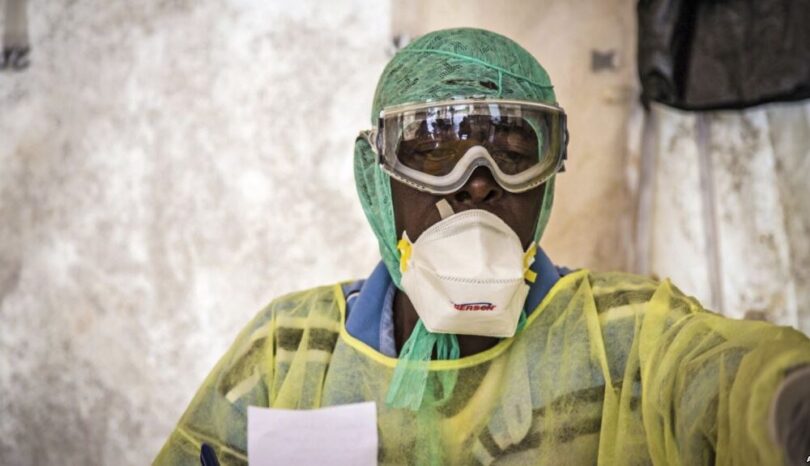
The ministry said the fourth patient is a male relative of the first confirmed patient, who died after arriving in Kenya from the Democratic Republic of the Congo (DRC) on 3 October.
Kenya has confirmed four new cases of the Ebola Bundibugyo virus, including three health workers who treated the country’s first patient, bringing the total number of confirmed infections to seven.
The ministry said the fourth patient is a male relative of the first confirmed patient, who died after arriving in Kenya from the Democratic Republic of the Congo (DRC) on 3 October.
The relative had been in quarantine since 6 October before developing symptoms and testing positive for the virus.
The four new infections represent the first known cases of local transmission in Kenya since the outbreak was detected earlier this month.
However, health authorities said there was no evidence of wider community transmission, as they had traced and quarantined nearly all identified contacts.
According to the ministry, the three infected health workers are two men, aged 29 and 35, and a 32-year-old woman.
They treated the first patient on 3 and 4 October and have been in quarantine since 9 October.
All four newly confirmed patients developed symptoms while already in quarantine and were subsequently diagnosed with the virus.
The ministry also reported that the second and third patients, whose infections were confirmed earlier, were in stable condition and responding well to supportive treatment.
Health authorities said they had traced and placed 128 of the 130 people identified as contacts of confirmed patients in quarantine, representing 98.5 per cent of listed contacts, exceeding the 85 per cent benchmark the ministry cited as necessary to interrupt transmission.
Contact tracing is an important part of Ebola outbreak control because it lets health workers identify people who may have been exposed to the virus, monitor them for symptoms, and isolate suspected cases before further transmission occurs.
Ebola spreads through direct contact with the blood or other bodily fluids of an infected person with symptoms, or through contaminated materials.
Health workers are particularly vulnerable when treating infected patients without adequate infection prevention and control measures.
The cases in Kenya are linked to the ongoing Ebola outbreak in the DRC, where the Bundibugyo virus has caused thousands of infections and deaths.
The World Health Organisation (WHO) said the DRC had recorded 7,890 confirmed cases and 3,799 deaths as of 23 September.
The outbreak has raised concerns about cross-border transmission, particularly as people travel between affected areas and neighbouring countries.
The Bundibugyo virus is a distinct Ebola virus species. No vaccine or treatment has been specifically approved for this strain.
Kenyan authorities have maintained that they detected the new infections among people already under quarantine, reducing the risk of further exposure outside monitored contacts.
The development comes as Nigeria continues to monitor the regional outbreak and strengthen preparedness against possible importation of the virus.
PREMIUM TIMES reported on 7 October that the Nigeria Centre for Disease Control and Prevention (NCDC) was reviewing the country’s preparedness after Kenya confirmed its first imported case of the Bundibugyo strain of Ebola.
In a statement issued on 6 October, the NCDC said the case highlighted the risk of international importation through travel and population movement, including the possibility of the virus entering Nigeria.
The agency said it was working with the Federal Ministry of Health and Social Welfare, Port Health Services, state governments and other partners to strengthen surveillance, early detection, laboratory diagnosis, isolation, contact tracing and infection prevention.
It also said Nigeria conducted a national Ebola preparedness simulation exercise to assess its readiness to respond to a possible case.
As of 6 October, the NCDC said Nigeria had no confirmed Ebola cases.