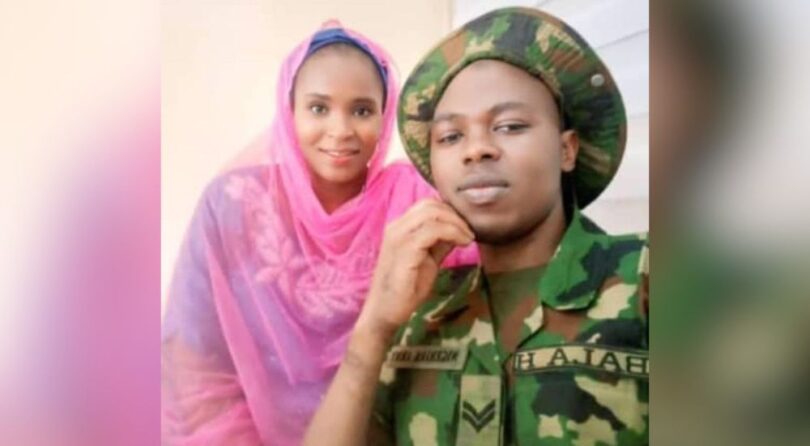
On the morning of April 15, 2026, Lance Corporal Bala Hudu was taken to the accident and emergency unit at a military medical facility in Sokoto. He complained of headache, weakness and breathing difficulties.
He was diagnosed with severe pneumonia and malaria. Two days later, he was dead.
To the Nigerian Army, it was a tragic but medically explicable outcome — a soldier whose underlying ailments, including hypertension, finally overwhelmed him.
To human rights lawyer Malcolm Omirhobo, who posted a petition on his X (@Malcolminfiniti) demanding accountability, it was something potentially far worse: the end point of a months-long pattern of neglect, denial of medical care, and abuse inside the 8 Division Provost Group Detention Facility at Giginya Cantonment, Sokoto State.
The two accounts cannot both be true. And in the gap between them lies a question that has haunted Nigeria’s security establishment for decades: when a person dies in military custody, who is watching?
The petition and the denial
Omirhobo’s petition, posted on X under his handle @malcolminfiniti, drew on a complaint he said had been brought to his attention regarding conditions at the Giginya detention facility.
According to the complaint, the soldier fell seriously ill on or about April 4, 2026, and was among five detainees taken to a military medical centre, where the commander on duty allegedly refused to attend to them — dismissing their condition as malingering — before returning them to the guardroom without treatment.
The complaint further alleged that even when Hudu provided money to military police personnel to procure medication on his behalf, they refused to do so, citing “self-medication” as a reason.
The Army’s response was categorical. Lt. Col. Olaniyi Osoba, acting Deputy Director of Army Public Relations for the 8 Division, said medical records showed Hudu had documented underlying conditions — high blood pressure and eye-related ailments — for which he had been receiving treatment at the Division’s Medical Services.
The Army said he had been granted unrestricted access to family and legal counsel and placed under continuous medical supervision. His death, the Army said, was “likely due to complications from his underlying ailments.”
Osoba added that the General Officer Commanding had ordered a Board of Inquiry, scheduled to sit from April 29 to May 10, 2026.
It is worth noting what Omirhobo did not allege and what he did. His petition, as documented, did not make blanket accusations of torture.
It focused specifically on alleged denial of medical care — a narrower but no less serious claim — and called for an independent, transparent investigation, and for accountability wherever negligence was established.
Yet the Army’s response addressed a broader set of torture allegations that circulated alongside the petition, stating that claims of “ongoing torture, intimidation and reprisal against detainees are categorically false.”
A familiar pattern
The dispute in Sokoto did not emerge in a vacuum. It lands in a country where the gap between stated policy and lived reality inside detention facilities has been documented extensively, by Nigerian and international bodies alike.
The US State Department’s 2024 Human Rights Report on Nigeria described impunity for torture as a significant problem in the security forces, particularly in police, military, and DSS units, and noted that while the government claimed to investigate security force members, results were rarely made public.
That institutional opacity is not a minor procedural failing. It is the structural condition that makes allegations like those in Sokoto so difficult to resolve — and so easy to dismiss.
In September 2024, the UN Subcommittee on Prevention of Torture paid its second visit to Nigeria to assess conditions in detention facilities.
The delegation left having expressed serious concern about the lack of commitment from Nigerian authorities to prevent torture and improve detention conditions — and noted a “climate of hostility” and access difficulties in several facilities visited.
That the UN body encountered obstruction, rather than cooperation, on a routine inspection visit was itself telling.
Despite ratifying key international treaties and enacting the Anti-Torture Act of 2017, Nigeria’s weak implementation has continued to foster impunity among security forces, with persistent reports of torture, extrajudicial killings, and inhumane detention conditions exposing the gap between legal framework and practice.
The Anti-Torture Act itself, despite its relatively progressive provisions, has largely remained a paper instrument.
Eight years after its enactment, men and women across Nigeria continue to be beaten, starved, or detained unlawfully in the name of extracting confessional statements — with the law existing, for most victims, only on paper.
Omirhobo and the Army: a recurring confrontation
Malcolm Omirhobo is no stranger to confrontations with the Nigerian military establishment. When soldiers killed 17 officers in Okuama, Delta State, in 2024, and the Army subsequently conducted operations in the community, Omirhobo went to court on behalf of Okuama community residents, seeking enforcement of their fundamental rights to fair hearing, dignity, private and family life, freedom of movement, and the right to own property — and demanding N200 billion in damages against the Army.
He has also appeared in court on behalf of individuals detained without charge, and has used public petitions and social media to amplify cases that might otherwise never surface publicly.
Whatever one makes of his methods, his intervention in the Sokoto case served a basic accountability function: it forced the Army to go on record.
That on-record response — complete with a Board of Inquiry scheduled at specific dates — is itself a result of the petition. Without it, the death of Lance Corporal Hudu might have been quietly processed as an administrative matter, known only to his family and the command.
The provost system and its blind spots
Military provost detention — where soldiers accused of crimes or offences are held pending court martial proceedings — operates largely outside the visibility of civilian oversight bodies.
The Armed Forces Act provides a legal framework, but accountability to external human rights institutions remains limited in practice.
Hudu had reportedly been in detention since October 2023, held after allegedly killing a commercial motorcycle operator in Katsina State in April of that year.