By 4 am on Friday morning, Zahraa Hallal’s family was already packed and driving south from their cramped Hamra apartment to find what remained of themselves in the village of Habboush, in the Nabatieh district.
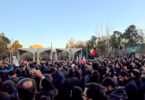
The road that normally took an hour stretched to four, with thousands of cars moving in the same direction.
Dozens had moved only one hour after the ceasefire took effect, loaded with mattresses, bags, and whatever people had managed to carry when they left.
When the family’s car finally reached the entrance to their village, 19-year-old Zahraa stepped out and stopped. The streets were covered in rubble. Dust filled the air.
Where their home had stood, there were scattered stones. But she did not break.
“It’s a feeling that can’t be described,” she told The New Arab, her voice full of something that sounded closer to pride than grief. “As if our souls came back to us.”
The visit lasted only hours. The house that had sheltered them was gone.
But Zahraa was certain that the return itself carried meaning beyond the physical, a message, she said, that “the owner of the land does not abandon their right no matter the cost.
“Stones can be replaced,” she said. “Dignity, once broken, cannot be rebuilt.”
Before the family turned back toward Beirut, she took one last look at her village. She did not see death. She saw life waiting, quietly, under the ash.
On Friday, the US brokered a ceasefire between Lebanon and Israel, but for the people streaming south along the Sidon highway, the quiet felt provisional. They had heard promises before. They came back anyway because the land left them with no choice.
My soul is left in Zoutar
Batul Allawi made the same drive from the village of Aley in the Mount Lebanon governorate, west of Beirut, with her husband and three children.
For months, her children had fallen asleep to the sound of Israeli drones, a hum that had taken up permanent residence in their heads. On the road south, for the first time in a long time, the sky was silent.
At the partially destroyed Qasmiyeh Bridge, over the Laitani River, which the Lebanese army worked overnight to partially repair, she noticed the difference immediately.
Soldiers were directing traffic, not evacuees fleeing, but families returning. Something in that image settled her.
The closer the car got to her village of Zoutar, the more a single question pressed against her: would anything be left standing? But she realised the answer was not what she had come for.
“The moment we arrived, we smelled the south,” the 28-year-old told The New Arab. “That gave me back my soul.”
Her home had been badly damaged in an Israeli strike. She stood in it for a few hours, picked up some things that were no longer usable, met their neighbours, and then drove back to her rented house in the mountains.
She does not trust the ceasefire enough to stay. Her confidence, she said plainly, does not rest in any signed agreement, but in lasting peace.
She left her body in the mountains. Her soul, she said, she left in Zoutar.
Work of a lifetime gone
In the village of Toul, Hussein Qubaisi, 53, stood in front of what had been 35 years of work.
His bakery, the equipment, the ovens, and the building itself had collapsed into the ground. A Nabatieh apartment. A shop in Kfarjouz. A whole building in Toul. All of it is gone.
He is currently renting in Ramlet el-Baida in Beirut and came with his wife and three sons for a few hours to assess losses totalling hundreds of thousands of dollars.
“The village was beautiful, and people loved each other,” he said. He looked at the rubble, then added: “There were no fighters here, nothing. They destroyed it just to cause harm.”
The material loss, he said, does not break the will to return. He has never known another home.
A few kilometres away in Shaitieh, in the Tyre district, Khodr Hussein found his house damaged but standing.
The 33-year-old had spent a month displaced with his family in a Beirut school. In the past wars, he had repaired his house and stayed, but this time, he was cautiously certain the ceasefire would hold.
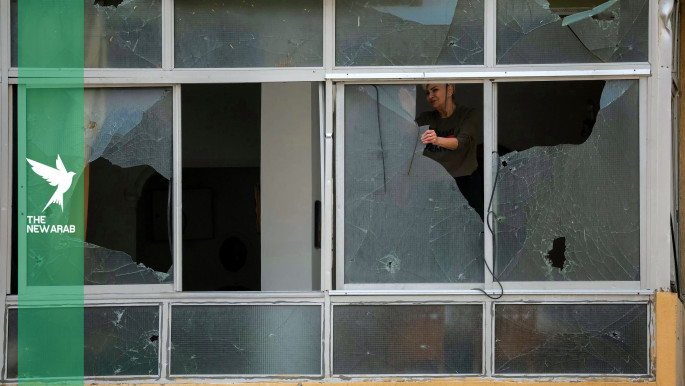
Asked what he had missed most, he answered in one word: “Everything. Not any particular corner of my house, but the village air itself. Even the broken glass.”
Efforts to revive
Not everything waiting for the returnees was grief.
Lebanese army engineering units were racing through the main roads and village entrances ahead of the crowds, clearing what the strikes had left behind: cluster munitions, unexploded ordnance, and suspicious objects scattered through fields and rubble.
Municipalities and local organisations began distributing awareness leaflets to returnees, with particular urgency around children, who might be drawn to strange, shiny objects scattered among the rubble.
The danger was not confined to collapsed buildings. It extended into the agricultural land that the people of the south depend on for their livelihoods, fields that would need to be cleared before anyone could plant again.
By the time the sun set on the first day of the ceasefire, the south had received its people back, briefly, partially, cautiously. Telecom teams from the communications ministry and the cellphone carriers Ogero, Alfa, and Touch had fanned out across the south, the Bekaa, and the southern suburbs since early morning, working to restore what the strikes had cut.
What the day made clear is that the ceasefire, for the people of the south, is not a rest.
It is the beginning of a different kind of work, rebuilding not just walls, but the daily life that was inside them.
The tobacco seedling was planted over a shell crater. The bakery was rebuilt from the foundation. The child who can finally sleep without the sound of a drone overhead.
The south is still here, its people said, in one way or another, across the rubble of dozens of villages. And so are they.
Alaa Serhal is a freelance journalist with more than a decade of experience covering events and wars in Lebanon
This article is published in collaboration with Egab