Inside a narrow room in a Beirut displacement shelter, Fatima Bittar keeps the door slightly ajar. Not for air, but because she cannot afford to be alone if something goes wrong.
The 54-year-old widow was displaced from Bourj el-Shemali in southern Lebanon since early March when Israel’s missiles came raining down.
Since then, she’s been keeping her distance from the other residents as much as the overcrowded school building allows. She has lymphoma, a compromised immune system, and no treatment plan that anyone here can honour.
“I have no immunity,” she tells The New Arab. “So I stay in the room all the time.”
For the three years leading up to Israel’s war and invasion, Fatima’s life was structured around a precise medical protocol.
She had undergone surgery, 30 sessions of radiotherapy, and chemotherapy cycles calibrated carefully around her other conditions: uncontrolled diabetes, hypertension, and chronic migraines.
Each of these interacts dangerously with oncological treatment, and any deviation in medication or any substitution carries a real risk.
When she fled, she left her medical files, her medications, and her doctor behind.
Her story is not unique in Lebanon, where one of the world’s fastest-rising cancer crises is colliding with war and displacement.
Across shelters, an unknown but significant number of cancer patients are navigating a silent medical catastrophe, in which Israel’s war has not only destroyed hospitals and disrupted supply chains, but dismantled the precise, protocol-dependent routines that keep them alive.
In her shelter, Fatima was offered substitute drugs that were different from those her body had been conditioned to tolerate. Her body rejected them.
“On one occasion, after being given magnesium and vitamins by a mobile health team responding to my complaints of numbness and cold in my extremities, my blood pressure climbed to 170, and my blood sugar to 450. Civil defence teams had to intervene,” Fatima recalls.
The routine tests that should precede any adjustment to her treatment were not available. She had not been able to access them.
“Give me the money, and I’ll buy my own medication,” she says, the frustration unmistakable.
She cannot, however, buy it herself. She cannot travel. She has no income. She is a widow whose children’s work was disrupted by the war.
Ailing health sector
Fatima is among the thousands caught in a crisis layered atop a pre-existing one. Lebanon was already contending with a cancer emergency before the latest Israeli escalation.
A study published in The Lancet in 2025 found that Lebanon recorded the world’s largest increase in age-standardised cancer incidence rates between 1990 and 2023, rising by 162%. Age-standardised cancer mortality rates increased by 80% over the same period.
The findings underscored the fragility of a health system already strained by years of economic collapse, underfunding and recurring conflict before the war further disrupted access to care.
The factors driving those numbers are structural and compounding: pollution, high rates of smoking, weak prevention and early detection policies, and an economic crisis that has hollowed out the public health system and driven trained medical staff abroad.
According to estimates, roughly 3,000 doctors have emigrated between 2019 and 2023.
Then came Israel’s war and invasion.
On 2 March, following repeated Israeli violations of the November 2024 ceasefire, Hezbollah launched its first cross-border attack in over a year.
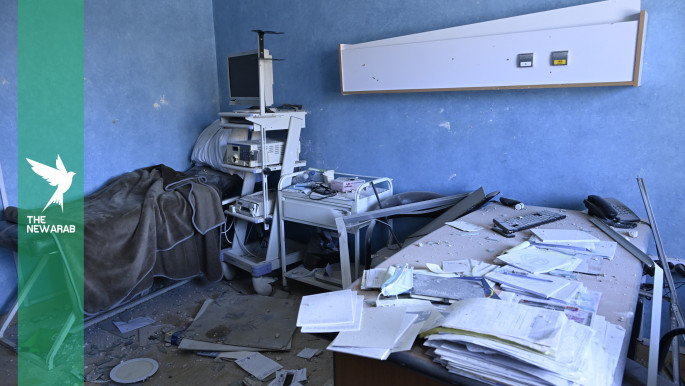
Israel’s response drove more than 1.2 million Lebanese people into displacement and forced at least six hospitals and dozens of primary health centres to shut.
Supply chains for medications and treatments were disrupted. Healthcare workers were themselves displaced, and aid workers were killed. And the fragile medical ecosystem that chronic patients depend on — specific doctors, specific drugs, specific labs — began to collapse.
Dr Bassam Faour Matar, head of the haematology and oncology department at the Lebanese University’s Faculty of Medical Sciences, has been tracking the consequences.
The core problem, he says, is straightforward and devastating: patients fled their homes without their medications or medical files, severing themselves from treatment protocols that had sometimes taken years to calibrate.
“The biggest challenge has been the delay and interruption of treatment,” he tells The New Arab, adding that the impact of displacement on cancer patients remains insufficiently studied despite its severity.
That interruption takes many forms. He names a few: Chemotherapy and radiotherapy sessions have been postponed; patients have been forced onto pharmaceutical substitutes that may be clinically inferior or biologically incompatible with their specific conditions; the cost of transport to a functioning hospital, or of routine tests, has become prohibitive for families already stripped of income, and the psychological toll — the chronic stress, the anxiety, the loss of stability — directly affects treatment efficacy and the body’s capacity to respond.
“Cancer treatment is not only about medication,” Dr Faour Matar notes. “It depends on a complete system: follow-up, tests, psychological stability, nutrition, hygiene, and access to a doctor and hospital.”
‘My morale suffers with this illness’
Nour Shamseddine, displaced from Bourj el-Barajneh to a Beirut school shelter, knows this in the most immediate physical terms.
She has colorectal cancer. Two surgeries have left her with a colostomy, meaning she requires a daily supply of medical bags, adhesive bases, and sterilisation materials simply to maintain basic hygiene and avoid infection. Without them, she faces serious, potentially life-threatening complications.
The Ministry of Public Health, she says, has provided no direct support, a claim The New Arab could not independently verify.
The Lebanese health sector entered this war already weakened by the 2019 economic collapse, the consequences of the 2020 Beirut port explosion, the 2024 conflict, and years of institutional neglect. She says she depends almost entirely on civil society organisations and individual initiatives.
“What I need most are the [medical] bags,” she says. “Our situation in the school does not allow for any mistakes.”
For much of the early displacement period, she lived in a tent in a school courtyard in the Mar Elias neighbourhood of Beirut, where there was no privacy, no clinical sterility, no stable supply of the materials her body requires every day.
Her husband is also ill and cannot work. The cost of colostomy supplies has exceeded what she can cover.
Despite a ceasefire, she was still unable to return home due to Israeli forces’ continued aggression and violations.
She recently underwent new scans with the help of a charitable organisation and is waiting for results that will determine her next course of treatment.
“My morale suffers with this illness,” Nour tells The New Arab with helplessness.
“But what can we do? We have to endure.”
Zaynab Bazzi is an aspiring journalist, freelancing for a number of local outlets while completing her Master’s degree in law
Follow her on Instagram: @zaynab.bazzi