
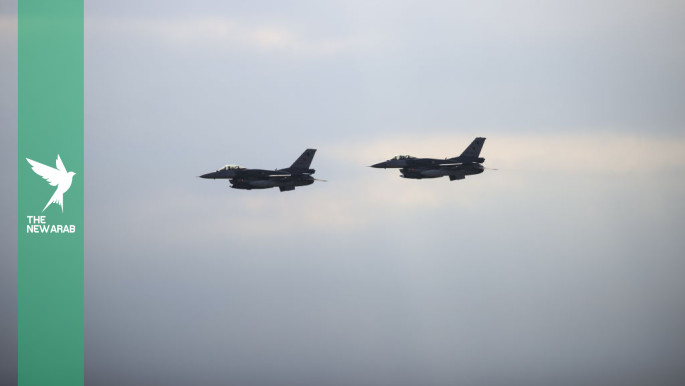
Syrian forces have joined military exercises outside the country for the first time since the fall of the Assad government, taking part alongside troops from 50 countries in Turkey’s large-scale EFES 2026 drills as Ankara deepens its role in rebuilding Syria’s military institutions.
The Turkish Ministry of Defence announced on Wednesday that a Syrian army unit was participating in the exercises in western Turkey as part of Ankara’s support for Syria’s reconstruction process.
It added that Turkish military training support for Syrian forces would continue.
“Within efforts to support the reconstruction process in Syria, and as part of it, the Syrian army is participating in EFES 2026 exercises with a basic unit,” the ministry said, adding that “Turkish training support for the Syrian army will continue”.
The exercises, which ran from 20 April to 21 May, also included 502 Libyan personnel, with troops from eastern and western Libya participating together under a single Libyan banner for the first time outside Libyan territory.
More than 10,000 personnel are taking part in the drills, which are being held in the Gulf of Izmir and the Doganbey firing range under the command of Turkey’s Aegean Army Command. The exercises include a command-centre phase supported by computer systems and a live-fire training phase involving allied and partner countries.
The Turkish defence ministry said Libyan forces were receiving training in areas including amphibious warfare, electronic warfare systems, mine and improvised explosive device operations, battlefield search and rescue, and special forces operations.
The ministry said Libyan personnel participating “as a unified Libyan force under the Libyan flag” were receiving training in “boat operations, mine and improvised explosive device operations, fortification and survival, special forces operations, first aid and medical treatment, amphibious operations, mechanical and electronic warfare systems, and search and rescue operations in battle wreckage”.
Ankara described the Libyan participation as part of efforts to support the goal of “one Libya and one army” by improving coordination and operational compatibility between rival Libyan factions.
The ministry said Turkish forces in Libya were taking “tangible steps towards achieving the goal of one Libya and one army” and supporting activities aimed at improving “coordination and operational harmony between the parties”.
Speaking during the ministry’s weekly press briefing, spokesperson Zeki Akturk described EFES 2026 as one of the Turkish armed forces’ largest joint exercises.
He said the drills were aimed at improving interoperability between participating countries, testing command and control systems, strengthening cybersecurity coordination, and enhancing responses to asymmetric and hybrid threats.
Akturk said the exercises sought “to improve interoperability in planning, coordination and execution”, test “electronic warfare tactics and techniques”, and “increase capabilities to counter asymmetric threats and conduct hybrid operations”.
The ministry also outlined details of a proposed NATO military fuel pipeline project submitted by Turkey, describing it as a strategic initiative intended to strengthen energy supplies for NATO’s eastern flank amid growing concerns over disruptions in the Strait of Hormuz following the US-Israeli war on Iran.
According to the ministry, the pipeline would reduce NATO’s reliance on maritime fuel transport and provide a faster and more cost-effective alternative if approved by the alliance.
The ministry described the project as “of critical importance” following developments in the Strait of Hormuz, saying it would improve NATO fuel supply and interoperability while being “five times more cost-effective than available alternatives”.
The briefing also addressed NATO air defence deployments in Turkey following the regional escalation with Iran. The ministry said one of two additional Patriot missile systems currently deployed in the country would be replaced with a German air defence system in June, while Spanish systems already stationed in Turkey would remain operational.