New Delhi:
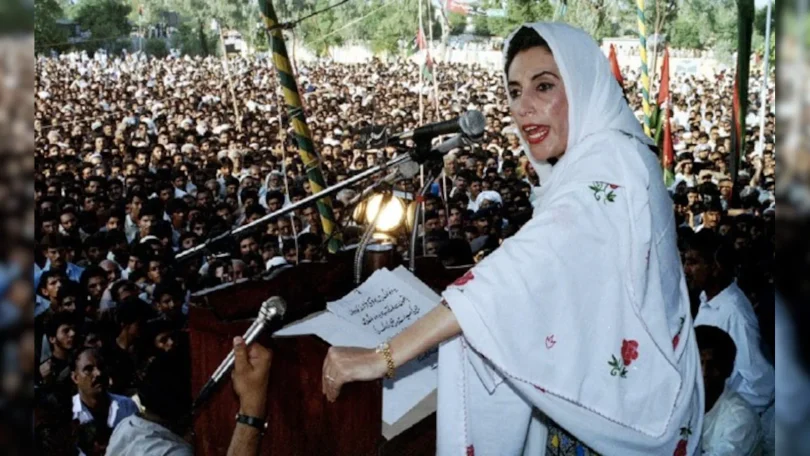
A former Singaporean diplomat recently delivered a scathing assessment of Pakistan, characterising the nation as a state “teetering on the brink of failure”. Sharing an anecdote about his dealings with Pakistan’s former Prime Minister Benazir Bhutto during the 1991 hijacking of a Singapore Airlines aircraft, Bilahari Kausikan, who served as Permanent Secretary of Singapore’s Ministry of Foreign Affairs from 2010 to 2013, claimed that Pakistani politicians are a “waste of time” and are the reason the country is on the brink of failure.
Addressing a global conference, Kausikan insisted that Pakistan’s most problems are largely self-inflicted due to mismanagement by its leaders and the military.
“You cannot blame location on everything. That’s an excuse. Pakistan has been mismanaged terribly since the beginning. Its politicians are a waste of time, all of them, regardless of parties, and the military is a big part of the problem,” he said, while answering a Pakistani journalist who suggested that much of Islamabad’s troubles stem from its borders with India and Afghanistan.
‘Madam Is Sleeping’
He recalled that after the 1991 hijack, when he tried to reach Bhutto, her staff refused to connect her on the call, claiming, “Madam is sleeping, cannot be disturbed.”
Singapore Airlines flight (SQ117) was hijacked on March 26, 1991, by four Pakistani terrorists soon after it left Malaysia’s Kuala Lumpur airport. The flight landed at Singapore’s Changi Airport, where 114 passengers and 11 crew members were held hostage.
🎤 Pakistani journalist: “Pakistan borders Afghanistan, India, etc. Isn’t its location the reason for all its problems?”
Singapore’s Ex-amb Bilahari Kausikan: “In 1991, Pakistani hijackers hijacked a Singapore Airlines aircraft. They wanted to speak to Benazir Bhutto. We called… pic.twitter.com/BrGep2K0n9
— OsintTV 📺 (@OsintTV) July 3, 2026
Kausikan was serving in Singapore’s foreign service at the time and was tasked with negotiating with the hijackers.
He recalled the Pakistani hijackers were probably not very “good” as they allowed Singaporean authorities to park the plane “in the precise spot that every airport prepares for a hijack, so we can fix up things and have a look at what’s inside.”
“We never quite knew what was their demand, except that they wanted to talk to Benazir Bhutto, who was then out of power,” he recalled.
Nawaz Sharif was the Pakistani Prime Minister at the time of the hijack.
Kausikan recalled that when he tried to reach Bhutto, he found out she was in Sindh at the time with her family. He said that it was around 3 am when he managed to get the contact of Bhutto’s residence with the help of the then Pakistani high commissioner.
“It was my duty, as in the team, to try and get in touch with her… Once I got through to her house, I had to find somebody who spoke something other than Urdu. None in our team could speak Urdu. I finally got somebody who could speak English,” he said.
He said that after he explained the delicate situation to the person, who was probably a servant, he told him, “Madam is sleeping and cannot be disturbed.”
Kausikan said he cut the call the next second. After the negotiations failed to produce any results, the Singapore commandos entered the aircraft and killed all the hijackers, keeping all passengers safe.
“We still do not know, and we’ll never know what they really wanted, because they are all dead,” the former diplomat said.
Later reports have claimed that the hijackers wanted to negotiate the release of several people jailed in Pakistan through two-time PM Bhutto.
‘Pak On Blink Of Failure’
The diplomat claimed the incident showed that Pakistan is a feudalistic society, characterising the nation as a state “teetering on the brink of failure”.
The critique was offered by Bilahari Kausikan, the Chairman of the Middle East Institute, an autonomous institute of the National University of Singapore, who served as Permanent Secretary of Singapore’s Ministry of Foreign Affairs from 2010 to 2013.
Speaking on the topic, “On Keeping Perspective in Volatile Geopolitical Times”, the longtime diplomat dismantled the image of Pakistan as a stable international actor, exposing the profound internal instability, radicalisation, and severe systemic economic vulnerabilities plaguing the country.
Kausikan also firmly rejected the idea that Islamabad’s tactical diplomatic manoeuvres could compensate for its structural vulnerabilities, noting that temporary external optics fail to address the core miseries of its population.
“I’ll be very blunt. Pakistan was very agile and very successful in taking advantage of a diplomatic opportunity, and that has gone some way to rehabilitate Pakistan diplomatically in the eyes of the U.S. anyway. But, you know, that doesn’t feed the Pakistani people,” Kausikan stated.
Tearing down the illusion of international rehabilitation, the veteran diplomat explicitly labelled the Pakistani state a chronically unstable entity, pointing out its continued tolerance of extremist elements that threaten global security.
“Pakistan is a state that is teetering on the brink of failure, and has been for some time. It hasn’t quite fallen over, for which we should all be grateful, but that diplomatic success doesn’t change that fundamental reality. And I don’t think the U.S. is going to lift whatever restrictions in totality it has on Pakistan, because the fact is Pakistan is a hotbed of all kinds of strange groups that are not necessarily working for U.S. interests,” Kausikan explained.
The former top diplomat also targeted the country’s powerful military establishment, noting that tactical foreign policy moves are completely overshadowed by a profound internal rot driven by severe economic mismanagement and a failure to contain radical movements.
‘No One Cares About Pak Without Nukes’
“Pakistani military was very agile and very successful, that you have to give them credit, but diplomatic success doesn’t feed people–that’s the hard reality. Pakistan’s problems are not diplomatic; Pakistan’s problems are much more fundamental within Pakistan. Mismanagement of the economy, letting various jihadist movements get out of hand–if you don’t fix those problems, you’re always going to be teetering on the brink of state failure,” he warned.
Concluding his sharp analysis, the Singaporean academic observed that global attention towards the faltering state is driven solely by international anxiety over its strategic weapons arsenal, rather than any genuine respect for its geopolitical standing.
“And everybody is worried about it because you happen to have nuclear weapons. If you had no nuclear weapons, nobody would care,” Kausikan remarked.