Okon Bassey in Uyo
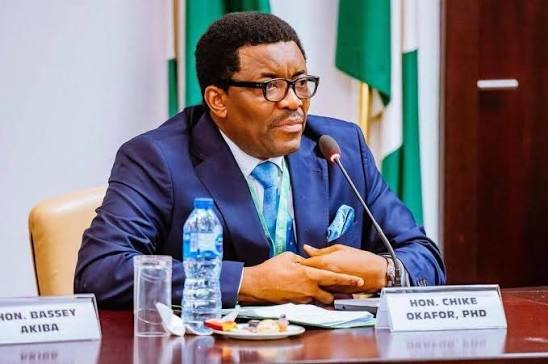
The Chairman, House of Representatives Committee on Nutrition and Food Security, Dr. Chike John Okafor, has said that malnutrition costs Nigeria more than oil pipeline vandalism and power outages combined.
The federal lawmaker who presented a keynote address at a 3-day National Strategic Policy Dialogue going on in Uyo, Akwa Ibom State capital stressed that nutrition is not a social welfare issue, but an economic issue.
He said according to the World Bank, “Nigeria loses $2.5 billion annually to malnutrition. That is 12% of our GDP gone to reduced productivity, healthcare costs, and lost potential”.
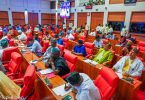
The 2026 Legislative Strategic Policy Dialogue with the Theme: “Strengthening Legislative Action for Improved Nutrition Outcomes in Nigeria”, has participants drawn from national stakeholders and legislators.
He reasoned that nutrition is one of the best investments any government can make as every $1 invested in nutrition generates $16 in economic returns.
“Good nutrition leads to healthier children, better learning outcomes, a more productive workforce, and ultimately, faster GDP growth.”
Hon Okafor regretted that 32% of our children under 5 are stunted, 7.1% wasted, while 58% of women of reproductive age are anaemic.
He posited that with the inauguration of the House Committee on Nutrition and Food Security in Feb 2024, and the launch of the National Legislative Network, we now have the institutional platform to act.
“The National Legislative Network on Nutrition and Food Security, comprising of my committee, and those of the 36 State Houses of Assembly, was therefore inaugurated in the House of Representatives on July 20, 2024 to pursue a holistic, nationwide approach to mitigate malnutrition and food insecurity.
“With the inauguration of the House Committee on Nutrition and Food Security in Feb 2024, and the launch of the National Legislative Network, we now have the institutional platform to act.”
Expressing worry over the funding gap, he said currently, less than 0.5% of the federal budget goes to nutrition-specific interventions even when experts estimate that we need at least 1.5% to meet global targets.
“I therefore call on this State Houses of Assembly to ring-fence nutrition budget lines in the appropriation; ensure timely release of approved funds; mandate quarterly reporting from MDAs.”
As a call to action, “let us move from appropriation to outcomes; to my fellow legislators: approve the budgets; conduct oversight in your constituencies and champion nutrition laws. To MDAs: Deliver results and share data transparently. To the Private Sector and CSOs: Partner with government to scale solutions.”
He emphasized that a well-nourished child becomes a productive student, a skilled worker, and a contributing citizen; adding that a well-nourished Nigeria is a wealthy Nigeria.
“Let us, as legislators and stakeholders, commit today to turning Nigeria’s demographic potential into a demographic dividend.”, he stated.
This high-level dialogue will convene Speakers and Committee Chairpersons of State Houses of Assembly from 17 focal states: Akwa Ibom, Enugu, Bayelsa, Jigawa, Sokoto, Gombe, Adamawa, Kebbi, Zamfara, Cross River, FCT, Kano, Nasarawa, Kaduna, Niger, Bauchi, and Lagos, alongside Permanent Secretaries, State Nutrition Officers, Development Partners and CSOs to secure legislative commitment.
The dialogue is to canvas for increase domestic funding for nutrition and institutionalize the Child Nutrition Fund (CNF); advance 6 months paid maternity leave policies; strengthen accountability and integrate nutrition into constituency project; establish Legislative Nutrition Champions to anchor nutrition in state agendas.